icnlive

WATCH LIVE. THINK BUSINESS.

© 2026 ICN.LIVE

ICN.live

PUBLISHED BY ICN PRESS

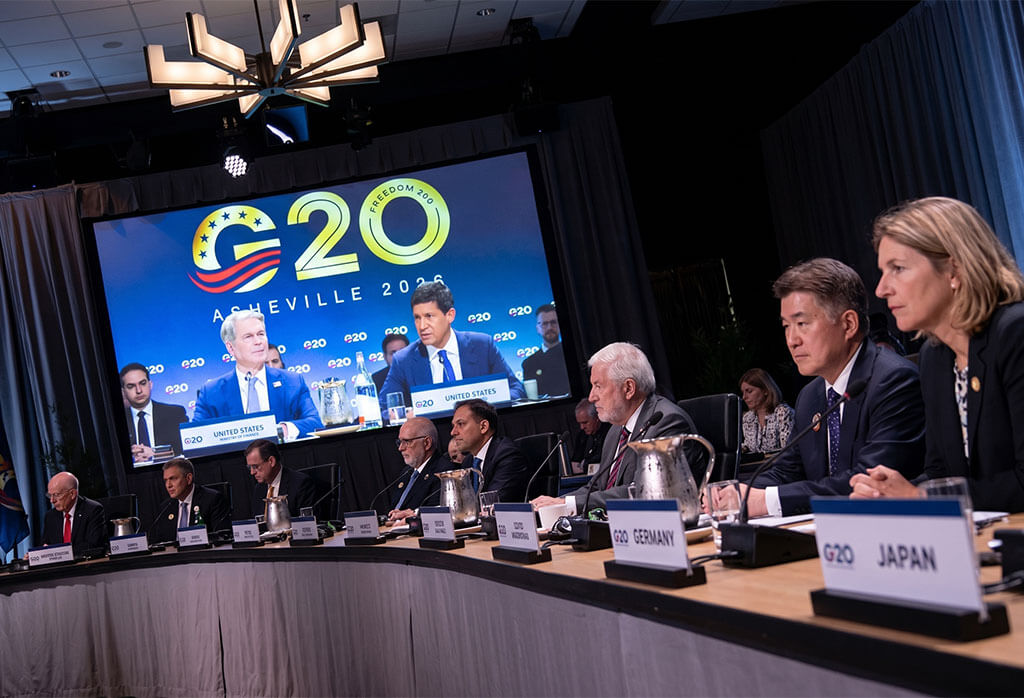
  • The UAE joined the second G20 Finance Ministers and Central Bank Governors meeting in Asheville, North Carolina, on 31 August and 1 September 2026.
  • Mohamed bin Hadi Al Hussaini, Minister of State for Financial Affairs, called for closer cooperation on steady growth, government services and future skills.
  • Talks covered the global economy, sovereign debt, digital transformation, and a wider role for the private sector.
  • The UAE showcased its work on government efficiency, ease of doing business, and training national talent for a changing job market.

The UAE at the G20 finance meeting brought a clear message to Asheville: economies grow when people gain new skills. Its Ministry of Finance took part in the second G20 Finance Ministers and Central Bank Governors gathering, held in North Carolina on 31 August and 1 September 2026 under the United States G20 Presidency. Behind the formal agenda sat a human question. How do people keep up when the jobs around them change? Talks ranged across the global economy and the outlook for growth, cooperation on digital transformation and skills, sovereign debt, and ways to close wide gaps between economies. Ministers also looked at how private companies can support growth and investment.

What Al Hussaini told the room

Mohamed bin Hadi Al Hussaini, Minister of State for Financial Affairs, urged G20 members to work more closely on steady, balanced growth. He pointed to shared practices in government services and in training for future skills. These steps, he said, help economies stay ready as change speeds up, and help growth reach more people. “The G20 is an important platform for strengthening international cooperation and developing joint solutions to global economic challenges,” Al Hussaini said. He tied that cooperation to human capital, arguing investment in people and future skills builds economies that compete and adapt. Readiness, in his framing, is not abstract. It is whether a nurse, a teacher or a factory worker finds solid ground when their field shifts.

The UAE at the G20 finance meeting and its home record

The UAE at the G20 finance meeting also pointed to its own record at home. Coverage of the UAE G20 finance ministers meeting drew on the country’s work in digital services. The delegation showcased steps in digital transformation and government services, meant to make the state run better and business easier to do. For a small firm owner, ease of doing business is not a slogan. It means time saved and fewer forms. The UAE also presented programmes that train national talent for a fast-moving job market. Young workers, in particular, stand to gain when training keeps pace with what employers need.

G20 finance ministers Asheville talks on debt and growth

When G20 finance ministers met in Asheville, sovereign debt sat high on the list. The UAE at the G20 finance meeting pressed for cooperation on debt, more transparency, and real attention to the needs of emerging and developing economies. Transparency matters here. Clear numbers let lenders and citizens see where money goes. Debt strain rarely stays on a balance sheet. It shows up in clinics, classrooms, and roads that never get built. The G20 finance track 2026 priorities also cover global imbalances and a safer path for digital assets.

Private sector, AI and what comes next

The Asheville sessions brought in private sector voices from banking, advanced manufacturing and digital assets. Talks touched on artificial intelligence in healthcare, where better tools can reach patients who wait too long for care. Participants weighed how technology and new ideas can lift key sectors and the wider financial industry. For the UAE at the G20 finance meeting, the throughline stayed the same. Growth means little unless people can share in it, and digital transformation and future skills give them the means to do so.

TAGS

EXPLORE MORE ON:

UAE at the G20 finance meeting
Global Village Season 31 opening date

Dubai’s Global Village Season 31 opening date has not been confirmed, though the park is expected to return in October 2026. Season 30 closed on May 31, 2026, starting the annual summer break. Global Village usually reopens in mid-October, once the worst of the heat eases.

Season 31 will bring back cultural pavilions, food stalls, shopping areas, rides, and live shows. Much of the site sits outdoors, so summer temperatures make normal operations hard. During the closure, teams handle maintenance and prepare new attractions for the year ahead.

When Global Village Season 31 opening date lands

An exact opening day remains unannounced. Global Village’s website points to October 2026 for the return. Last year offers a guide. Season 30 opened on October 15, 2025, and opening ceremonies tend to fall on a Wednesday near the middle of the month. On that pattern, the gates could open around mid-October, subject to official confirmation. Based on past years, some coverage points to Wednesday, October 14, or Wednesday, October 21, as candidates. Neither is official. Fans watching for the Global Village Season 31 opening date should expect news closer to the launch.

Season 30 ran longer than planned. Earlier in the year, the park paused for a short period during regional uncertainty tied to the conflict involving the United States, Israel, and Iran. It reopened on April 20, 2026, once conditions improved, then wrapped on May 31. Season 30 also marked the park’s 30th anniversary, one of its longest runs to date.

Global Village reopens in October 2026 and the season ahead

Once the park returns, it runs through the cooler months. That window makes it one of Dubai’s main seasonal outdoor destinations. Global Village reopening in October 2026 keeps it in step with previous years. Ticket details, including the Global Village Season 31 ticket sale date, have not been published. An official Global Village Season 31 opening date should arrive before the gates open.

Reaching the park is straightforward. Drivers use Sheikh Mohammed Bin Zayed Road, and RTA buses serve the site from several metro stations throughout the season. Guests from Abu Dhabi, Sharjah and the Northern Emirates travel in on the main highway network.

Global Village mixes entertainment, shopping, food and culture from around the world in one place. It first welcomed visitors during the Dubai Shopping Festival and moved to its permanent home in 2005. In its early years, pavilions stood in tent-like structures. Before the move, the attraction sat in Oud Metha, near Wafi City.

What visitors find inside

Today the site is split into regions covering the Middle East and North Africa, Asia, Europe, Africa, the Americas and South Asia. A Carnaval zone holds more than 200 rides, games and attractions. Food runs from around 200 to 250 outlets, including about 24 restaurants and cafés and more than 170 street-food kiosks. Shoppers reach over 3,500 outlets selling goods from many countries. Gates usually open in the late afternoon and run into the night.

Global Village Dubai tickets and free entry

Global Village Dubai tickets have long ranked among the city’s more affordable options, with entry starting near Dh25. Entry stays free for children under three, senior citizens, and people of determination, subject to current terms. For anyone planning the Global Village 2026 season, pricing and hours should follow the official opening announcement.

Adobe and Humain AI firm

Adobe has broadened its work with Saudi Arabia’s government and the Humain AI firm, opening its design software to millions in the kingdom at no charge. The company announced the move on Monday at LEAP 2026 in Riyadh. More than 27 million people who qualify, all aged 13 and over, will get 12 months of free use. Adobe puts the value of the commitment above $4 billion, though that figure reflects the worth of the free access rather than cash paid to Humain.

The offer covers the Adobe Firefly Standard tier along with premium features in Adobe Express. It also brings in Firefly Foundry image and video models. The plan puts Adobe’s free AI tools in the hands of students, small businesses and everyday creators. Shantanu Narayen, Adobe’s chief executive, tied the deal to helping Saudi individuals and businesses turn ideas into work. For Adobe, reach matters as much as goodwill. The rollout begins late in 2026. Saudi Arabia has made AI a national priority, and this deal slots into that push.

A model built around Saudi culture

At the center of the offer sits a new image model built by Adobe and the Humain AI firm. The system supports Arabic AI image generation, letting users produce pictures that fit local norms from prompts written in Arabic. Adobe describes the model as a way to reflect local values and visual style. Humain brings the cultural data and local knowledge, while Adobe supplies the underlying technology. The two companies first agreed to work together in November 2025, aiming to build Arabic content tools for the kingdom and the wider region.

This deal builds on that start. The Adobe Humain partnership now reaches well beyond a single product. For a government investing heavily in its own digital economy, control over how machines picture the country carries real weight. Who sets the cultural defaults, and who checks them, becomes part of the story. Tareq Amin, Humain’s chief executive, has argued that AI should understand the setting in which it runs.

Who governs the rollout?

The arrangement pulls together a private US firm, a national ministry and a state-owned tech company. Saudi Arabia’s Ministry of Communications and Information Technology anchors the public side. The Humain AI firm, owned by the Saudi Public Investment Fund, carries the local mandate, and the fund oversees close to $1 trillion in assets. Adobe brings the software and the brand. Free access can build habits early, before users settle on rival apps.

The design software market has grown crowded, and smaller AI-first firms have taken share on price and speed. By seeding its tools among millions, Adobe positions itself to keep paying customers once the free year ends. Reach also extends to founders. From early 2027, eligible startups in the ministry’s CODE and The Garage programs will get a year of free Adobe tools and training. Access runs wide, yet the terms sit with the state and a global firm. Whether the free tier turns into lasting use will test how a sovereign fund, a ministry, and the Humain AI firm share the work of building a country’s digital tools.

Share this post

on your favourite social platforms

or copy the link