

icnlive

WATCH LIVE. THINK BUSINESS.

© 2026 ICN.LIVE

ICN.live

PUBLISHED BY ICN PRESS

  • Businesses receive faster account opening support through Wio Bank.
  • DWTC Free Zone expands services for founders, startups, and larger firms.
  • The deal supports company formation in Dubai and smoother financial onboarding.
  • Future plans include special card rewards for eligible free zone businesses.

Wio Bank, in a partnership with DWTC Free Zone, gives businesses easier banking access inside Dubai.

Dubai keeps building strong support systems for founders, investors, and companies entering regional markets. This new agreement joins licensing support with practical financial tools from a digital bank. Businesses inside the zone gain quicker onboarding, dedicated support, and simpler daily banking processes. Those benefits matter during early setup stages, when delays often slow hiring, payments, and supplier planning. The move also strengthens digital banking UAE options for firms seeking simpler business finance tools.

DWTC Free Zone wants easier business activity across registration, governance, and operational support services. Wio Bank adds value by giving eligible clients priority handling during account opening requests. Dedicated relationship support also helps firms solve issues before those issues disrupt early operations. For new founders, startup banking support often shapes early confidence and first-month performance. A smooth banking process helps teams pay staff, receive funds, and manage vendor obligations.
This collaboration links regulatory efficiency with financial access, which many businesses view as essential.

Dubai free zone business setup often moves faster when banking support starts during registration stages. That joined approach reduces friction for entrepreneurs entering one of the region’s busiest commercial hubs.

Wio Bank, in a partnership with DWTC Free Zone, strengthens early business momentum

The announcement also opens marketing opportunities through selected events and shared awareness initiatives. Those activities help businesses learn about account features, money tools, and support pathways. Stronger awareness matters because many founders compare several banks before choosing a long-term partner. Wio Bank appears focused on speed, clarity, and practical digital tools for everyday finance. DWTC Free Zone appears focused on building a fuller ecosystem around business growth needs.
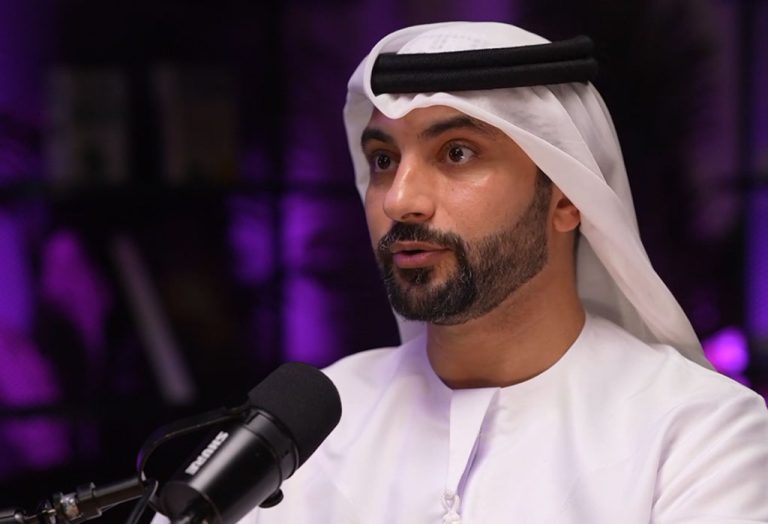
Together, both groups present a service model built around faster action and easier entry. Abdalla Al Banna said the partnership expands services while supporting efficient establishment and growth.

Prateek Vahie said faster onboarding and relationship support give businesses confidence from the first day. Those comments show both sides want fewer barriers during the earliest commercial stages. From my standpoint, strong onboarding often shapes whether founders feel ready for growth. The proposed co-branded corporate card also adds another possible benefit for future licensees. Exclusive rewards tailored to ecosystem members would give extra value beyond standard banking access.

Such steps fit a larger strategy inside DWTC Free Zone during recent regulatory upgrades. A newer multiple share class framework already gives businesses wider capital structuring and governance flexibility. Founders and investors often welcome such flexibility when balancing control, fundraising, and expansion plans.

Why this matters for Wio Bank in a partnership with DWTC Free Zone

Viewed together, these moves show a free zone adapting quickly to current business expectations. Companies want registration support, governance flexibility, and corporate banking solutions within one connected environment. This partnership answers part of that demand through simpler finance access for eligible firms. For founders, easier onboarding saves time during the tense first days after incorporation. For established firms, reliable digital banking UAE services support smoother scaling and cash management.

For Dubai, stronger service links help reinforce a reputation for practical, business-friendly execution. The agreement also supports company formation in Dubai by reducing one common setup pain point. Banking delays often frustrate founders more than licensing, office space, or routine documentation. A faster path helps businesses move from registration toward trading, hiring, and revenue generation.

Wio Bank, in a partnership with DWTC Free Zone, also signals confidence in digital service models. As business needs keep changing, free zones that remove friction usually attract stronger interest. This deal gives entrepreneurs one more reason to view DWTC as a serious growth base. Across the wider market, Dubai free zone business setup choices often depend on total support. That total support now looks stronger through startup banking support and connected financial services. For businesses entering Dubai, the message looks simple: faster banking now sits closer to business formation.


TAGS

EXPLORE MORE ON:

6G band in the UAE

The case for the 6G band in the UAE rests on a small number: two to five percent. That is how far an Upper 6 GHz signal falls behind today’s 3.5 GHz C-band in reach. The modelling covered city centres, towns, suburbs and open country. Higher frequencies normally travel less far, and shorter reach normally means more towers. A gap this narrow points the other way. An operator can hang the new radios on masts and rooftops it already owns.

The figure comes from a white paper titled “The Golden 6 GHz Band.” Four names sit on it: TDRA, the telecoms regulator, e& UAE, Khalifa University of Science and Technology, and NYU Abu Dhabi. Its release comes with a decision to move the 6G band in the UAE out of trials and into commercial service. The industry calls it the golden spectrum.

Where the threefold figure comes from

Two gains sit behind the headline claim, and they multiply. The first is a gain in spectral efficiency of about 1.5 times. It comes from a 256TRX Giga-MIMO antenna array, which has far more transmit and receive paths than a standard 5G unit. Beamforming and scheduling across the array do the rest. This gain holds regardless of the channel width. The second is width itself. Set 200 MHz of Upper 6 GHz spectrum against a 100 MHz C-band carrier and the channel doubles. One and a half times two comes to roughly triple the capacity per cell. The authors say the result lines up with work by independent analysts.

Coverage comes out of the same hardware. Signals at higher frequencies lose strength faster, and the array’s beamforming makes up for the loss. In the hardest case the team modelled, indoors in a dense city, reach stays within about three percent of C-band.

A caveat travels with every figure. The results come from models, not field tests, and rest on assumptions the paper lists. Live performance, it says, will depend on where the radios go, which spectrum they get and what the devices can do. Bayan Sharif, provost of Khalifa University, called the 1.5 times gain “achievable under well-conditioned assumptions.” The method went out with the findings, he said, so others could check the work.

Business Intelligence & News

  • Meta One in the UAE brings paid tiers from Dh5.99 to Dh1,199 a month across WhatsApp, Instagram, Facebook, and Meta AI.
  • Core versions of all four apps stay free, with subscriptions adding features and heavier AI usage on top.
  • Entry plans start at Dh5.99 for WhatsApp Plus, while creator and business bundles climb into the hundreds.
  • Meta reports more than 15 million subscriptions and trials worldwide, with Edits and AI glasses features still to come.

How regulation shaped the 6G band in the UAE

Policy moved before engineering on the 6G band in the UAE. In 2023, the World Radiocommunication Conference identified 6425 to 7125 MHz for mobile service across ITU Region 1. The Telecommunications and Digital Government Regulatory Authority (TDRA) moved earlier than most of its peers and wrote the whole range into its national frequency plan. Within it, e& UAE holds 6425 to 6775 MHz, as much as 350 MHz in one unbroken block.

With the allocation settled, the operator committed to a commercial Giga-MIMO deployment built for peak downloads of 10 Gbps. Launch is planned between July and December 2026. Tariq Al Awadhi, TDRA’s executive director of spectrum affairs, drew the line himself: “Regulatory certainty is what turns research into infrastructure.”

Money follows the coverage result. The white paper treats Upper 6 GHz as a capacity layer laid over e& UAE’s current 5.5G network. It shares towers, rooftops, power and transport links, and backhaul gets an upgrade where needed. Fewer new sites can mean a lower cost for each bit carried as demand grows. Marwan Bin Shakar, chief technology officer at e& UAE, framed the customer side as higher speeds, more capacity and a steadier connection in crowded areas.

What the network is meant to carry

The paper groups planned uses under three headings: Connect Home, Connect Industry, and Connect Consumer and Vehicle. Those cover home broadband delivered over the air at speeds close to fibre, heavy-bandwidth uses for companies and public bodies, AI-driven services in the home, and connected cars.

The work extends earlier UAE research, including TDRA’s national 6G roadmap and two e& UAE papers written with the same universities. TDRA has described the band as a resource for 5G-Advanced services and a foundation for 6G. Abroad, over 60 companies, from operators and vendors to chipset suppliers and device makers, have signed a GSMA statement on the band’s readiness.

One piece sits beyond any operator’s control. A band is only useful to people whose phones and routers can tune to it. TDRA plans to add Upper 6 GHz, known in standards as n104, to national type-approval rules, with the first devices due from September 2026. How fast those handsets reach shop shelves will decide when the 6G band in the UAE turns from a modelled result into something a customer can measure.

Share this post

on your favourite social platforms

or copy the link