icnlive

WATCH LIVE. THINK BUSINESS.

© 2026 ICN.LIVE

Leila Al-Khatib

Writer,

icn.live

Follow

Leila Al-Khatib earned her undergraduate degree in Communication and Public Media. Her articles on financial culture have appeared in ICN.live since 2023. Her reporting style emphasizes clarity and accessibility, making complex changes in global finance understandable to broad audiences.

Dubai Named World's Most Instagrammed City

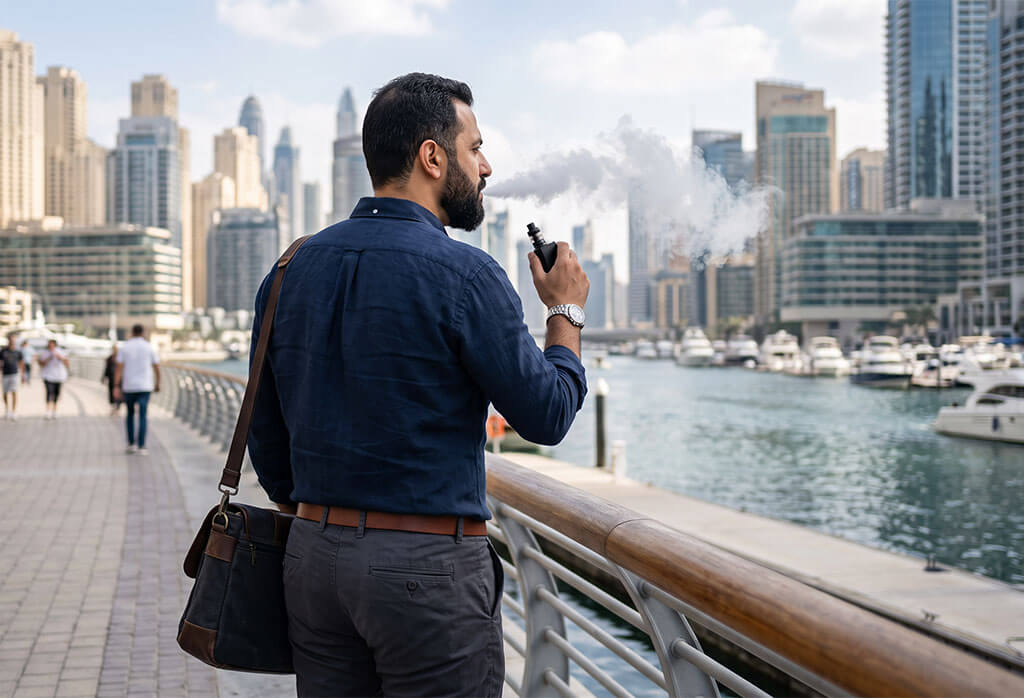
Dubai is the most photographed city in the world, according to a new ranking of how often destinations appear on social media and in search results.

The study comes from Players Time, which built a scoring system it calls an Instagrammability Score. It combines hashtag counts on Instagram and TikTok with monthly Google search volume, then scales the result from 0 to 100.

Dubai scored a perfect 100. The city has been tagged 147 million times on Instagram and more than 43 million times on TikTok. It draws 3.43 million Google searches a month.

The Burj Khalifa took first place in the separate landmarks ranking. The tower has 10.1 million tagged posts and 1.1 million monthly searches. That puts it well ahead of the Grand Canyon at 696,000 searches and the Eiffel Tower at 662,000.

That result is worth sitting with. The Burj Khalifa opened in 2010. It is now photographed and searched more than monuments that have been standing for centuries. The Eiffel Tower came second with a score of 73.22. The Taj Mahal and Machu Picchu both landed in the top group, with search volumes between roughly 854,000 and 928,000 a month.

Europe holds 8 of the top 20 landmark places. The Sagrada Familia and the Colosseum sit in that group, with monthly searches running from about 313,000 to 737,000.

Some places are ranked for the experience, not the building

A few entries in the landmarks list are not really buildings at all.

Shibuya Scramble Crossing in Tokyo generated more than 6.57 million posts. Up to 3,000 people cross at once, and most of the photos are taken from inside the crowd rather than from a viewing point. Times Square in New York works the same way, with 5.82 million posts.

The oddest entry is the DUMBO viewpoint near the Brooklyn Bridge, which has passed 4 million Instagram posts on its own. Search demand for it is modest. People are not planning trips there. They walk past, take the photo, and the number keeps climbing.

London posts more, Barcelona searches more

Among cities, London and Paris follow Dubai. London recorded the highest raw hashtag volume in the study at 192.2 million posts. New York City reached 165.6 million and Istanbul 153.7 million.

Barcelona is the outlier. The city recorded 97 million tagged posts and 23 million monthly Google searches, which is close to seven times Dubai’s search volume.

That figure deserves a caveat the study does not offer. “Barcelona” is also the name of one of the most followed football clubs on the planet. A raw keyword count cannot tell a fan looking for match results apart from a traveller looking for a hotel. The same problem may explain why San Diego, Santiago and Kochi appear in a ranking of visual destinations despite far lower travel profiles.

Players Time has not published the weighting behind its score, so the gap between hashtag volume and search demand is difficult to check independently. Hashtag counts are also self-reported by the platforms and change constantly.

The Dubai finding survives those questions better than most. The city leads on both measures at once, and it does so against capitals that have had a hundred years’ head start on accumulating images. The Burj Khalifa did the same thing at landmark level in sixteen years.

Google Fined €890 Million

Brussels fined Google €890 million on Thursday, the first penalty the company has taken under the Digital Markets Act and the sixth EU competition decision against it in under twenty years.

The European Commission split the amount across two separate findings. A €460 million fine covers self-preferencing in Google Search, where the Commission found the company gave its own shopping, hotel, transport and sports results better placement than competing services. The remaining €430 million covers Google Play, where developers were blocked from telling users about cheaper ways to pay outside the store.

Teresa Ribera, the Commission’s competition chief, framed the decision around ranking rather than size. “The best products should succeed because they’re better,” she said, arguing that European consumers have a right to hear from developers about better offers even when the store owner takes no cut.

Google has 60 days to change both practices. It has already said it may go to court.

Google says the fix breaks the product

Kent Walker, Google’s president of global affairs, said compliance will force the company to remove live search features in Europe, including instant hotel pricing and direct availability for flights and restaurants. He called the outcome “product degradation driven by a small group of self-serving complainants” rather than fair competition, and argued that steering users off Google Play carries security risks.

That argument has not landed. Ribera and EU tech chief Henna Virkkunen both used their briefings to restate that the rules apply regardless of where a company is headquartered.

The bigger story is what happens next

The more consequential detail sits below the fine. The Commission said Google has already proposed and begun testing changes to how it displays its own free services in search, and separately to how it presents shopping ads and sports content. Regulators described this as substantial progress and pointed to a constructive dialogue with the company.

In practice, that means daily non-compliance penalties, which can run to 5% of average daily worldwide turnover, are probably off the table. Apple and Meta, fined in April 2025 in the first DMA actions, did not get the same language.

The Commission also said Google may need to apply Thursday’s reasoning to AI Overviews and AI Mode, its generative summaries in search. Talks on that are continuing. For anyone tracking where this regime is heading, that line matters more than the €890 million. It is the first signal that the DMA’s ranking obligations will follow Google into AI-generated answers, where the distinction between a result and a recommendation gets much harder to police.

Politics in the background

The timing is awkward. The Trump administration has repeatedly cast the EU digital rulebook as a trade barrier aimed at American firms and has raised the prospect of retaliatory tariffs. US lawmakers have added their own pressure. Ribera’s answer, when asked, was that the Commission’s obligation is to enforce its own law.

Total EU antitrust penalties against Google now stand at roughly €10.38 billion, including the €2.95 billion adtech fine issued in September 2025 and the €4.34 billion Android decision from 2018.

Alphabet shares traded about 4% lower before the US open, though most of that reflected investor reaction to the AI spending plans laid out in Wednesday’s earnings, not the fine itself.

For businesses in the Gulf, the direct effect is limited. DMA obligations bite on what European users see, so app developers and travel firms operating here will not see Play Store terms change outside the EU. The precedent is what travels.

Emirates Economy Class upgrade

The latest Emirates Economy Class upgrade tackles a problem every long-haul traveller knows: falling asleep upright and waking with a sore neck. The company has announced that it has fitted a new headrest, called U-Dream, onto Economy seats. It supports your head and neck during sleep, and Emirates says you can leave the travel pillow at home.

What the U-Dream headrest does

The U-Dream headrest is a multi-way adjustable design. Padded leather side wings fold inward to cradle your head and neck. That keeps your head from dropping forward or tipping to the side while you sleep. It also moves up and down and tilts, so it lines up with passengers of different heights and body types.

The headrest is part of the Safran Seats Z400 Economy seat. It has been independently tested and certified to meet the safety standards of the European Union Aviation Safety Agency. Emirates says it is the first airline in the world to fit this technology at scale, bringing a level of support usually found in premium cabins.

Why this Emirates Economy Class upgrade matters for sleep

Standard Economy seats give little side support for the head. Many people pack a neck pillow to cope. This Emirates Economy Class upgrade announced by the company builds that support into the seat itself.

Sir Tim Clark, President of Emirates Airline, said:

‘Emirates never rests on its laurels when it comes to customer experience, and we have found a way to significantly improve the comfort for Economy Class passengers, especially those travelling long-haul. The U-Dream changes the game if the person wants to sleep – by supporting the neck in full. No more neck pillows needed. It’s another innovation that shows our commitment to customers and cements our Economy Class as the best.’

The leather surface wipes clean and is sanitised after every flight. Emirates says the headrest is easy to adjust, and cabin crew is trained to help passengers who need a hand.

Where and when you can use it

The U-Dream headrest already flies on three A350 aircraft. Emirates plans to fit every A350 in its fleet by the end of the year. The headrest will also come pre-installed on all 270 Boeing 777X jets the airline has on order.

From 2027, installation begins on retrofitted A380s and Boeing 777s. Over time, the feature reaches much of the long-haul fleet.

The move fits a wider pattern. This Emirates Economy Class upgrade lands during the airline’s multibillion-dollar fleet refurbishment, which has already refreshed cabins across its widebody aircraft. Premium cabins usually get the headlines, so a change aimed squarely at Economy passengers stands out.

For frequent flyers, the practical takeaway is simple. Before you book, check which aircraft runs your route. The seat you get may depend on whether that jet has been fitted yet.