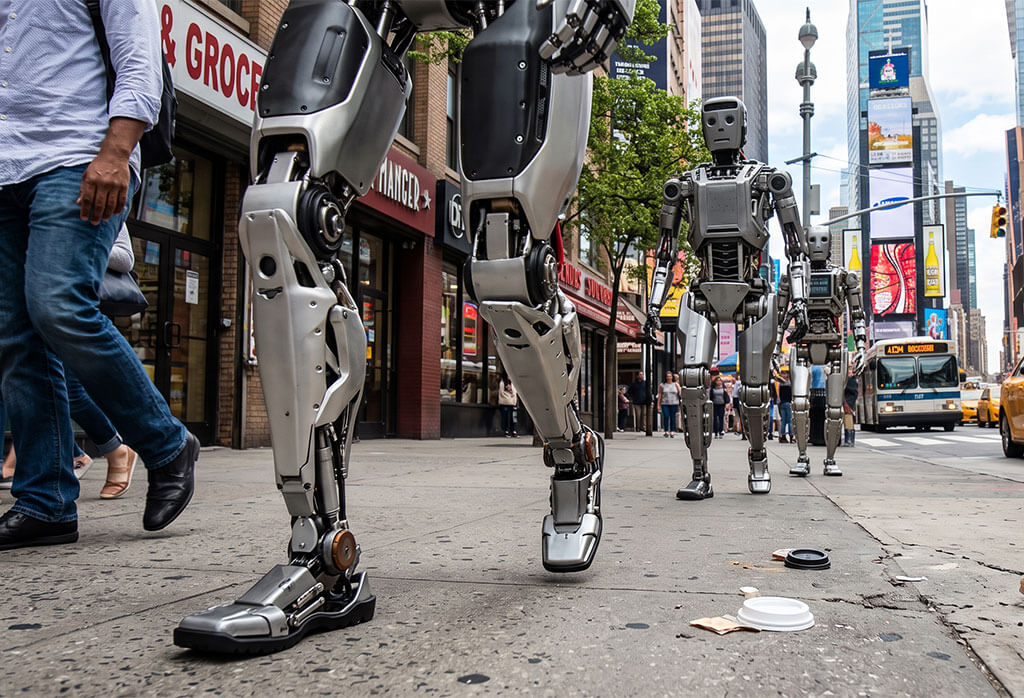



The US ban on Chinese robots arrived quietly, as a line item added to a government list of security threats. On Tuesday, the Federal Communications Commission placed foreign-made humanoid and quadruped robots on the FCC Covered List, the register of equipment judged too risky to authorize for sale. Connected power inverters landed there too. Those devices link batteries, solar panels, and data centers to the electrical grid, and many are built in China.
The paperwork looks narrow. Its reach is not.
What the ban covers
The order stops new models from entering the US market. It does not pull back robots or inverters people already own, and it leaves untouched any model the FCC approved before Tuesday. A company selling an authorized robot dog can keep selling it. One with a new humanoid ready to launch cannot, unless it earns an exemption.
FCC Chairman Brendan Carr said the goal was to secure American supply chains. The commission warned that foreign-made inverters could let overseas firms switch them off, take data, or open a door to remote access and surveillance. Robots assembled abroad, it said, could let hostile actors watch Americans or take control of the machines.
Why the US ban on Chinese robots matters now
The move points to a larger contest over technology. Chinese humanoid robots have spread quickly through factories and homes, and industry estimates put China’s humanoid robot market share as high as 85 percent, a figure that comes from later reporting rather than the FCC order itself. The country’s firms reached buyers before US rivals such as Tesla and Boston Dynamics could match their pace.
Speed is the worry. National security risks sit at the heart of the FCC case, yet industrial strategy runs close behind. By shutting out new imports, Washington buys time for domestic robot makers to grow. The US ban on Chinese robots also lands as the two governments prepare for a planned meeting between Trump and Xi Jinping in September.
Beijing’s answer
China rejected the reasoning outright. The Chinese embassy in Washington accused the US of politicizing trade and acting on groundless pretexts. It vowed to take all necessary measures to protect Chinese interests and pressed other nations to build AI for good. The embassy told Washington to drop what it called a hegemonic mindset and stop smearing Chinese firms.
China said its AI progress grew from its own work and from cooperation abroad, not theft. US Treasury Secretary Scott Bessent has warned that Chinese AI companies could face sanctions over claims they took American intellectual property.
Part of a wider push
The robot order fits a longer run of US restrictions. Washington has taxed Chinese electric vehicles out of the American market and blocked sales of advanced US chips to China. Last year Beijing pushed back by tightening export controls on rare earth minerals, the raw material behind much modern electronics. That pressure still shapes how carefully the US acts.
Trump raised alarms about the China tech threat during his first term, pressing worries about intellectual property theft and state-linked spying. His second term has been gentler, hemmed in by Beijing’s grip on rare earths. The US ban on Chinese robots shows how far the fight has moved, from phones and chips to the machines now walking into daily life.