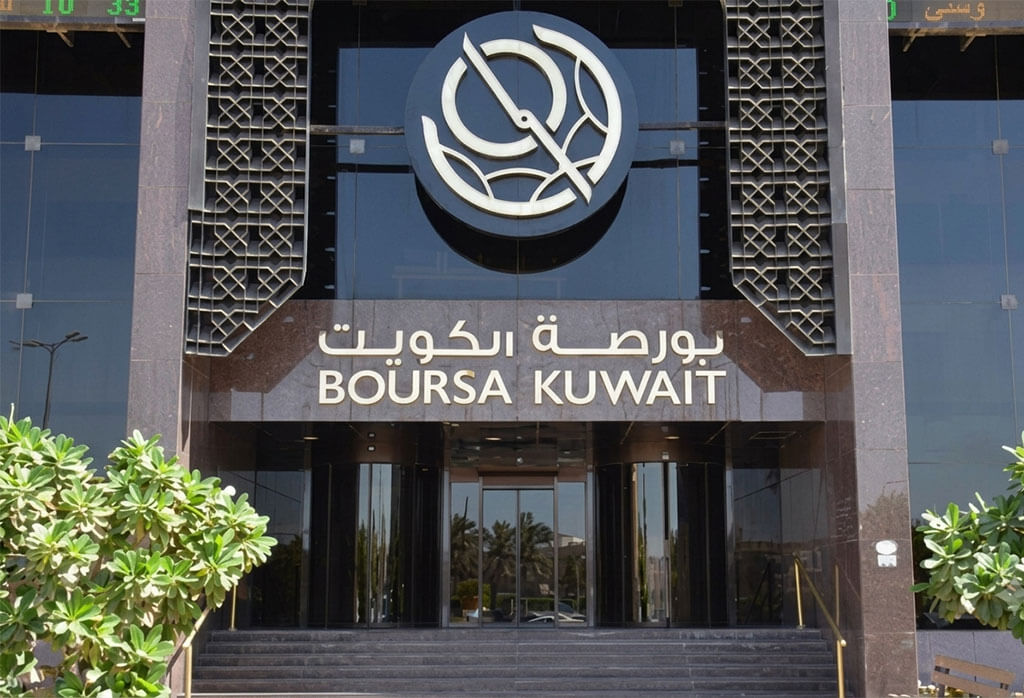



The Kuwait $6 billion bond sale closed this week with an order book the finance ministry calls one of the largest for a multi-tranche sovereign deal in 2026. Three tranches went out. Investors took $3 billion in three-year paper, $1.5 billion in five-year notes and $1.5 billion at 10 years. Final spreads landed at 70, 75 and 85 basis points over US Treasuries. It was the country’s first international issuance since October last year.
Pricing tells you more here than the headline number does. Kuwait tightened 25 basis points across all three tranches from its opening levels, according to a person familiar with the deal cited by Bloomberg. Buyers do not give up that much yield to a borrower they distrust.
Demand for the Kuwait $6 billion bond sale came in two versions. The finance ministry put total orders above $18 billion, more than three times the issue size. Bloomberg reported books near $14.8 billion at final terms. Peak interest and final interest are different numbers, and both can be accurate.
Who bought the Kuwait $6 billion bond sale?
American accounts took 48 percent of the allocation. The UK and Europe followed with 28 percent, then the Middle East and North Africa at 16 percent. Asia took 4 percent, and other international markets took the rest. Finance minister Yaqoub Al-Refaei said the result shows investor confidence in Kuwait’s credit position and financial standing.
The short end did the heavy lifting. Half the total sat in the three-year tranche, which points to buyers who want yield without long duration risk. Five- and 10-year paper gives other Kuwaiti borrowers a benchmark to price against.
Geography matters more than usual on this one. JPMorgan reclassified Kuwait as a developed market in February 2025 and removed it from its emerging market bond index. That move stripped out index-driven demand the country once attracted by default. Pulling almost half the book from the Americas without that support is a real result for a Kuwait sovereign bond issuance.
War risk barely moved the price
Iranian attacks have hit US military assets in Kuwait and Bahrain in recent weeks. Fixed income desks priced the three-tranche bond sale anyway. Gulf sovereign bonds already went through this test once, falling to lows in mid-March before climbing back through late April. Traders have a reference point now, and they used it.
Why Kuwait keeps borrowing
The arithmetic is plain. Kuwait’s 2026-27 budget forecasts revenue of KD16.3 billion against spending of KD26.1 billion. That leaves a Kuwait budget deficit of KD9.8 billion, up from KD6.3 billion the year before. Oil was expected to supply close to 80 percent of budgeted revenue, so disruption around Hormuz cuts straight into the top line.
Access came back through legislation. The Kuwait public debt law, approved in March 2025, set the borrowing ceiling at KD30 billion, roughly $97.4 billion, and allowed maturities out to 50 years. Political gridlock had kept the country out of the sovereign market for eight years before that. Since the law passed, Kuwait raised $11.25 billion in October 2025 and another $2 billion in May.
Kuwait is building a yield curve, and curves need repeat business. Each deal hands domestic banks and corporate borrowers a pricing reference they did not have. I read the Kuwait $6 billion bond sale as a curve-building exercise first and a cash-raising one second. The deficit is real. So is the sovereign wealth sitting behind it. What global investors bought this week was the legal framework and the balance sheet, not the news cycle.