
icnlive

WATCH LIVE. THINK BUSINESS.

© 2026 ICN.LIVE

ICN.live

  • UAE investors hit 98 percent AI use, the joint global top alongside India.
  • Around 83 percent use AI for finance work, above the 73 percent global rate.
  • Roughly 56 percent want a blend of AI tools and human advisers.
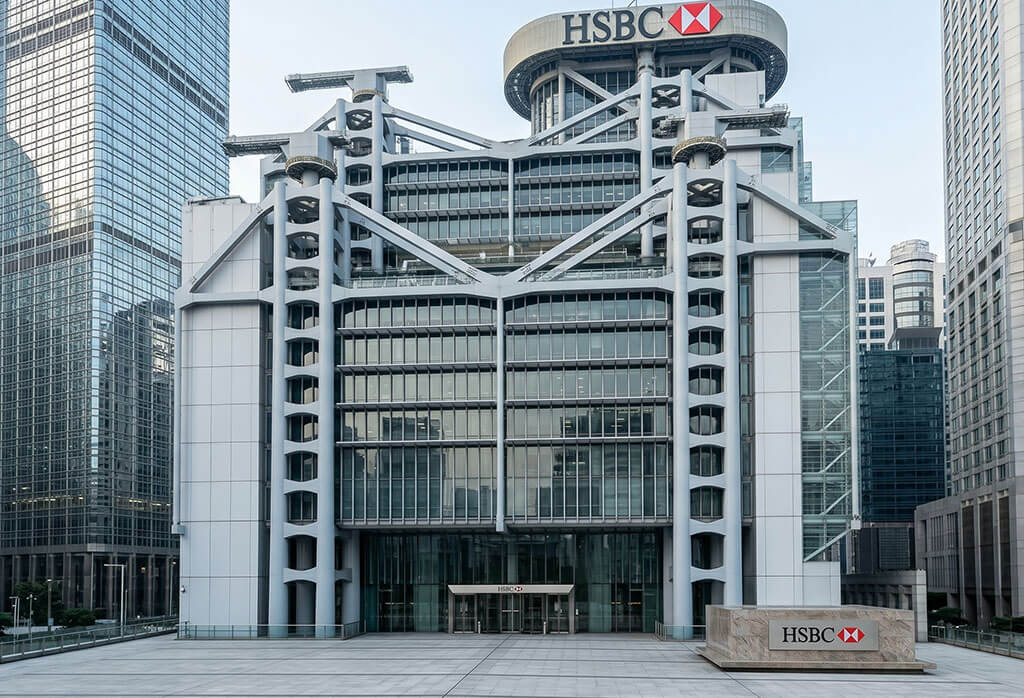
  • HSBC links the trend to national AI goals and its Wealth Intelligence platform.

HSBC issued an AI adoption in investing report showing how UAE investors now use these tools. Your money decisions sit at the center of this fast-moving shift across the country. Researchers surveyed 9,993 wealthy people across ten markets, including 703 investors based in the UAE. The numbers place UAE AI adoption right at the top, level with India worldwide. About 98 percent of these investors use AI somewhere in their daily lives right now. Britain sits near 76 percent, while the United States lands close to 75 percent.

What the report shows about the UAE’s habits

Most of these investors lean on AI for research, analysis, and quick idea generation. Around 83 percent apply these tools to finance work, above the global mark of 73 percent. Roughly 78 percent use AI investment tools for research, while 61 percent back a wider strategy. Confidence rises too, since 31 percent feel readier when they talk with their advisers. Another 27 percent compare options faster, and a similar share feels calmer under pressure. The HSBC issued an AI adoption in investing report that tracks these shifts in plain numbers.

Risk appetite also shifts as people gain more trust in these new digital helpers. Some 63 percent say AI helps them weigh calculated risks with much clearer eyes. India leads here at 64 percent, while the global average sits near 49 percent. Western markets trail behind, with the United States at 44 percent and Britain at 39. These investors also tie about 36 percent of recent returns to AI-guided choices. The global figure here sits a little lower, near 33 percent across all markets.

People still want a human voice before the money moves

Trust in human advisers stays strong, even as these smart tools grow more popular. About 56 percent want a hybrid wealth management model blending software and expert people. Nearly 39 percent explore with AI first, then check ideas with a trusted adviser. Barry O’Byrne, CEO of International Wealth and Premier Banking at HSBC, framed the pattern clearly. “Clients are not picking sides,” he said, since they blend speed from AI with human judgment. Craig Worobec, Head of Wealth and Premier Solutions for the Middle East, agreed strongly. He called UAE residents some of the most AI-literate people on the planet today. From my standpoint, this blend gives you speed without losing the calm of human advice.

The HSBC Human-AI Advantage study also tracked daily life well beyond pure portfolio numbers. Around 74 percent feel their quality of life has improved, against a global rate of 63 percent. Many also credit these tools with opening new doors in their careers and skills. Growing use of generative AI in finance ties closely to wider national goals here. The UAE National Strategy for AI 2031 treats the field as a core economic driver. A new Artificial Intelligence and Data Authority now guides data and digital government work. HSBC pairs the trend with tools like Wealth Intelligence, drawing on 10,000 data sources.

The HSBC issued an AI adoption in investing report, pointing to a clear hybrid future. You gain real speed from these systems, yet a trusted adviser still guides big moves. This HSBC report on AI adoption in investing gives you a clear picture of the UAE.


TAGS

EXPLORE MORE ON:

Superintelligence for everyone

Superintelligence for everyone is the bet Mark Zuckerberg placed this week. On August 10, the Meta chief published an essay titled The Future is for Everyone, and his argument runs simple. The most advanced AI should sit in your hands, not inside a handful of labs. What matters most, he wrote, is not who builds the strongest system first. It is who gets to use it.

The three ideas behind the plan

Zuckerberg built his case on three ideas. People, not big institutions, create prosperity. AI’s real value lies in helping you invent things rather than replacing your job. And safety comes from spreading power widely, so no single company or government can dominate. He calls his preferred version personal superintelligence, and he wants Meta to lead in building it.

Think of it this way. If one person owned a superintelligent lawyer, they could win in court even when they were wrong. Give everyone that same lawyer, Zuckerberg argues, and the system gets fairer. That thought experiment sits at the center of the Mark Zuckerberg AI vision laid out in the essay.

What Meta says it will build

Superintelligence for everyone starts, in Meta’s telling, with a personal assistant. Meta wants to put personal AI agents in front of billions of people. Zuckerberg described an assistant that works around the clock on your behalf, helping with your health, career, finances, relationships, and home. He said it would run with strong privacy, modeled on the encryption Meta uses in WhatsApp, so your information stays yours.

Cost sits at the heart of the pitch. Meta plans free versions for billions of users, plus a paid tier for people who want more computing power. Zuckerberg also said Meta superintelligence work now runs through Meta Superintelligence Labs, and the company will resume releasing some open-source AI models soon. No firm dates appear for when these tools reach users.

“Everyone will have an exceptionally capable personal agent that understands you, your goals, and everything you care about. Your agent will work 24/7 on your behalf to improve your relationships, health, career, finances, home management, hobbies, and more. It will free up time for the things you enjoy, and help you accomplish more than you could otherwise.”, Mark said.

Why the finance crowd is watching

Zuckerberg frames invention, not automation, as the real prize. He predicts new kinds of work, from one-person studios making custom products to small teams running sizable companies with a capable agent. That prediction rests on people gaining skills as fast as machines gain them. Whether that holds is uncertain, and he admits the transition could be hard for many workers.

The essay also answers a common worry about who benefits. Meta points to Richland Parish, Louisiana, where it is building a large data center. Teachers there received a 50,000 dollar bonus this year from the added tax revenue, the company said. Local promises like these form what Meta calls a community compact, backed by a fund for the towns it builds in.

Superintelligence for everyone, or a Meta pitch?

The essay reads as philosophy more than product news. It names no launch dates and no specific models. Superintelligence for everyone is the frame, yet the plan still runs on Meta’s platforms, Meta’s compute, and Meta’s terms. For readers weighing the promise, that tension is worth watching. The idea of superintelligence for everyone sounds open by design. Delivery, for now, sits with one company.

Abu Dhabi free visa

The Abu Dhabi free visa for Indian travellers is here, and the rules are refreshingly plain. Book a holiday of at least three nights in the emirate, and your UAE entry visa comes at no extra cost. The Department of Culture and Tourism, Abu Dhabi, known as DCT Abu Dhabi, covers the fee. That charge runs Dh285, or roughly $77 a person.

The offer began on August 1 and runs through October 31, 2026. During this pilot window, DCT Abu Dhabi will support up to 20,000 visas.

Who can claim it

Treat this as a targeted deal, not an open door. The Abu Dhabi free visa for Indian travellers applies to Indian passport holders who depart from India. You need to book through a participating travel partner or an online travel agency. Your stay must run at least three consecutive nights at a hotel in Abu Dhabi. A return flight from India is also required.

One detail matters here. Travellers cannot apply on their own. The free UAE visa for Indian tourists flows only through approved partners, so the package is the key.

Behind the scenes, travel companies have two ways to process the visa. One route uses a Destination Management Company appointed by DCT Abu Dhabi. Pick this path, and the department pays the visa cost directly.

The second option lets partners keep their existing destination management companies. Under this route, DCT Abu Dhabi reimburses Dh285 for every visa issued. Either way, you receive a UAE entry visa without paying more, and the Abu Dhabi holiday package carries the cost.

The math adds up fast. At 20,000 visas and Dh285 each, the pilot represents about Dh5.7 million, close to $1.5 million in direct travel support.

Why Abu Dhabi is targeting India

India sits near the top of Abu Dhabi tourism priorities. The Abu Dhabi free visa for Indian travellers extends a longer effort to strengthen air links and build closer ties with the travel trade. Cheaper entry means an easier yes for a family weighing a trip. Indian nationals also form the UAE’s largest expatriate community, nearly 35 percent of the population, with about 800,000 living in Abu Dhabi alone.

Abdulla Yousuf, Director of International Operations at DCT Abu Dhabi, framed the goal in market terms. He said India remains one of the destination’s most important international markets, and the department wants to keep making Abu Dhabi more accessible for Indian travellers.

Yousuf gave a second reason too. By covering the visa, he said, the department hands travel partners another strong reason to recommend the emirate. He pointed to longer stays as the payoff, with visitors spending more time across the emirate’s culture, entertainment, hospitality and natural attractions.

What travellers should check

So where does this leave you? If a three-night Abu Dhabi trip already sits on your list, the Abu Dhabi free visa for Indian travellers trims a real cost from the total. Ask your travel partner whether they take part before you pay. Book early. The 20,000 cap could fill before October, and once it does, the free window closes.

DFSA advances financial competitiveness

The Dubai Financial Services Authority (DFSA) has introduced a series of regulatory initiatives and technological updates to streamline procedures, expand digital asset regulation, and integrate agentic AI across its operations to bolster the Dubai International Financial Centre (DIFC).

Over the past 12 months, the regulator updated its crypto token regime and revised securities regulations to limit offering rules strictly to DIFC-based issuances, reducing operational overlap while maintaining investor protection.

Updated crypto token rules came into force in January 2026, granting licensed firms greater responsibility for assessing tokens under strict risk management guidelines. The DFSA also recognised three fiat-backed stablecoins for financial services within DIFC and signed a memorandum of understanding with the Virtual Assets Regulatory Authority.

The authority launched public consultations to update the Islamic finance framework and initiated its largest review of the collective investment funds framework since 2010.

On the supervisory front, the DFSA signed an agreement with the Ministry of Economy and Tourism to enhance information sharing while continuing enforcement actions against regulatory breaches, including misleading conduct and non-compliance with suspicious transaction reporting.

Mark Steward, Chief Executive of the DFSA, said the regulator is building on its 21-year foundation by applying a risk-based approach that offers flexibility and transparency. He noted that DIFC’s attraction rests on a framework providing regulatory certainty, reducing complexity, and aligning standards across the region.

The developments coincide with significant growth across DIFC-supervised sectors in 2025. Total assets of operating banks reached $251 billion, up 19 percent year-on-year, while capital markets recorded $30.6 billion in new listings, led by sukuk and ESG-linked instruments. DIFC now hosts 27 of the world’s 29 systemically important global banks and China’s top five banks, contributing to Dubai’s rise to seventh globally in the Global Financial Centres Index.

In line with the Dubai Economic Agenda D33 and DIFC Strategy 2030, the DFSA’s second annual AI survey published in November 2025 revealed that 52 percent of DIFC firms now use AI technologies—up from 33 percent in 2024—with 60 percent planning further expansion in 2026. The regulator is also advancing cybersecurity resilience by upgrading third-party technology risk management and broadening cyber threat intelligence sharing.


IMPORTANT: CONTENT SUBMITTED BY THE CLIENT. THIS IS A PRESS RELEASE ARTICLE. PLEASE READ THE INFORMATION BELOW.

ICN.live neither validates nor guarantees the accuracy, reliability, or quality of the information, promotional materials, or products mentioned herein. Readers are encouraged to conduct independent due diligence before making any decisions related to the featured company. ICN.live bears no responsibility, directly or indirectly, for any harm, loss, or consequences that may result from reliance on or interaction with the content, services, or offerings described in this release.

The details shared in this announcement do not constitute financial, trading, or investment guidance. Readers are strongly advised to carry out independent research and seek advice from a qualified financial professional before making any investment or cryptocurrency-related decisions.

Share this post

on your favourite social platforms

or copy the link