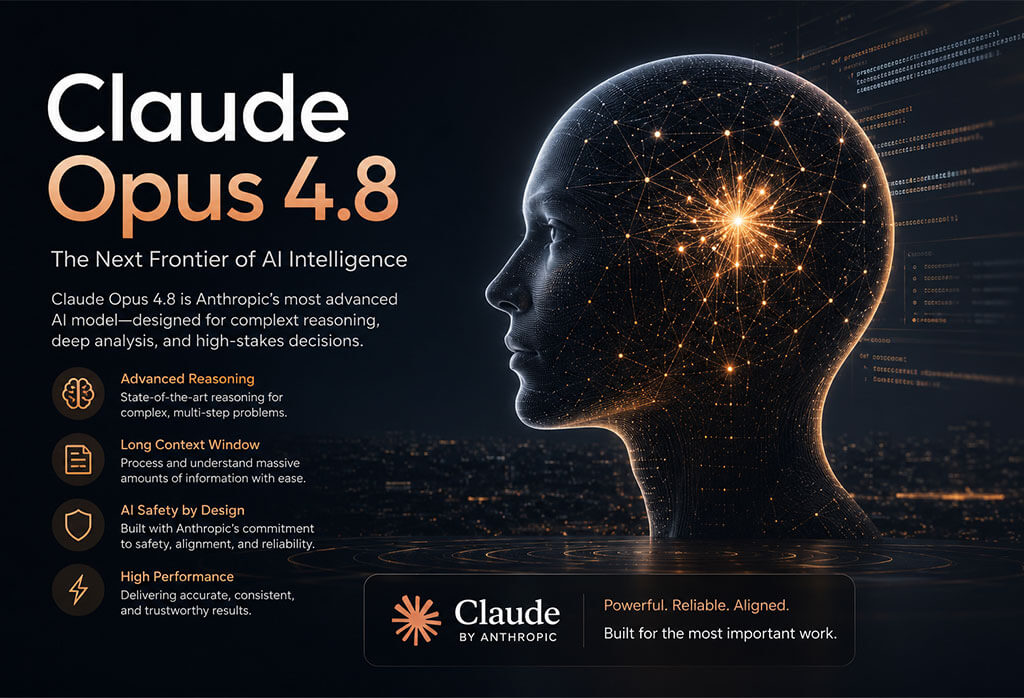


Claude Opus 4.8 AI model arrives as Anthropic pushes its flagship system toward harder engineering work. The company built the release for long software projects, agent tasks, and detailed analysis. Anthropic released the upgrade on a Thursday and kept the same price as before. You pay five dollars per million input tokens and twenty-five per million output tokens.
The new system reduces silent errors, a common weakness across large language models today. Anthropic says the model flags four times fewer hidden code flaws than its predecessor. You can read this gain through one clear benchmark from the company’s internal testing. The Claude Opus 4.8 AI model scored 69.2 percent on the SWE-Bench Pro metric. This score measures agentic coding, where the model plans and finishes tasks on its own. The result tops earlier versions and shows steady progress on real engineering benchmark tests. Anthropic claims the model beats rival systems from OpenAI and Google on key tests. These wins cover agentic coding, financial analysis, and computer use across several public benchmarks. Developers gain more than raw scores from the latest release by the AI company. Anthropic added several new tools across its platform, including Claude.ai and the Cowork surface. One headline feature now sits inside Claude Code and changes how large jobs run.
Dynamic workflows reshape how Claude Code handles scale
Dynamic workflows let the model break a huge codebase into many parallel processing tracks. The feature then deploys hundreds of small agents to work at the same time. Each agent tests and validates its output before the system returns a final result. Anthropic says the model now catches its own mistakes and warns you about them. Early testers report fewer false claims and more honest progress updates from the model. You get faster work on tasks that once stalled large teams for many hours.
Claude Opus 4.8 AI model gives you new effort control
Anthropic also built an effort control mechanism into the Claude Opus 4.8 AI model. This control lets you decide how deep the reasoning goes for each separate query. You can add power for heavy research loops or scale down for quick tasks. Lower effort settings also help you preserve API rate limits and cut running costs. An adaptive thinking mode trims token use during lighter conversation turns with the model. Developers can also update the system prompt mid-conversation without losing helpful prompt cache hits. This setup helps you run long sessions with steadier speed and lower token waste.
Why the launch matters for your daily work
The Claude Opus 4.8 AI model now ships with a default one-million-token context window. You can hold far more code or text in a single working session now. The launch lands as Anthropic and OpenAI both prepare public market debuts this year. Anthropic frames this upgrade as a modest yet solid step beyond the older Opus 4.7. Company statements say early testers found the system sharper and more reliable on agentic tasks. From my standpoint, this release rewards patient users far more than those chasing flashy promises. You gain steadier output, clearer error flags, and tools tuned for real production work. The Claude Opus 4.8 AI model now stands ready for your hardest coding sessions.