


Parkin’s regional growth plans now stretch past the UAE, after the Dubai-listed parking operator signed a memorandum of understanding to take its technology into Egypt.
The agreement brings in three local partners: Modon Misr for Asset and Facility Management, transport services provider Mwasalat Misr, and Redcon Properties. They control the ground. Parkin brings the cameras and the software.
What the Egypt agreement covers
The partners plan to deploy Automatic Number Plate Recognition parking systems, AI-enabled parking cameras, barrierless entry, digital permits and parking management platforms across assets the Egyptian companies already run. They will also work out technical, operational and commercial models that suit the Egyptian market.
Read that carefully. An MoU is a framework, not a contract. No sites, dates or pricing have been fixed.
Parkin says the goal is better parking efficiency and a smoother experience for drivers in Egypt’s growing cities. Chief Executive Mohamed Abdulla Al Ali called the deal a step in the company’s regional expansion, and said technology, data and operational know-how would carry the weight in building parking systems that work.
Inside Parkin’s regional growth plans
Line up the past four months and the pattern gets obvious.
In May, Parkin Company PJSC signed a long-term framework agreement with Sharjah master developer Arada, covering up to 9,900 spaces at the Aljada megaproject, phased between 2026 and 2030. The smart paid parking system there went live on 15 July, the company’s first paid operation outside Dubai. On 10 August came an MoU with Abu Dhabi’s Q Mobility, the operator behind Mawaqif, aimed at linking digital payments and AI-driven occupancy management across the two emirates.
Egypt is the first step outside the country altogether. Parkin’s regional growth plans have moved from one emirate to three markets in under four months, and every deal so far has been a partnership rather than a purchase.
Why the technology travels
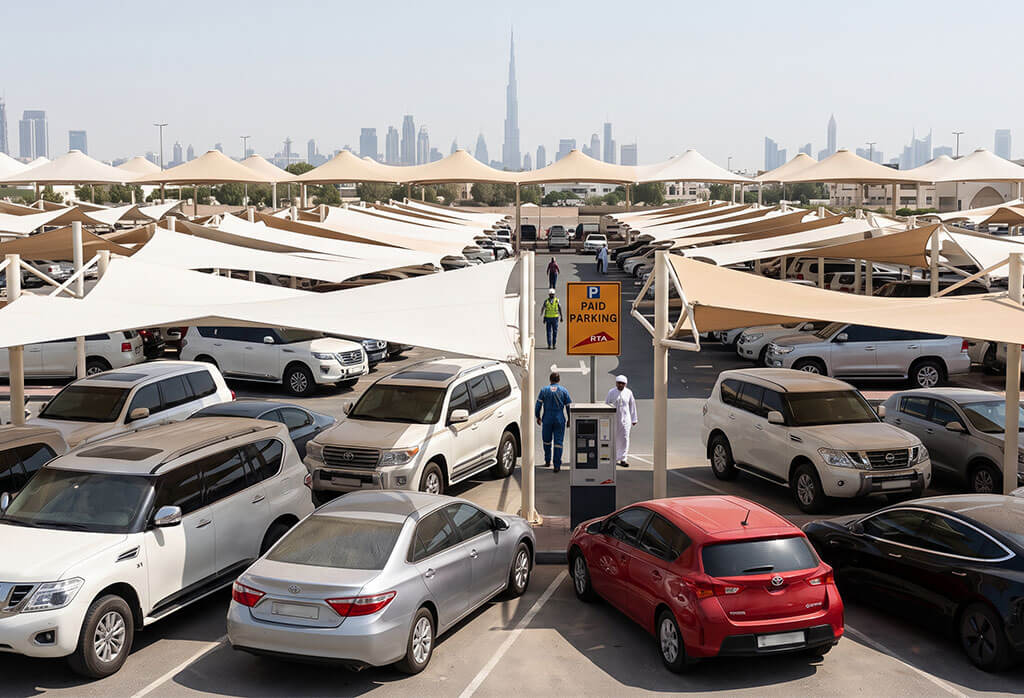
Parkin holds a 49-year concession over Dubai’s paid public parking. That covered roughly 229,000 spaces at the end of 2025 and 141 million transactions last year. Volume at that scale teaches a system what a busy Thursday evening looks like, and that learning is the exportable part.
Think of a car park as a checkout lane. The old version needed a ticket, a barrier, and a queue behind whoever lost their ticket. The smart parking solutions UAE operators have been rolling out since 2024 read the plate on the way in, start the clock, and charge the wallet on the way out. Nobody stops. Nobody hunts for coins.
That model does not care which country the tarmac sits in, which is why Parkin smart parking systems can move across borders faster than physical infrastructure usually does.
What Egyptian drivers could see
Egypt keeps building new cities and communities, and each one arrives with parking demand attached. Modon Misr chief executive Mohamed Aboutaleb said the partnership could support how parking and mobility develop as that construction continues.
For now, nothing is switched on. The partners still have to agree on what the technology costs, who operates it, and where it lands first. Parkin Egypt remains an intention on paper.
Watch the next announcement instead. If a named development and a go-live date appear, the Egypt move stops being exploratory and starts being a business.