

icnlive

WATCH LIVE. THINK BUSINESS.

© 2026 ICN.LIVE

ICN.live

PUBLISHED BY ICN PRESS

  • Iran-US ceasefire accusations rose after both nations launched new strikes near the Strait of Hormuz.
  • The United States hit Iranian missile and radar sites following a drone attack on a ship.
  • Iran claims it targeted US positions in the region, though officials gave no clear proof.
  • The memorandum of understanding signed this month now faces a serious test over maritime control.

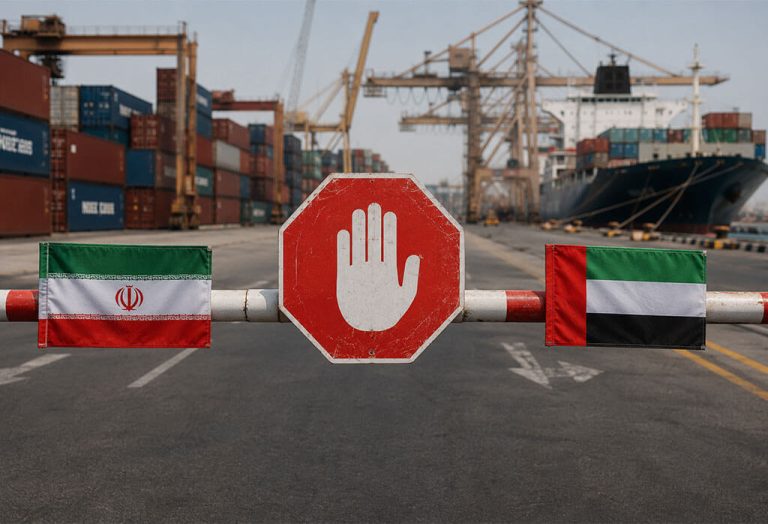
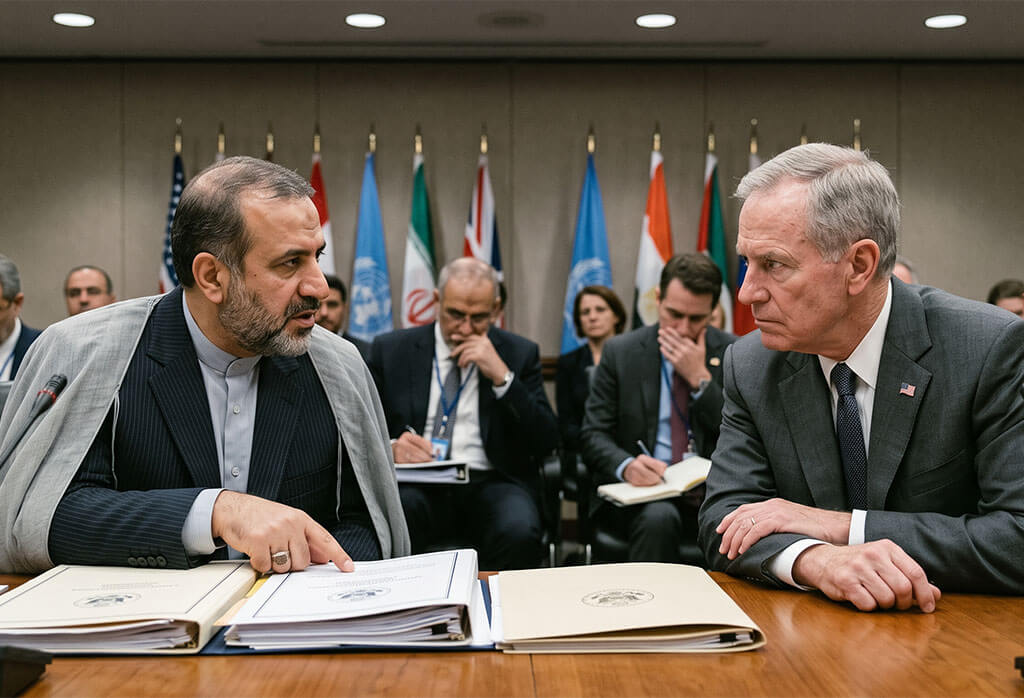
Iran-US ceasefire accusations now dominate headlines as both governments blame each other for fresh violence. Tehran said on Saturday it struck American sites across the Persian Gulf in response. Washington had earlier hit Iranian weapons sites on Friday, raising the stakes for everyone. American aircraft targeted missile storage and coastal radar posts during the Friday operation near Iran. Those strikes answered an Iranian drone attack on a Singapore-flagged container ship last Thursday. The vessel crossed the Strait of Hormuz when the drone struck its upper deck. No crew members suffered injuries, and the ship kept moving along the Omani coast. US officials called the attack an unwarranted strike against free movement through the waterway.

Pressure builds over the Strait of Hormuz attack

Iran’s foreign ministry called the US action a clear breach of the signed memorandum. You should know that the memorandum of understanding that Iran signed aimed to ease maritime tension. The deal promised open shipping lanes and fresh nuclear talks in exchange for sanctions relief. Iran’s Revolutionary Guard claimed it hit US positions, yet it offered no firm evidence. Past Iranian retaliation claims stayed unconfirmed, so caution shapes how you read these reports. US Central Command stayed silent when reporters asked them directly about the Iranian claims.

Iran-US ceasefire accusations test a fragile peace

Iran-US ceasefire accusations now threaten the fragile calm seen across the wider region recently. A US official told CNN the Friday strikes did not signal full combat for now. Vice President JD Vance said the United States honored the deal it signed with Tehran. On X, Vance wrote, “violence will be met with violence,” warning Tehran against further attacks. Some progress appeared in Lebanon, where Israeli forces fight the Tehran-backed armed group Hezbollah. The two sides and the US signed an early deal meant to build lasting peace.

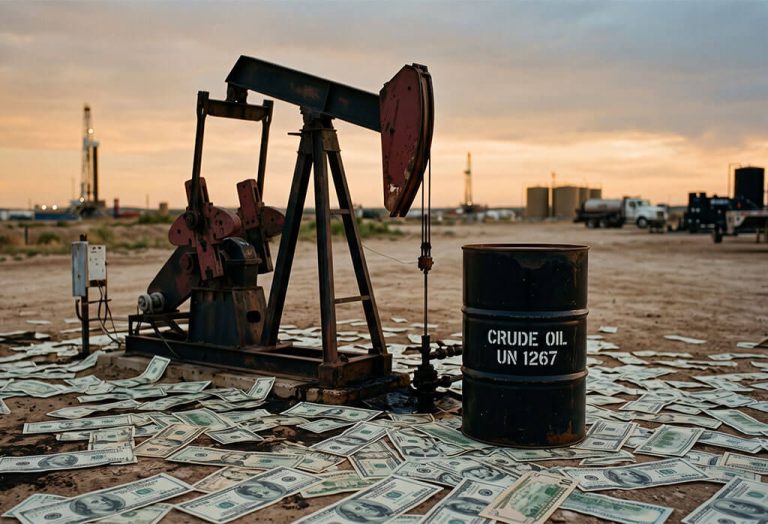
When the US strikes Iran, oil markets often react fast to the rising risk. You feel the effects through fuel prices and broader market confidence over the coming weeks. Trump warned he would resume military action if Iran breaks the agreed terms again. The 60-day truce covers vessel passage and nuclear talks tied directly to sanctions relief plans. As I see it, this dual strategy slows trust between the two wary governments. Each Iranian ceasefire violation claim pushes both nations closer to wider open conflict again. Reports show the Iran-US ceasefire still holds in parts despite the new strikes.

Why Iran-US ceasefire accusations matter for global trade

Iran-US ceasefire accusations affect oil flows through one of the world’s busiest trade routes. About one-fifth of global oil moved through the strait before the conflict began. Traders watch each new strike because supply shocks lift prices quickly across world markets. You should track these events closely if your costs depend on a stable energy supply. Bahrain reported Iranian drone attacks on its land, which hosts an American military base. Kuwait said it intercepted incoming attacks while sirens warned its worried residents to hide. These wider attacks show how fast a small clash can spread across the Gulf. For now, both sides keep talking while still trading strikes near the contested waterway. The coming weeks will show whether this fragile deal survives the rising public anger.

TAGS

EXPLORE MORE ON:

OpenAI's executive departures continue

OpenAI’s executive departures continue, and the newest one hits a corner of the company that decides how fast its AI can grow. The Wall Street Journal reported that Chris Malone, the OpenAI head of data centers, left last week. He joined in March 2025 after more than a decade at Google and nearly five years at Meta, so his run at the lab stayed short.

Picture what that seat holds. Every AI model needs computing power, and that power needs buildings packed with servers. The person steering that work holds one of the most watched jobs in the field. When they leave, people pay attention.

A short-lived reorganization?

Before Malone left, OpenAI changed the shape of his role. He stopped reporting to president Greg Brockman and began reporting to vice president Sachin Katti, who took over the group. In a statement, OpenAI said it had “recently reorganized” its infrastructure organization to match the scale and pace of its work. The company said it keeps a deep data center team with clear leadership.

Several leaders now share the load. Uday Ruddarraju runs the data center team. Brent Mayo handles build and delivery. Spas Lazarov, a veteran of the data center and energy sectors, leads all data center engineering.

Why OpenAI’s executive departures continue to draw scrutiny

Malone is not walking out alone. His exit follows a long run of OpenAI executive departures, and Business Insider counted 13 in 2026, with several in the past month. These are not junior staff. They sit near the top. OpenAI’s executive departures continue at a pace few large companies would shrug off.

Two weeks ago, OpenAI replaced chief revenue officer Denise Dresser after roughly eight months. Days before that, longtime chief operating officer Brad Lightcap said he would leave to “start something new,” though he shared no plans. About a month earlier, Fidji Simo stepped down as the company’s second-in-command to recover from a “chronic illness.” She stays on as an adviser.

The safety and ethics side has thinned too. OpenAI lost its head of ethics, Chloé Bakalar, in July. Reports also said the company disbanded its preparedness team, the unit that studied whether its models could cause catastrophic harm. Some leaders left because their projects closed. Bill Peebles, who ran the shuttered image tool Sora, was one. Kate Rouch, the former chief marketing officer, left in April for health reasons.

What the OpenAI executive exodus means before the IPO

The company plays down the OpenAI executive exodus. Brockman has said the bright spotlight on the company means every exit gets picked apart in a way rivals avoid. There is truth in that. Even so, the pattern raises real questions.

Reporting from CNBC and Bloomberg points to a shift in strategy. The company has leaned less on the Stargate project and moved toward leasing data center space from cloud providers. That change helps explain the reshuffle around Malone’s team.

Timing sharpens the worry. OpenAI’s public listing, once expected this year, is now reported to be pushed to 2027. A looming OpenAI IPO in 2027 brings a hard look at the numbers. Reporting has questioned whether the company is overvalued and whether its profit can match the huge sums flowing in. As OpenAI’s executive departures continue, investors will weigh what the churn says about the company, while the people still inside keep the work moving.

Turkiye Exports to Islamic Countries

Turkey’s exports to Islamic countries reached $41.5 billion in the January to July period of 2026, according to figures released by the Trade Ministry on Monday. The total marks a rise of $345.7 million, or 0.8%, from the same period a year earlier. Growth was modest in percentage terms, but the underlying trade relationship with the Organization of Islamic Cooperation continues to widen.

Total foreign trade volume between Turkiye and OIC member states climbed 2.2% year over year to $69.2 billion over the same seven months. That figure includes both exports and imports, and it points to a broader commercial relationship than exports alone suggest. The ministry framed the numbers as part of a longer structural push rather than a single seasonal gain.

A strategy years in the making

The export growth sits inside a formal government plan. The Trade Ministry’s Strategy for Developing Exports with OIC Members is built into Turkiye’s 2026-2028 Medium-Term Program, and it sets a specific target. Ankara wants the share of OIC countries in Turkiye’s total exports to rise from 27% today to 30% by 2028. That is not a large jump in percentage points, but it represents billions of dollars in additional trade if achieved on the current export base.

To get there, the ministry studied the economic and commercial data of OIC members and picked out 21 countries for first-phase focus. The list spans Azerbaijan, Bahrain, Bangladesh, the United Arab Emirates, Algeria, Indonesia, Morocco, Ivory Coast, Qatar, Kuwait, Libya, Malaysia, Egypt, Nigeria, Uzbekistan, Pakistan, Senegal, Saudi Arabia, Tunisia, Jordan and Oman. These markets were chosen because ministry analysis flagged them as holding the strongest near-term commercial potential for Turkish exporters, based on existing trade patterns and demand signals in each economy.

The OIC itself provides the backdrop for why this matters at scale. Founded in 1969 to strengthen cooperation and solidarity among Islamic countries, the organization now counts 57 members. Together they represent close to a quarter of the world’s population, yet only about one-tenth of global income. That gap between population share and income share is the commercial opportunity Ankara’s strategy is built around.

A decade of steady expansion

Turkiye’s trade volume with OIC countries has followed a long upward path. It stood at $87.6 billion in 2013 and reached $119.1 billion by 2025, an increase of roughly 1.4 times over twelve years. That is gradual growth rather than a sudden surge, consistent with a trade relationship built on expanding market access and diplomatic engagement rather than one-off deals.

In 2025, three countries anchored Turkiye’s OIC trade. The United Arab Emirates led at about $19 billion, followed by Iraq at $14.3 billion. Egypt and Kazakhstan each accounted for roughly $7.9 billion. Those four relationships alone made up a substantial share of Turkiye’s total commercial activity with the OIC bloc last year.

Where 2026 gains concentrated

The first seven months of 2026 showed uneven movement across individual markets, with some countries posting sharp increases even as the overall growth rate stayed modest. Egypt recorded the largest rise in Turkish exports by value, climbing $522.2 million to reach $2.8 billion. Libya followed with an increase of $438.5 million, bringing its total to $2.2 billion.

Exports to Syria rose $296.8 million to $2.1 billion, a notable figure given the country’s ongoing reconstruction needs. Jordan rounded out the top gainers, with exports climbing $227.5 million to $1.3 billion. These four markets, Egypt, Libya, Syria and Jordan, drove much of the incremental growth in Turkiye’s exports to Islamic countries this year, even as the aggregate 0.8% rise reflects a more mixed picture across the full 21-country list.

The pattern fits the wider structural shift the ministry has been describing. Turkiye is not chasing volume in its largest existing markets alone. It is building depth across a broader set of economies, betting that population growth and rising income across the Muslim world will keep expanding demand for Turkish goods through the rest of this decade.

UAE's First Transition Finance Framework

UAE’s first transition finance framework has arrived, and it changes how carbon-heavy companies in the country can access funding for their shift away from fossil-heavy operations. Emirates NBD built the framework specifically for corporate and institutional clients whose businesses cannot yet meet the strict criteria of green finance, but who are taking real, measurable steps to cut emissions.

Why this gap needed filling

Think of green finance as a club with a strict entry test. A solar farm gets in easily. A steel plant working to cut its carbon footprint does not, even if it is making genuine progress. That plant still needs capital to fund the changeover, and until now, the UAE market had no dedicated structure for financing it. UAE’s first transition finance framework fills that gap by defining what counts as credible transition activity, rather than requiring businesses to already be green.

The framework applies to high-emitting and hard-to-abate sectors: manufacturing, mining, power and energy, real estate, transport and storage, agriculture and information technology. These industries share a common problem. They are often complex, capital-intensive, or lack a commercially viable zero-carbon alternative right now. A cement producer cannot simply swap its kilns for clean equivalents overnight. Emirates NBD’s methodology gives lenders a consistent way to assess which projects in these sectors deserve transition funding, based on emissions reduction, energy efficiency gains, and adoption of cleaner technologies.

Built on international standards

Emirates NBD did not write this framework in isolation. It drew on the ICMA Climate Transition Finance Handbook, the ICMA Climate Transition Bond Guidelines 2025, and the Loan Market Association’s Guide to Transition Loan Finance 2025. That grounding matters for credibility. A framework built only on internal judgment invites skepticism from investors who want proof that “transition” labels mean something real, not a marketing gloss on business as usual.

To back that credibility, the bank commissioned DNV Assurance to deliver a second-party opinion on the framework. An outside assessor reviewing the methodology gives clients and investors a check beyond the bank’s own claims. Vijay Bains, Chief Sustainability Officer and Group Head of ESG at Emirates NBD, said the framework builds on the bank’s existing sustainable finance and sustainability-linked financing tools, and will help support the transition of the real economy across the UAE and the wider region.

Part of a larger target

UAE’s first transition finance framework does not stand alone. It sits inside Emirates NBD’s broader push to mobilize $30 billion in sustainable and transition finance by 2030. The bank said the new structure will help channel capital toward decarbonization, industrial transformation and long-term resilience projects, giving it another instrument alongside existing green and sustainability-linked products.

The initiative also connects to a bigger regional goal. Emirates NBD is supporting the UAE Banking Federation’s ambition to mobilize AED 1 trillion in sustainable finance by 2030. That figure covers the entire national banking sector, and frameworks like this one are the mechanism through which individual banks contribute their share.

What clients get from it

For a company in one of the covered sectors, the practical benefit is clarity. Before this framework, a business pursuing decarbonization had few consistent signals on which projects would qualify for transition financing versus standard corporate lending. Now, clients get defined criteria covering emissions reduction, energy efficiency upgrades, cleaner technology adoption and shifts toward lower-carbon business models. Investors benefit too, since a shared methodology makes it easier to compare transition claims across borrowers rather than evaluating each one from scratch.

The framework does not promise instant transformation of the region’s heaviest emitters. What it offers is a structured entry point, one that treats credible progress as fundable even when a business has not yet reached green status. For sectors that make up a large share of the UAE’s industrial base, that distinction could shape how quickly decarbonization investment actually moves.

Share this post

on your favourite social platforms

or copy the link