 Bitcoin
  Ethereum
  Tether
  BNB
BNB  Solana
  XRP
XRP  USDC
USDC  Lido Staked Ether
  Cardano
  Avalanche


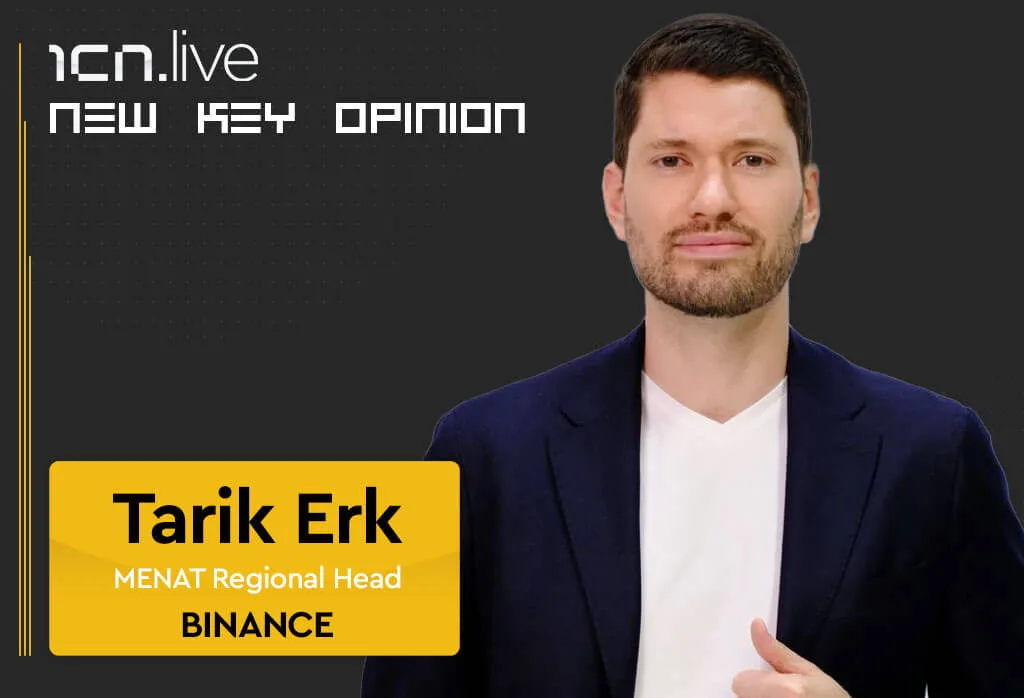
ICN.live Key Opinion | EXCLUSIVE Interview with Tarik Erk.
Tarik Erk is a regulatory and market expansion leader with over a decade of experience delivering compliant growth across financial services and digital assets. With experience across global banking and crypto infrastructure, including roles at Paxos, JPMorgan Chase, and Commerzbank, Tarik Erk, originally from New York, has led market launches, product execution, and government engagement in complex jurisdictions. Before Binance, he drove the expansion of regulated digital asset operations across the Middle East and Africa, focusing on establishing sustainable, license-ready platforms.
Liquidity Fragmentation & Market Structure Shift
Liquidity fragmentation is accelerating at an unprecedented pace, and just as CEXs’ competition intensity was not enough, a new force emerged: on-chain prediction markets absorbing retail and speculative liquidity at exponential speed. From your vantage point, does this represent a material competitive threat to Binance’s long- term position? Is Binance actively evaluating the development of its own prediction-market infrastructure?
From Binance’s perspective, it is encouraging to see the industry continue to evolve and take on new forms, including the emergence of on-chain prediction markets. These types of platforms naturally attract different user segments and use cases, contributing to further liquidity dispersion across the ecosystem.
We have seen similar cycles over the past decade, from the rise of NFTs and parachains to tokenized real-world assets. Prediction markets are a natural extension of this progression and are increasingly becoming another way users engage with digital assets rather than a direct substitute for spot or derivatives trading on centralized exchanges.
As a result, we do not view this trend as a material competitive threat, but rather as a signal of increasing adoption and experimentation across the digital asset economy. When new products and use cases bring more users into the ecosystem, the entire industry benefits through deeper understanding, broader participation, and stronger long-term foundations.
At Binance, we recognize that users have different objectives and preferences. Some may come to Binance for long-term investment, liquidity, and infrastructure, while others may engage with on-chain platforms for more niche experiences. Much like in traditional finance, there is no single “right” way to deploy capital. Though we do track industry movements to assess what users may be most interested in, our focus remains on championing the industry’s growth and improving Binance’s infrastructure and user experience.
The Next Institutional Catalyst
We’re now seeing near-daily partnership announcements between major banks and blockchain infrastructure providers developing institutional-grade stablecoin systems. A clear sign that adoption has reached a strategic inflection point. What do you see as the next major industry catalyst capable of attracting the same level of institutional interest and capital commitment? Do we still have a ‘white rabbit in the hat’ that could surprise the market at scale?
In recent months, there has been increasing discussion around whether crypto has moved beyond its adolescence and into a more mature phase. That perspective is both exciting and, in many ways, accurate. The industry has made meaningful progress on trust, safety, regulation, and compliance, although challenges around education and adoption remain, particularly in emerging markets such as the Middle East.
From Binance’s perspective, the growing involvement of major financial institutions is a clear signal that digital assets have reached a strategic inflection point. We are seeing traditional players integrate stablecoin systems and collaborate with blockchain infrastructure providers, reinforcing the legitimacy and long-term value of this industry.
Looking ahead, the next major catalyst is unlikely to be a single speculative breakthrough. Instead, it will be the continued build-out of institutional-grade infrastructure: regulated stablecoins, tokenized real-world assets, improved on- and off-ramps, and seamless user experiences that bridge traditional finance and blockchain technology.
If there is a “white rabbit in the hat”, it lies in scale rather than surprise. When compliant infrastructure, strong regulation, and intuitive user experience converge, digital assets move from an emerging asset class to a core component of the global financial system. This shift marks the industry’s next chapter, one defined not by hype but by utility, trust, and long-term adoption.
Binance’s Ecosystem Complexity Management
Binance today operates as the world’s largest blockchain ecosystem, spanning the exchange, CoinMarketCap, Square as a social app, and a growing portfolio of products. From an educational and ecosystem-architecture perspective, what are the core structural frictions at your level right now? Is the pressure on orchestrating ecosystem growth at scale, on sustaining execution velocity, or on managing the complexity that comes with building a globally regulated platform?
Education remains one of the most persistent structural frictions in driving global digital asset adoption. Crypto still has a steep learning curve, and that can feel intimidating for new users, which is something we understand well. That’s why initiatives like Binance Academy and ongoing educational content across our owned channels are so critical as we enter new markets and scale globally.
At the same time, operating at Binance’s scale introduces a different kind of complexity. Orchestrating ecosystem growth across multiple products, markets, and regulatory environments while maintaining execution velocity is a constant balancing act. As a global organization with teams around the world, we invest heavily in coordination, governance, and internal alignment to ensure innovation does not come at the expense of safety or trust.
Ultimately, the pressure is not choosing between speed, scale, or regulation, but managing all three in parallel. Our focus is on growing organically and intentionally, moving at the pace of the industry while ensuring we build systems, tools, and safeguards that are resilient enough to support the next phase of global adoption.
From Exchange to Infrastructure
Given Binance’s scale and legacy in the digital assets space, the company has increasingly moved from market participant to ecosystem shaper. From your perspective, what institutional systems, regulatory relationships, and internal governance frameworks have been most critical in building Binance’s regional licensing footprint, and what still needs to evolve for regulation to become a seamless, “default” part of how the industry operates?
MENAT has evolved rapidly in recent years, particularly in markets like the UAE, where regulatory openness and long-term thinking have created an environment for digital assets to mature responsibly. The region has struck an important balance between encouraging innovation and putting safeguards in place, accelerating the shift from speculative activity toward institutional participation and real-world financial integration.
For Binance, building a regional licensing footprint has relied on three core pillars: strong regulatory relationships, institutional-grade systems, and more formalized internal governance. Close collaboration with regulators has been essential, alongside significant investment in compliance, risk controls, market surveillance, and secure infrastructure that can operate at scale. Internally, Binance has continued to embed compliance and accountability into decision-making as the business has grown.
This approach has supported progress across the region, including our ADGM license in the UAE, regulatory momentum in Pakistan, and partnerships in Bahrain. Looking ahead, for regulation to become a seamless default across the industry, greater global alignment, clearer standards, and continued regulator–industry collaboration will be critical as digital assets become more embedded in everyday financial life.
Compliance becomes a catalyst for Growth
As crypto moves from a specialist domain into everyday financial life, trust, usability, and compliance have gone beyond a nice-to-have and are now essential. How has Binance’s perception of compliance changed, and how is it reinforcing Binance’s next phase of evolution?
As crypto continues to move from a specialist domain into everyday financial life, Binance’s view of compliance has fundamentally evolved. What was once seen across the industry as a necessary safeguard is now understood as a core enabler of trust, scale, and long-term adoption.
As the market matures, compliance is no longer a constraint on innovation, but a driver of sustainable growth. Binance has invested heavily in building robust, institution-grade compliance and risk frameworks that protect users while supporting responsible expansion. In 2025 alone, these controls helped prevent $6.69 billion in potential fraud and scam losses, safeguarding more than 5.4 million users globally. The company also processed over 71,000 law enforcement requests, reflecting deeper cooperation with authorities and a more formalized approach to governance.
For MENAP markets in particular, where regulators are developing digital asset frameworks alongside rapid fintech growth, this compliance-first mindset is central to Binance’s regional strategy. By embedding trust, safety, and regulatory alignment into its core infrastructure, Binance is positioning itself for its next phase of evolution, one defined not just by scale but by credibility, resilience, and long-term relevance within the global financial system.
Open Mic: Your Thoughts on the Market
We’d love to give you the floor for an open-ended response. What are your personal thoughts on current market conditions, and do you have any insights on the future of the industry you’d like to share?
Right now, the market is moving from speculation toward infrastructure, compliance, and real-world integration, which is a healthy sign. Institutional engagement around stablecoins and tokenized assets shows crypto is approaching everyday financial life, but trust, education, and user experience remain critical for adoption at scale.
The next phase of growth will not come from a single breakthrough. It will come from consistent execution, clear regulatory frameworks, global alignment, and platforms that make digital assets intuitive and secure. The industry is growing up, and the focus is shifting from speed to sustainability and from experimentation to long-term value. That is where the real opportunity lies.