

icnlive

WATCH LIVE. THINK BUSINESS.

© 2026 ICN.LIVE

ICN.live

PUBLISHED BY ICN PRESS

  • Saudi Arabia rethinks NEOM giga-project with $16 billion set aside to cancel long-term contracts.
  • The NEOM budget 2026 to 2030 prioritizes Oxagon while delaying The Line Saudi Arabia plans.
  • The Public Investment Fund redirects spending toward logistics, defense, and projects with clearer financial returns.
  • NEOM contract cancellation costs equal more than a third of the kingdom’s 2026 deficit.

Saudi Arabia rethinks NEOM giga-project plans as new budget figures reveal billions set aside for cancellations. The 2026 to 2030 budget includes around $16 billion in payments to contractors, according to Semafor. These payments are tied to penalty clauses inside long-term agreements signed during years of rapid contracting. Saudi authorities now expect to spend more on cancelling work than on building it. You should watch this shift because it reshapes one of the world’s largest development plans.

NEOM sits under the Public Investment Fund, which now reviews spending across its entire portfolio. The fund once projected that the full project would cost more than $1 trillion to build. Officials have already spent $64 billion on the site, with progress focused on select areas. Visible work centres on Oxagon NEOM, the industrial city and port near the Red Sea. An $8.4 billion green hydrogen project also nears completion within this same coastal zone.

This reset gained pace after Aiman Al-Mudaifer became NEOM’s chief executive during the past year. His strategic review brought layoffs, corporate restructuring, and a fresh look at development plans on-site. Saudi Arabia rethinks NEOM giga-project priorities through tighter procurement and a clear focus on delivery.

THE COST OF SLOWING DOWN GROWS

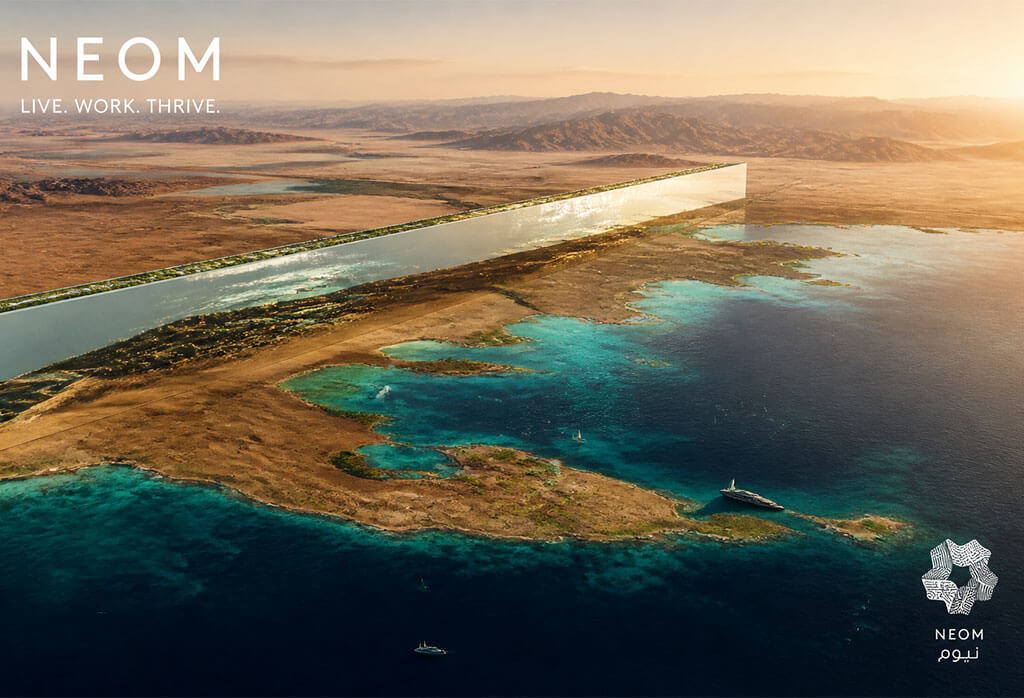
The reported $16 billion bill shows that scaling back a project this size carries high costs. NEOM contract cancellation costs equal more than a third of the projected 2026 budget deficit. Negotiations with contractors might change the final figure, people familiar with the matter told Semafor. The Line Saudi Arabia plan has become the clearest symbol of this wider recalibration effort. Planners first presented it as a 170-kilometre linear city running from the coast inland. Its scale, cost, and timeline drew growing scrutiny as the kingdom reassessed spending priorities. Semafor reported earlier work on The Line stays delayed until after the year 2030. Officials now redirect this spending toward infrastructure carrying clearer strategic or commercial near-term value. Selected parts of the development stay fully active even during this broader financial pullback.

WHY SAUDI ARABIA RETHINKS NEOM GIGA-PROJECT SPENDING

Saudi Arabia rethinks NEOM giga-project budgets because deficits and weak foreign investment forced tighter choices. The Public Investment Fund now favours projects tied to clearer returns and national priorities. Those priorities include logistics, artificial intelligence, defence, and infrastructure for Expo 2030 and the 2034 World Cup. Oxagon NEOM gained importance as the Iran war disrupted shipping through the Strait of Hormuz. The Red Sea port now serves as an alternative route for goods moving into the Gulf. One Qatar-based firm moved cargo from Europe to Doha in 22 days using this route. NEOM still plans to spend $10.7 billion on new work, mostly tied to Oxagon and utilities.

WHAT THE RESET MEANS FOR YOU

By contrast, some tourism plans face long delays under the revised NEOM budget 2026 framework. MAGNA resorts and the Trojena mountain site wait until the next decade for fresh funding. As I see it, Saudi Arabia rethinks NEOM giga-project plans to protect long-term financial stability. You now see a kingdom balancing bold ambition against cost, liquidity, and tight delivery timelines. The shift signals discipline reaching every corner of the kingdom’s wider development programme today.

TAGS

EXPLORE MORE ON:

Hub71 Expands Initiate Programme

Hub71, Abu Dhabi’s global tech ecosystem, is expanding Initiate, its early-stage founder programme, after attracting more than 5,500 applications since launch. A startup has already been selected to begin its venture-building journey with Initiate at Hub71, receiving support to refine its products, validate market demand and prepare for commercial growth.

Through Initiate, Hub71 is combining venture builder expertise with practical founder development. Founders receive hands-on support to refine ideas, validate opportunities and build new ventures, while aspiring entrepreneurs can access workshops designed to develop the skills, networks and confidence needed to take their first steps towards building a startup.

Initiate has attracted almost 5,500 applications, reflecting strong demand from aspiring founders looking to turn early-stage ideas into viable ventures. This momentum has extended into the programme’s workshop series, with 500 aspiring founders attending seven sessions across July and August focused on problem validation, customer discovery, venture-building and co-founder identification. Delivered by Hub71 partners, the workshops equip aspiring founders with practical tools, industry insights and opportunities to build connections within Abu Dhabi’s startup ecosystem, helping them turn ideas into viable ventures.

Hub71 has also added Disrupt.com and TMC2 MEA to Initiate’s venture-builder network, expanding founders’ access to technical, commercial and investor expertise across a wider set of sectors.

Mohammad Alkhoori, Head of Startup Journey and Communications, Hub71, said: “Demand for early-stage support in Abu Dhabi is growing quickly. Every founder’s journey starts with an idea, but turning that idea into a successful startup requires the right guidance at the right time. Through Initiate, we are giving aspiring entrepreneurs and early-stage founders access to experienced venture builders and a collaborative ecosystem that helps them validate ideas, build ventures, and take their next steps with confidence.”

Marking an early milestone for the programme, Hub71 has selected a startup to advance through Initiate, aligned with a priority sector for Abu Dhabi’s economy. Prism56, an AI-driven platform developed by Fikra Ventures to automate venture capital deal evaluation and investment committee workflows, has progressed from concept to minimum viable product and will now move into validation and pilot deployment. As a studio-led startup, Prism56 will continue to receive tailored venture-building support, mentorship and resources from Fikra Ventures to support its path to commercialisation. The startup will also receive licensing and office space support from Hub71 for one year, alongside access to its wider ecosystem of over 150 corporate, government and investment partners, service providers and founder community.

Through Initiate, Hub71 supports founders at the ideation and pre-seed stages by combining venture builder expertise with practical founder development, helping them validate ideas, develop business models and prepare their ventures for growth. Startups completing Initiate are positioned to progress into Hub71’s Access Programme, forming a clear pathway from idea to growth within Hub71’s broader tech ecosystem.

By supporting more founders as they build scalable ventures, Hub71 is strengthening Abu Dhabi’s pipeline of high-growth startups and reinforcing the Emirate’s position as a global hub for innovation and entrepreneurship.

About Hub71

A global tech ecosystem championing startup growth from Abu Dhabi. The extensive ecosystem brings together renowned corporations, national champions, and prominent investors to help founders grow and scale disruptive technology companies globally from the UAE capital. The aim is to shape a future that knows no bounds.

Meta's Bombastic $17 Billion

Meta’s bombastic $17 billion settlement closes one of the largest child safety fights the tech industry has faced. The company agreed to pay $16.68 billion after 47 states and U.S. territories accused it of designing Instagram and Facebook to hook young users. State attorneys general said Meta built features meant to “entice, engage, and ultimately ensnare youth and teens.” Meta denies wrongdoing. Still, the numbers tell their own story here.

Think of the child safety settlement as a bill for a decade of design choices. Executives built products that kept teens scrolling. Regulators decided that came at a price. That price now stretches across ten years of payments, plus a new rulebook for how Instagram and Facebook must treat anyone under 18.

New Limits Reshape Instagram and Facebook for Teens

Under the deal, under-18 users face a firm two-hour daily cap on Facebook and Instagram. Push notifications go dark during school hours. Access shuts off completely between midnight and 6 a.m. Age checks get tougher too, closing gaps that let younger kids slip past sign-up screens.

The Instagram and Facebook teen restrictions go further than time limits. Teen accounts will no longer show likes or other engagement counts. That single change targets a mechanism long tied to teen social media addiction lawsuit claims: the pull of watching a number climb. Strip away the number, and the pull weakens. Meta also agreed to tighten controls around content that promotes eating disorders or self-harm.

Regulators leaned hard on COPPA violations as part of their case. The Children’s Online Privacy Protection Act bars companies from collecting data on kids under 13 without parental consent. States alleged Meta gathered that data anyway, and that some of it fed machine learning and generative AI systems. That claim links Meta’s bombastic $17 billion settlement to a bigger question: how AI training pipelines treat data from underage users across the industry.

TikTok and YouTube Hold the Next $5 Billion

Here’s the twist. About $5 billion of the total stays locked unless TikTok and YouTube sign onto similar rules, including one-hour daily limits, nighttime curbs, and stronger age verification. Each platform would owe roughly $5 billion of its own if it joins.

Meta published an open letter urging both rivals to come aboard, arguing teens who get limited on one app simply hop to another. That’s a fair point. A single-platform curfew doesn’t mean much if the crowd moves next door anyway. Real TikTok and YouTube teen protections would need to land across the entire industry to change teen behavior at scale.

For now, Wall Street shrugged. Meta shares rose about 1 percent on the news, which suggests investors see this as a manageable cost rather than a real threat. Put that $17 billion against Meta’s $201 billion in 2025 revenue, and the settlement equals roughly 8.5 percent of one year’s sales. Spread over a decade, the yearly hit shrinks further.

Meta’s bombastic $17 billion settlement isn’t only about the check it writes. It’s the products it now has to rebuild. Time limits, curfews, hidden like counts, tougher age gates: these become permanent fixtures on two of the world’s largest social apps. Whether TikTok and YouTube follow will decide if this becomes an industry standard or stays a Meta-only fix.

OpenAI's executive departures continue

OpenAI’s executive departures continue, and the newest one hits a corner of the company that decides how fast its AI can grow. The Wall Street Journal reported that Chris Malone, the OpenAI head of data centers, left last week. He joined in March 2025 after more than a decade at Google and nearly five years at Meta, so his run at the lab stayed short.

Picture what that seat holds. Every AI model needs computing power, and that power needs buildings packed with servers. The person steering that work holds one of the most watched jobs in the field. When they leave, people pay attention.

A short-lived reorganization?

Before Malone left, OpenAI changed the shape of his role. He stopped reporting to president Greg Brockman and began reporting to vice president Sachin Katti, who took over the group. In a statement, OpenAI said it had “recently reorganized” its infrastructure organization to match the scale and pace of its work. The company said it keeps a deep data center team with clear leadership.

Several leaders now share the load. Uday Ruddarraju runs the data center team. Brent Mayo handles build and delivery. Spas Lazarov, a veteran of the data center and energy sectors, leads all data center engineering.

Why OpenAI’s executive departures continue to draw scrutiny

Malone is not walking out alone. His exit follows a long run of OpenAI executive departures, and Business Insider counted 13 in 2026, with several in the past month. These are not junior staff. They sit near the top. OpenAI’s executive departures continue at a pace few large companies would shrug off.

Two weeks ago, OpenAI replaced chief revenue officer Denise Dresser after roughly eight months. Days before that, longtime chief operating officer Brad Lightcap said he would leave to “start something new,” though he shared no plans. About a month earlier, Fidji Simo stepped down as the company’s second-in-command to recover from a “chronic illness.” She stays on as an adviser.

The safety and ethics side has thinned too. OpenAI lost its head of ethics, Chloé Bakalar, in July. Reports also said the company disbanded its preparedness team, the unit that studied whether its models could cause catastrophic harm. Some leaders left because their projects closed. Bill Peebles, who ran the shuttered image tool Sora, was one. Kate Rouch, the former chief marketing officer, left in April for health reasons.

What the OpenAI executive exodus means before the IPO

The company plays down the OpenAI executive exodus. Brockman has said the bright spotlight on the company means every exit gets picked apart in a way rivals avoid. There is truth in that. Even so, the pattern raises real questions.

Reporting from CNBC and Bloomberg points to a shift in strategy. The company has leaned less on the Stargate project and moved toward leasing data center space from cloud providers. That change helps explain the reshuffle around Malone’s team.

Timing sharpens the worry. OpenAI’s public listing, once expected this year, is now reported to be pushed to 2027. A looming OpenAI IPO in 2027 brings a hard look at the numbers. Reporting has questioned whether the company is overvalued and whether its profit can match the huge sums flowing in. As OpenAI’s executive departures continue, investors will weigh what the churn says about the company, while the people still inside keep the work moving.

Share this post

on your favourite social platforms

or copy the link