

icnlive

WATCH LIVE. THINK BUSINESS.

© 2026 ICN.LIVE

ICN.live

PUBLISHED BY ICN PRESS

  • IP Dominance Drives Outcomes: 8/10 titles are franchise-backed; built-in audiences reduce marketing friction and increase opening-week certainty.
  • Eventization Over Volume: Studios are concentrating budgets into fewer tentpoles (Avengers, Dune, Spider-Man), maximizing global box office and premium format revenue.
  • Reboot Risk vs. Upside: Resident Evil and Street Fighter carry high execution risk but offer strong upside if tone and casting align with fan expectations.
  • Family + Prestige Hedge: Moana secures a high-revenue floor via family audiences, while titles like The Odyssey and Digger target critical acclaim and long-tail value.

The global film slate is shifting toward high-conviction IP, director-led tentpoles, and franchise extensions with built-in audiences. Studios are concentrating capital into fewer, larger bets while using streaming windows to de-risk distribution. The result: a pipeline dominated by established universes, prestige adaptations, and cross-generational animated properties.

This list isolates ten projects with the highest probability of cultural impact and box office traction based on IP strength, talent attached, and release positioning. Each entry includes confirmed or widely reported lead talent, target release timing, and a concise synopsis to frame audience appeal and commercial upside.

ICN RED Top 10 Upcoming Movies to Watch in 2026

1) Spider-Man: Brand New Day

Hero Cast: Tom Holland, Zendaya
Release Date: July 31, 2026
A reset-era Spider-Man chapter that leans into isolation, consequence, and street-level stakes after the multiverse fallout. Peter Parker operates without public identity support, rebuilding relationships while confronting a grounded antagonist ecosystem in New York. Tonally closer to early Spider-Man arcs, the film prioritizes character rehabilitation and moral tension over spectacle overload. Expect tighter action geography, emotional continuity with prior arcs, and a reintroduction of core allies under new circumstances. Commercially, it’s positioned to re-anchor the franchise with broader accessibility while preserving continuity hooks for future crossover events.

2) Resident Evil (Reboot)

Hero Cast: TBA
Release Date: Late 2026 (expected)
A full reboot targeting fidelity to the original survival-horror tone of the games. The narrative centers on the outbreak’s initial containment failure, emphasizing claustrophobic environments, limited resources, and investigative progression through a corrupted corporate apparatus. Practical effects and restrained pacing are expected to replace prior action-heavy interpretations. The project aims to capture genre purists while onboarding new audiences through a cleaner entry point. If executed with discipline, it can re-establish the brand as a horror-first franchise with strong ancillary potential across streaming series and interactive tie-ins.

3) Avengers: Doomsday

Hero Cast: Ensemble (MCU core roster; details TBA)
Release Date: May 1, 2026
A convergence event designed to recalibrate the Marvel narrative after phase fragmentation. The film reportedly introduces a high-threat antagonist with systemic impact, forcing alliances across legacy and newer heroes. Expect multi-thread storytelling, synchronized set pieces, and a decisive tonal shift toward stakes and permanence. From a business standpoint, this is a franchise stabilizer: high marketing spend, global rollout, and merchandise tailwinds. Success depends on narrative clarity and character prioritization after recent audience fatigue with diffuse arcs.

4) Digger

Hero Cast: TBA
Release Date: 2026 (TBA)
A character-driven drama with thriller undertones, centered on a protagonist navigating moral compromise within a high-pressure environment (details under wraps). The project is positioned for festival traction, leveraging performance depth and a tightly controlled narrative scope. It targets awards-season pathways rather than tentpole metrics, with downstream value in streaming acquisition and critical prestige. If anchored by a breakout performance, it can convert modest production budgets into outsized cultural relevance and long-tail viewership.

5) Street Fighter

Hero Cast: TBA
Release Date: 2026 (TBA)
A rebooted adaptation of the iconic fighting franchise, structured around an ensemble of global fighters converging in a high-stakes tournament. The film aims to balance fan service—signature moves, rivalries, and character archetypes—with coherent storytelling and modern action choreography. The commercial thesis hinges on international appeal and brand recognition, particularly in Asia and Latin America. Execution risk centers on tonal consistency and casting credibility. A disciplined approach can unlock sequel potential and cross-media expansion.

6) The Odyssey

Hero Cast: Matt Damon, Anne Hathaway (reported)
Release Date: 2026 (TBA)
A large-scale adaptation of Homer’s epic, reframed for contemporary audiences while preserving mythological scope. The narrative follows Odysseus’ prolonged return journey, confronting divine intervention, psychological endurance, and leadership under adversity. Production value is expected to emphasize practical locations and controlled VFX to sustain immersion. This is a prestige play with global resonance, targeting both awards circuits and wide audiences. Success depends on balancing fidelity to source material with narrative accessibility and pacing.


7) Dune: Part Three

Hero Cast: Timothée Chalamet, Zendaya, Florence Pugh
Release Date: December 2026 (expected)
The continuation of the Arrakis saga, advancing Paul Atreides’ arc into the consequences of power, prophecy, and political consolidation. The film is expected to escalate ideological conflict and broaden the geopolitical canvas of the universe. With established visual language and audience investment, it’s positioned for strong international performance. The key variable is narrative compression of complex source material without sacrificing coherence. Ancillary revenue (IMAX, premium formats) will be a primary driver.

8) The Hunger Games: Sunrise on the Reaping

Hero Cast: TBA
Release Date: November 2026 (expected)
A prequel set during the Second Quarter Quell, focusing on a younger Haymitch Abernathy and the systemic brutality of the Games. The film leans into political allegory, survival strategy, and character formation under extreme conditions. Franchise familiarity reduces marketing friction, while the darker tone targets both legacy fans and new viewers. Box office upside is tied to casting strength and the ability to differentiate from prior installments while maintaining thematic continuity.

9) Moana (Live-Action)

Hero Cast: Dwayne Johnson, Auli’i Cravalho (reported)
Release Date: July 10, 2026
A live-action reimagining of the animated hit, retaining core narrative beats—identity, heritage, and environmental balance—while expanding cultural and visual scope. The film prioritizes authenticity in Polynesian representation alongside large-scale oceanic set pieces. Family audience dominance and brand recognition underpin a strong revenue floor. Upside depends on musical execution and visual fidelity that justifies the live-action transition. Expect robust merchandising and cross-platform synergy.

10) Coyote vs. Acme

Hero Cast: John Cena, Will Forte (reported)
Release Date: 2026 (TBA)
A hybrid live-action/animation courtroom comedy where Wile E. Coyote sues Acme Corporation for defective products. The premise leverages Looney Tunes nostalgia with a modern legal-comedy framework, enabling meta-humor and broad demographic appeal. Production risk is moderate; success hinges on script sharpness and tonal balance between slapstick and satire. If positioned correctly, it can perform strongly in family segments and streaming windows, with high rewatch value.

TAGS

EXPLORE MORE ON:

Manny Pacquiao poverty reduction role

The Manny Pacquiao poverty reduction role places the former senator at the head of the agency that coordinates anti-poverty policy across the Philippine government. President Ferdinand Marcos Jr. administered his oath at Malacañang and gave the boxing champion the rank of Cabinet secretary. Pacquiao takes over the National Anti-Poverty Commission from Lope Santos III, who had led its secretariat since 2023.

His new post inside the Manny Pacquiao anti-poverty commission carries a coordinating mandate, not control of a single welfare programme. As NAPC lead convenor, he will run daily operations, align agencies and engage the 14 basic sectors the commission serves. Republic Act 8425, the Social Reform and Poverty Alleviation Act, created the body in 1998 and named the president as its chair. Marcos recently moved the commission from the Department of Social Welfare to the Office of the President through Executive Order 123, a shift that raised its standing before Pacquiao arrived. The post also sits apart from that of Larry Gadon, the presidential adviser on poverty alleviation.

Numbers behind the appointment

His Marcos cabinet appointment arrives as the country’s poverty indicators record steady improvement. Government data put the Philippines’ poverty rate in 2025 at 9.7 percent of the population, down from 15.5 percent in 2023. That lower share still represents about 11.08 million Filipinos living below the poverty line. Households in the poorest brackets gained the most. First decile incomes rose 23.8 percent, while second decile incomes climbed 22.7 percent over the same window.

The Philippine Statistics Authority also recorded declines in family poverty across all 18 regions between 2023 and 2025. Family poverty incidence now sits at its lowest level since the current series began. The Manny Pacquiao poverty reduction role begins with those indicators already moving in the government’s favour.

Inside the Manny Pacquiao poverty reduction role

A fixed deadline shapes the Manny Pacquiao poverty reduction role. Marcos has set a single-digit national poverty rate of 8 to 9 percent by 2028, and the latest data leaves the government within about one percentage point of that goal. Reaching it depends on programmes that pair job creation with skills investment, social protection and better public services. Pacquiao will monitor those programmes, recommend policy measures and coordinate how resources move across agencies.

Convergence defines the job more than any single benefit scheme. His office pulls separate efforts into one direction and reports where they fall short. The Manny Pacquiao poverty reduction role will be measured in the national figures, not in speeches.

From the streets to the commission

Pacquiao ties the role to hardship he knew long before boxing made him rich. He grew up selling goods on the streets of General Santos City, worked as a ship stowaway, and fought for about two dollars a bout as a boy. “I came from poverty. I experienced sleeping on cardboard on the streets, drinking only water, having nothing to eat,” he said in a statement.

Estimates of Manny Pacquiao’s net worth vary, and Sports Illustrated placed his fortune at 220 million dollars last year. He topped Forbes’ list of the world’s highest-paid athletes in 2012 and 2015. Outside politics, he has funded housing for poor Filipinos and handed cash to long queues of supporters after major fights.

The appointment gives the fighter his first Cabinet position after 12 years in Congress and the Senate. It follows his 2025 induction into the International Boxing Hall of Fame as the only eight-division world champion in the sport’s history. Pacquiao has yet to set out a detailed plan for the commission.

UAE business accelerators 2026

UAE business accelerators no longer sell classroom time, and ICN.live research across Dubai, Abu Dhabi, and Sharjah found that the shift is close to complete. Founder value now sits in four places: market access, institutional balance sheet backing, regulatory permission, and enterprise procurement. Desks and workshops still exist. They stopped being the reason anyone applies.

Why does the distinction matter to you? A founder who picks the wrong program loses a year at the stage when a year is most of the runway.

The ICN.live research team began with 24 active acceleration and incubation programs in the Emirates. Ten advanced to a shortlist, chosen on operational history, cohort transparency, and active venture deployment. Five made the final ranking. Weighting followed a strict evidence order, with audited reports and government registries at the top and self-reported marketing claims at the bottom, discounted unless independent data confirmed them.

If you are comparing startup accelerators in Dubai, three of the five finalists are based there. The other two sit in Abu Dhabi and Sharjah, and they solve different problems.

Where UAE business accelerators rank

Hub71 took first place with an overall score of 9.4 out of 10 in the ICN.live index. DIFC FinTech Hive followed at 9.2, then Dubai Future Accelerators at 8.9, Sheraa in Sharjah at 8.3, and in5 in Dubai at 8.2.

Read that order carefully, because the scores hide the more useful finding. These five do not compete on the same product. One sells sovereign capital. One sells a cheap trade licence. One sells a regulator. Another sells mentorship, and the last sells a government customer.

According to the ICN.live core finding, the strongest program for you is the one whose structural asset removes your immediate commercial blocker, rather than the one with the biggest community. Raw community size showed no reliable link to founder capital success. Concentrated vertical programs with small cohorts produced higher funding per startup and higher pilot conversion than sprawling generalist incubators.

That is a different way to shop. Instead of asking which name carries weight, ask which door the program opens.

Hub71 Abu Dhabi and the sovereign capital route

Hub71 launched in 2019, backed by the Abu Dhabi Government and Mubadala Investment Company, and operates from ADGM on Al Maryah Island. It supports seed to Series A companies across artificial intelligence, climate tech, digital assets and life sciences.

The ICN.live report counts 390 technology ventures supported, with $2.7 billion in cumulative alumni capital, equal to AED 9.9 billion. Startups can receive up to $204,000 in cash and in-kind incentives. That package is worth up to AED 750,000 and is delivered through a SAFE, under which Hub71 takes an equity interest when the startup closes a formal funding round. ICN.live also records more than 40 institutional venture capital partners connected through the program, and $244 million in signed enterprise deals closed by community startups.

For a deep tech founder, that combination is difficult to match anywhere in the Gulf. Mubadala sits a short walk away. So does the regulator.

The cost of joining Abu Dhabi

Every one of the ranked UAE business accelerators carries a trade-off, and Hub71’s is location. Physical relocation to Abu Dhabi is enforced, which loads housing and operating overhead onto international teams. The SAFE structure means you surrender equity at your next round. Sovereign compliance also moves at its own pace, and founders interviewed for the report described administrative friction that fast-moving software teams do not plan for.

Founder feedback collected in the research ran along a single line. Sovereign investor access and large enterprise deals were real, but capturing them required building genuine operations in the capital.

So the question is not whether Hub71 delivers. The research says it does. What you need to weigh is whether your team can physically move, and whether the equity you give up buys more than it costs.

in5 and the case for keeping your cap table

TECOM Group established in5 in 2013, and it now runs four specialised centres: in5 Tech at Dubai Internet City, in5 Media at Dubai Production City, in5 Design at Dubai Design District and in5 Science with Dubai Science Park. More than 1,100 startups have come through since inception.

The model inverts Hub71. in5 writes no cheques at all. Funding offered is zero. What you receive instead is a heavily subsidised Dubai commercial trade licence, prototyping labs and workspace, with no equity taken. ICN.live puts the operational savings at up to 80 percent of annual trade licensing and setup overhead, and records $2.45 billion in alumni capital, equal to AED 9.0 billion.

Treat it as a discount on the cost of existing rather than an investment. For a bootstrapped team, that can be worth more than a small cheque, because it stretches every month you already have.

The catch is attention. With over a thousand alumni, nobody runs your fundraise for you. Founders told ICN.live researchers the low-cost licence protected their early runway while they chased venture capital on their own.

When regulation is the product

DIFC launched FinTech Hive in 2017 with Accenture, as the region’s first fintech accelerator. It runs inside the DIFC Gate District and takes seed to Series A fintech, insurtech, regtech and Islamic finance ventures.

The asset here is permission. The DFSA regulatory sandbox, formally the Innovation Testing Licence, lets qualifying firms develop and test financial products inside DIFC for six to 12 months without meeting the full rules that apply to licensed firms. Capital cannot buy that. A payments startup with money and no licence still cannot trade.

ICN.live counts 220-plus accelerator alumni within the DIFC fintech ecosystem, more than $1.2 billion raised across cohort alumni, a $20,000 non-dilutive grant, access to the $100 million DIFC FinTech Fund, over 60 financial and wealth management partners, and more than 70 proof-of-concept pilots with regional banks each year.

Founders in the research prized one thing above the rest: meetings with banking chief technology officers that would otherwise take years of business development to arrange.

The limits are narrow and stated plainly. This program suits financial services and regulatory technology only. Bank procurement cycles move slowly, and full DFSA compliance carries continuing legal costs.

Sharjah runs an equity-free accelerator model

Sheraa, the Sharjah Entrepreneurship Center, started in 2016 as a government-supported platform, headquartered at the Sharjah Research Technology and Innovation Park with hubs inside the American University of Sharjah and the University of Sharjah. It works with pre-seed and seed companies in sustainability, creative tech, education, and digital services.

ICN.live gives Sheraa the highest program quality score in the ranking at 9.2, ahead of Hub71 on that single measure. Grants and milestone funding reach $50,000, and the report records 600 companies supported since 2016, $310 million in alumni capital equal to AED 1.14 billion, more than 140 public and private ecosystem partners, and a portfolio the report puts at 52 percent female-led.

For a first-time founder or a university researcher, this is the closest thing in the country to hands-on guidance without a cap table cost.

Sharjah’s weakness is capital density. Venture money is thinner than in Dubai or Abu Dhabi, so founders chasing multi-million-dollar follow-on rounds end up commuting to close lead term sheets.

Buying a government customer

Dubai Future Accelerators works differently again. Operated by the Dubai Future Foundation, it connects startups, private entities and government to position Dubai as a testbed for new technology. The program sits inside Area 2071 at Emirates Towers and matches growth-stage companies with government entities on urban, mobility and AI challenges. Cohorts run roughly nine weeks and are built around pilot contracts with those entities.

Procurement is the value. DFA offers fast-track access to more than 35 Dubai government bodies, including the Roads and Transport Authority, DEWA and Dubai Health Authority, which lets a company skip the standard public tender route. ICN.live records 350-plus scaleups matched, more than $1.5 billion in alumni capital, fully funded pilot deployment grants, and AED 1 billion under management through the Dubai Future District Fund. Conversion from cohort to signed government memoranda of understanding sits at 75 percent in the report.

One founder verdict collected in the research described a live public pilot inside nine weeks, and the international credibility that came with it.

Risk here is binary. DFA is an enterprise challenge platform rather than a school. Miss the pilot contract with your matched entity and the residual value falls sharply.

Equity or runway, the choice you have to make

Strip away the branding, and UAE business accelerators now offer two deals. Sovereign programs hand you balance sheet access and take equity through a SAFE. Zero equity utilities hand you cheap infrastructure and grants, and leave your ownership alone.

Neither wins in the abstract. Your answer depends on what is blocking you this quarter.

If licence and visa costs are draining you, a zero equity program buys months. Should no bank answer your email, a sector program with procurement relationships is worth the dilution. Where you cannot legally operate at all, regulatory permission outranks both.

Three questions before you apply

ICN.live built a decision matrix around three questions, and they work as a filter for whatever program you are weighing.

First, what exactly do you surrender relative to the cash you receive? Set SAFE dilution against the value of a sovereign investment pipeline, then compare that with an equity-free model that protects your ownership outright.

Second, what share of cohort alumni closed institutional capital within twelve months? Ask for audited follow-on funding numbers. Cohort press releases are marketing, and the ICN.live evidence hierarchy discounts them for exactly that reason.

Third, which named enterprise buyers or government procurement directors attend private partner days? A meeting with a decision maker is not the same as a crowded open demo day. The first can close a contract. The second rarely does.

Programs that answer all three cleanly are rare. Programs that dodge one are telling you something.

The market these programs sit in

Context helps you read the numbers. The UAE led MENA startup funding in the first quarter of 2026, with $625.8 million raised across 46 deals, and fintech took 46 percent of total regional investment. Regional capital has tightened since. According to Wamda, MENA startups raised $1.7 billion across 242 rounds in the first half of 2026, an 18 percent decline year on year, with capital concentrating in larger ecosystems and companies with clearer paths to scale.

Selective capital rewards founders who arrive holding something concrete: a signed pilot, a subsidised licence, a regulator’s sign-off. That is what the top UAE business accelerators now sell, and it explains why the ranking rewards structural assets over community size.

Building in the Emirates has stopped being an experiment in regional expansion. Founders who win here treat these programs as springboards to sovereign balance sheets, institutional clients and regional market share, and they choose on structure rather than reputation

Arab Media Summit 2026

The Arab Media Summit (AMS) 2026 will host ceremonies for three awards celebrating excellence and talent across the Arab media landscape, as the region’s largest media gathering returns to Dubai from 15th to 17th September, WAM announced.

The Arab Media Award (AMA); the Ibda’a – Arab Youth Media Award, and the Arab Social Media Influencers Award will honour established media professionals, emerging talent and digital content creators across a wide range of categories spanning journalism, television, digital media and content creation.

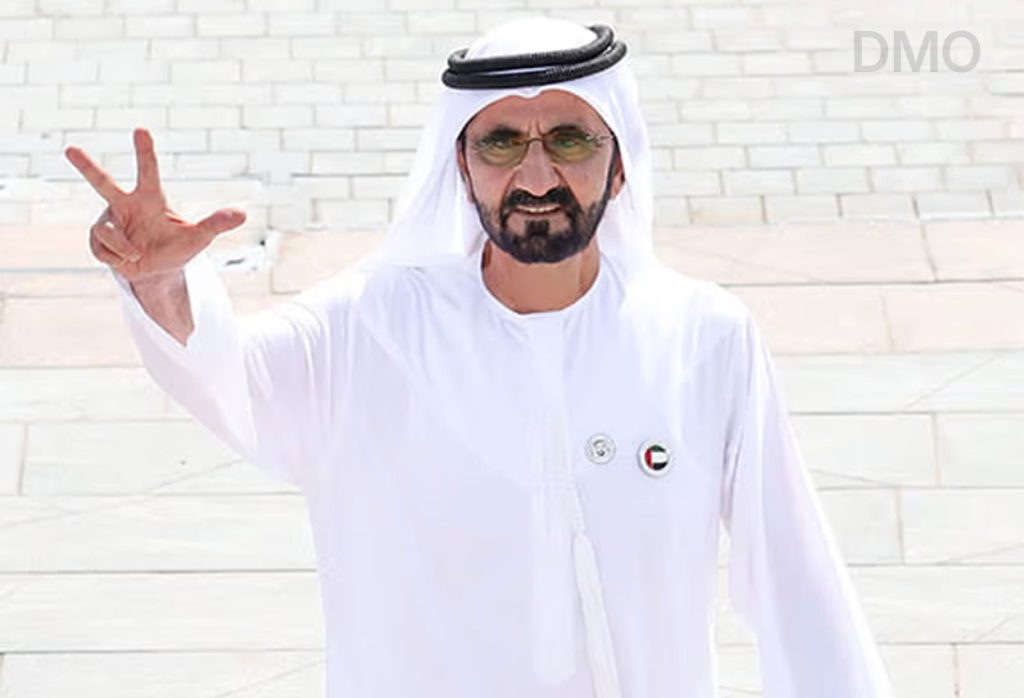
The largest edition of AMS to date will take place at the Dubai World Trade Centre under the patronage of His Highness Sheikh Mohammed bin Rashid Al Maktoum, Vice President and Prime Minister of the UAE and Ruler of Dubai, and the directives of H.H. Sheikh Ahmed bin Mohammed bin Rashid Al Maktoum, Second Deputy Ruler of Dubai and Chairman of the Dubai Media Council. The Summit is organised by the Dubai Press Club.

Over the years, the three awards have become a key part of the Summit, reflecting Dubai’s commitment to recognising excellence, nurturing emerging talent and supporting the continued development of the Arab media sector.

The Arab Media Award was launched in November 1999 as the Arab Journalism Award, following an initiative by His Highness Sheikh Mohammed bin Rashid Al Maktoum. It was established to encourage creativity among Arab journalists and recognise outstanding professional achievements.

Following successive phases of development, the Award was revamped and renamed the Arab Media Award in 2021 to reflect the growing diversity of the media sector and encompass a broader range of disciplines.

Celebrating 25 years of recognising excellence, the Arab Media Award marks its silver jubilee this year. The Award encompasses the Arab Journalism Award and the Visual Media Award, which features five categories recognising the Best Economic Programme, Best Social Programme, Best Cultural Programme, Best Sports Programme and Best Documentary Project. It also includes the ‘Media Personality of the Year’ Award, conferred by the Award’s Board of Directors.

Since its launch, the Award has attracted more than 82,000 entries and honoured around 360 media professionals from across the Arab world. It has established itself as one of the region’s leading platforms for recognising media excellence and has inspired generations of professionals to raise the quality and impact of their work.

Now in its tenth edition, the Ibda’a – Arab Youth Media Award continues to recognise outstanding media students from across the Arab world. Its six categories are Photography, Podcasting, News Reports, E-Games, Multimedia and Short Video. Winners will be announced during the Arab Youth Media Forum, held as part of the Arab Media Summit.

Launched in 2015, the Arab Social Media Influencers Award recognises Arab content creators whose work makes a positive impact on their communities.

The current edition features 12 categories spanning Podcast, Arts and Entertainment, Entrepreneurship, Sports, Tourism, Audience, Economy, Culture, Best Children’s Platform, Influential Personality of the Year, Community Service and Health, and Best News Platform

Share this post

on your favourite social platforms

or copy the link