
 Bitcoin
  Ethereum
  Tether
  BNB
BNB  Solana
  XRP
XRP  USDC
USDC  Lido Staked Ether
  Cardano
  Avalanche


Key Points
-
Zetahash milestone confirms Bitcoin’s network is at peak computational power
-
Bitcoin hashrate growth strengthens overall Bitcoin security against attacks
-
Rising mining difficulty pushes hardware innovation in the mining sector
-
Institutional adoption of Bitcoin aligns with network resilience and future price potential
Zetahash milestone marks a historic leap for Bitcoin’s resilience and strength in the global digital economy.
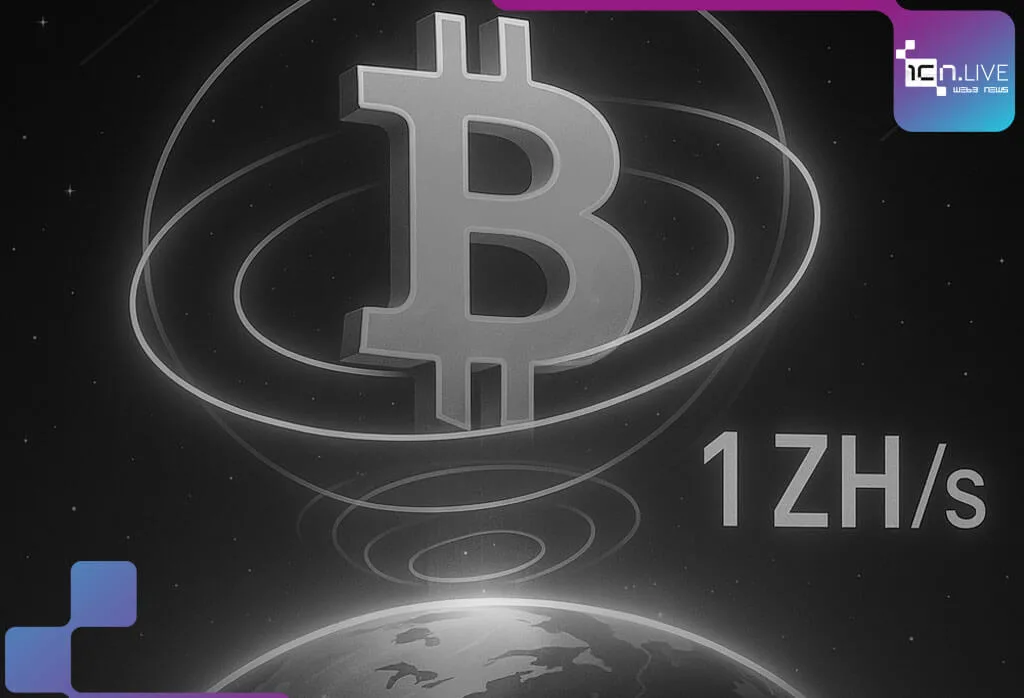
The achievement signals a new era where the Bitcoin hashrate has reached an unprecedented level of one zetahash per second. This computational scale reflects unmatched Bitcoin security and represents the largest proof-of-work network humanity has built to date.
The milestone brings attention not only to raw network power but also to the practical implications for miners and long-term holders. Bitcoin mining difficulty rises as hashrate increases, and this guarantees stronger protection against manipulation. As I see it, the zetahash milestone is more than a technical upgrade; it is a validation of Bitcoin’s unstoppable growth.
The scale of Bitcoin hashrate
Bitcoin hashrate at this level is staggering. One zetahash equals one sextillion guesses each second toward solving cryptographic puzzles. Miners compete relentlessly to find valid hashes, and the collective effort secures the chain. Each new block represents both trust and finality.
The higher the hashrate, the harder it becomes for an attacker to compromise the network. Bitcoin security is therefore directly tied to hashrate, making this milestone crucial for global confidence. Today, miners generate more computations per second than stars in the galaxy, creating a system beyond the reach of centralized tampering.
$BTC PRICE NOW
Bitcoin hashrate proves unmatched network security
The zetahash milestone also raises Bitcoin mining difficulty. Every two weeks, the network adjusts the target, ensuring consistency in block production. As the hashrate climbs, miners must deploy more efficient hardware. This cycle drives constant innovation in mining technology.
Bitcoin mining difficulty is not a challenge only for small operators; it forces even the largest farms to reinvest in optimization. Specialized machines consume significant energy, yet the payoff is a more secure chain that resists double-spending and 51% attacks. For institutional players, difficulty ensures that only serious participants commit resources.
Institutional adoption of Bitcoin
Institutional adoption of Bitcoin accelerates when milestones like this are reached. Investors see resilience in numbers, and a stronger hashrate signals safety for large capital allocations. Dan Tapiero, founder of 10T Holdings, called the zetahash milestone one of the most important events of the past half-century. He argued that Bitcoin has become the most secure network in the world.
Institutional adoption of Bitcoin is not simply about investment returns. It reflects the recognition of Bitcoin as a foundational infrastructure. Governments, corporations, and funds now treat the network as a long-term store of value and a transparent settlement layer. The zetahash era highlights how confidence grows alongside measurable security.
ANOTHER MUST-READ ON ICN.LIVE:
OpenAI’s for-profit structure enters new phase with Microsoft and public benefit transition
Institutional adoption of Bitcoin reflects network trust
Looking forward, the zetahash milestone may serve as a signal for upcoming Bitcoin price dynamics. Historically, higher hashrate and rising difficulty have preceded price rallies. Miners invest billions into infrastructure with long-term horizons, suggesting continued institutional faith in the system.
For everyday users, the benefit lies in stronger Bitcoin security. Transactions remain final, censorship-resistant, and globally transparent. For policymakers and skeptics, the zetahash era demonstrates that decentralized consensus is not a theory, but an active reality. The growth in Bitcoin hashrate confirms global participation and commitment to a tamper-proof ledger.