

icnlive

Rami Al-Saadi

Writer,

icn.live

Follow

Rami Al-Saadi has written for Reuters MENA, Business Insider Middle East, and CoinNews Arabia over a career that now spans seven years. Rami is an ICN.live writer since 2024 and his investigations explore Capital and Business sectors. Rami pursued graduate-level study in Media Studies with a focus on digital economies.
Dubai Is Ready With Free Autonomous Taxi Service

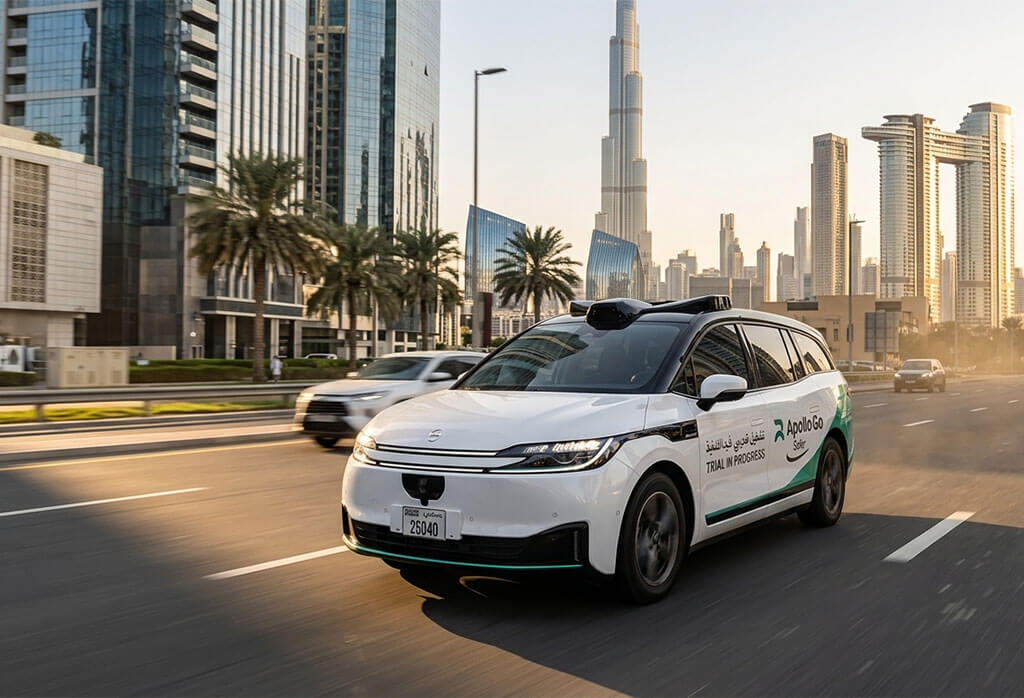
A single line on the RTA’s social feed told residents their next ride might arrive with no one at the wheel. Dubai is ready with a free autonomous taxi service, and the offer began in two neighbourhoods that hug the coast. The Roads and Transport Authority opened public rides in Umm Suqeim and Jumeirah, both close to the beaches, on July 15, 2026.

Riders reach the vehicles through two apps rather than an RTA channel. Uber customers pick the Autonomous option and receive a WeRide car when one is free nearby. Apollo Go users book inside that company’s own app. Fleet allocation depends on how many vehicles sit inside the active zone at the time.

The split behind the wheel is worth noting. Tawasul Transport handles dispatch and operational control for WeRide taxis booked through Uber. Dubai Taxi Company manages local fleet needs for Apollo Go. The technology firms run the driving systems. The licensed operators handle the ground work under RTA supervision.

This Dubai driverless taxi rollout removes something the earlier trips carried. When Uber first offered WeRide rides in December 2025, a vehicle specialist sat inside. The current free service drops that specialist and completes the move to fully autonomous operation.

From testing to public roads

The path here was slow and deliberate. RTA started commercial operations on March 30, 2026, after trials on set roads. By September 2025, more than 60 vehicles from Apollo Go, WeRide and Pony.ai were already running in Jumeirah and Umm Suqeim.

Apollo Go Dubai began with 50 RT6 vehicles used for testing and data collection. Agreements signed in April 2025 made Dubai the company’s first operating market outside mainland China and Hong Kong. Each RT6 carries 40 sensors and detectors. By April 2025, Apollo Go had logged more than 150 million kilometres of safe driving and over 10 million autonomous trips across several cities.

WeRide ran about 150 autonomous vehicles across the Middle East by December 2025, including more than 100 robotaxis. Anyone asking how to book driverless taxi Dubai rides will find the answer sits inside apps they already use.

What the cars actually do

The autonomous taxi Dubai fleet leans on artificial intelligence, high-definition maps and deep learning. Onboard systems read the road in real time and make driving choices without a person. The software handles intersections, signals, pedestrians and nearby cars while following road rules. These vehicles share open roads with live traffic.

The bigger target

Every robotaxi Dubai adds points toward one number. Dubai’s Self-Driving Transport Strategy aims for autonomous operation across 25 per cent of all journeys by 2030. The strategy covers several transport modes, not taxis alone.

Mattar Al Tayer, Director General and Chairman of the Board of Executive Directors at RTA, named licensing, infrastructure and operating rules as core requirements back in April 2025. Dubai’s population passed four million residents by December 2025, which lifts demand for taxis and app-based mobility.

The free window has limits Dubai has not spelled out. RTA has not disclosed operating hours, wider route boundaries, or an end date for free pricing. Published plans place 100 vehicles in the first phase and up to 1,000 Apollo Go units within three years. Later reporting suggests a Dh5 fare has since appeared on Apollo Go, a sign the free period may be short. Coverage will widen as demand, service quality and regulatory readiness allow.
Sharjah Islamic Bank H1 2026 results

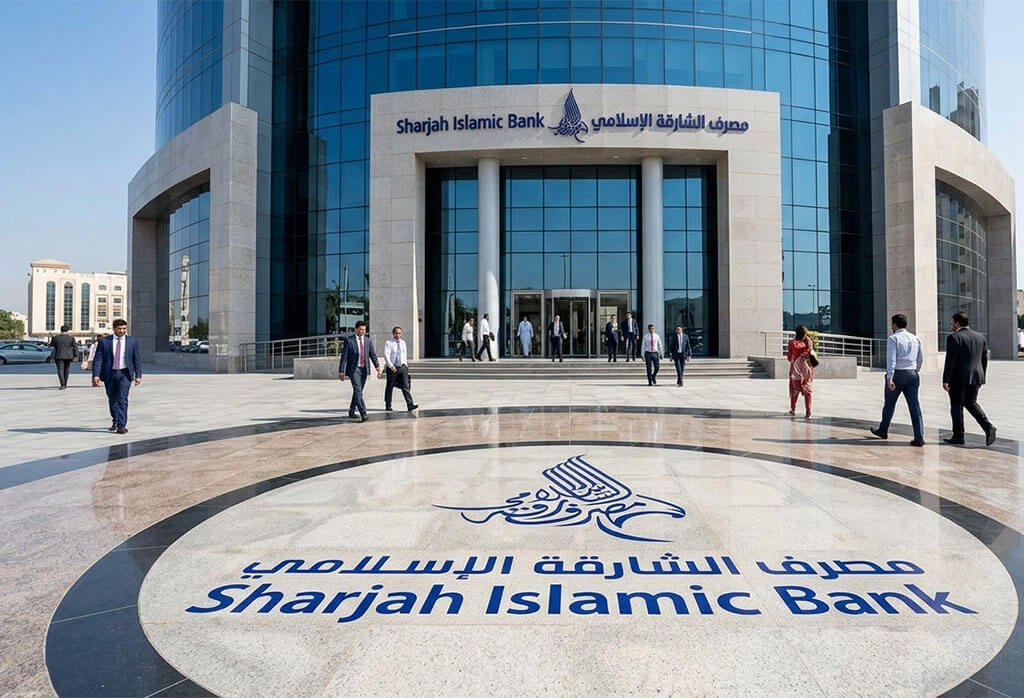
Sharjah Islamic Bank H1 2026 results showed net profit after tax reaching AED803.9 million. The lender lifted earnings 15.3 percent from AED697.2 million during the same period last year. Balanced growth across core business lines drove this result, alongside a strengthened capital base. You can see the strength in both income diversification and improved operating efficiency this half.

Income from Islamic financing and sukuk rose 12.1 percent to about AED2.1 billion this half. The increase equals AED227.6 million more than the AED1.9 billion posted one year earlier. Net fee and commission income grew 8.1 percent to AED445.7 million over the year. Total operating income reached AED1.4 billion, a rise of 20.5 percent from last year. Sharjah Islamic Bank net profit gains rested on wider income streams and lower relative costs.

Profit efficiency improves while the bank keeps investing

General and administrative expenses rose 17.2 percent to AED475.2 million during the first half. The bank spent more on people, technology, and stronger operational systems across this period. Net operating income before provisions and tax grew 22.3 percent to reach AED925.8 million. SIB net profit after tax rose while the bank kept investing in future growth. Impairment provisions for financial assets stood at AED79.2 million by the end of June. Recoveries reached AED37.9 million during the same six-month period across the financing portfolio here. The non-performing financing ratio improved to 3.6 percent, down from 3.8 percent last year. Provision coverage held firm at 107 percent, close to the 109 percent recorded earlier. These indicators point to a prudent credit policy and careful risk management across the book.

Balance sheet expands as customer deposits growth continues

Total assets increased to AED94.5 billion by the end of the first half period. The figure grew 4.7 percent from AED90.3 billion recorded at the close of 2025. Growth came mainly from the Islamic financing portfolio, which reached AED49.9 billion this half. The portfolio climbed 9.5 percent from AED45.6 billion posted at the end of 2025. Customer deposits growth reached 6.6 percent, lifting total balances to AED59.4 billion this half. The financing-to-deposits ratio rose to 84 percent, up from 82 percent one year earlier. Liquid assets stood at AED19.8 billion, close to 20.9 percent of total assets overall. Shareholders’ equity rose by AED2.6 billion after the bank completed its capital increase this year. The bank issued 1.1 billion new shares at AED1 each, plus a share premium. Investors added a premium of AED1.4 per share during the bank’s successful capital raise. These Sharjah Islamic Bank H1 2026 results also show a firmer capital base overall.

Sharjah Islamic Bank H1 2026 results lift shareholder returns

Return on equity improved to 14.81 percent from 14.78 percent during the prior year. The lender pushed return on assets to 1.74 percent from 1.55 percent last year. In its official results statement, Sharjah Islamic Bank tied these gains to disciplined risk management. The bank said results reflected “balanced growth across its core business activities” this half. From my reading, these numbers point to steady, well-managed expansion rather than one-off gains. Sharjah Islamic Bank H1 2026 results confirm strong momentum heading into the second half. You should watch deposits, financing demand, and margins closely as the year moves forward.

DEWA launched agentic AI

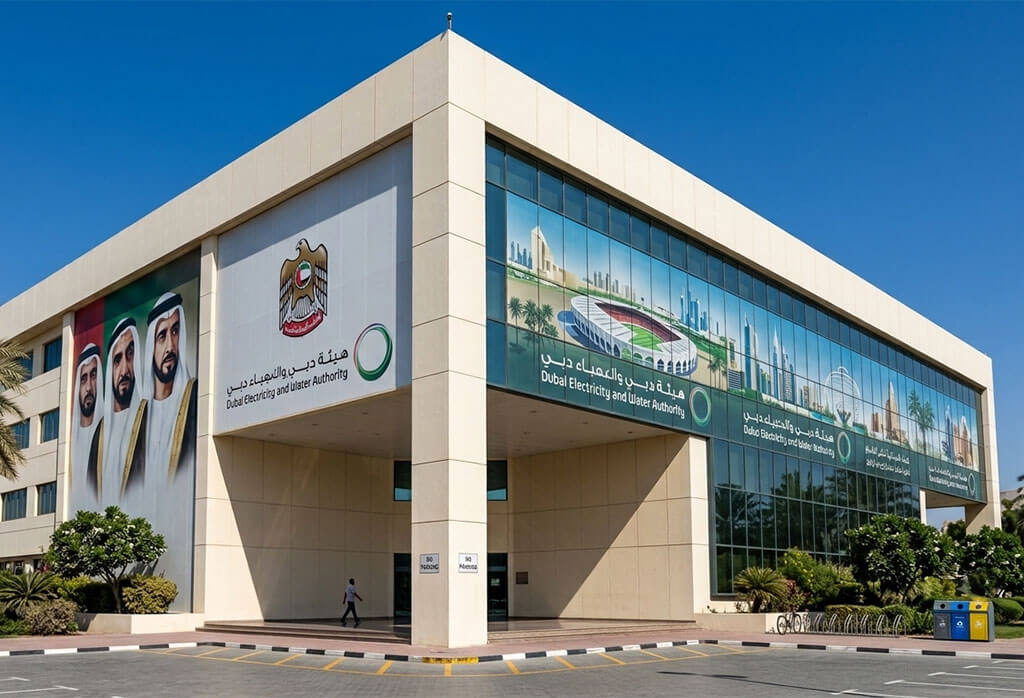
DEWA launched agentic AI across its digital platforms to reshape how you receive public services. The utility deployed this technology on its website, smart app, and internal employee systems. Dubai Electricity and Water Authority now ranks among the first utilities worldwide to reach this stage. Its leaders followed directives from Dubai’s ruler to widen AI use across government work. You gain faster service, cleaner design, and steadier quality through these new AI agents. The agents help designers build components and flag any work falling outside the approved standards. This work cut production and review time and lifted design consistency by around 80 percent.

Saeed Al Tayer runs the authority as its managing director and chief executive officer. He said AI now serves as “a core component of its operational and service infrastructure.” The chief executive called the rollout a milestone in redefining public services during the AI era. You now reach these services through an integrated system linked to global AI platforms. These changes support the UAE Strategy for Artificial Intelligence 2031 and long-term national goals. Officials built the digital groundwork early, so they acted fast once the directives arrived. DEWA also became the first UAE government body to adopt Microsoft Copilot for workplace tasks.

How DEWA launched agentic AI across its services

Rammas AI assistant sits at the center of this customer-facing push by the utility. The utility first launched this virtual helper in 2017 to answer everyday customer questions. It now runs on GPT-4o and pulls real-time answers directly from the DEWA website. Since its 2017 start, Rammas has handled over 13 million inquiries across DEWA’s channels. The AI agents also power DEWA’s Testing Centre of Excellence behind the digital scenes. There, agents write test plans, run checks, and produce full reports without manual steps. This work raised test verification efficiency by about 85 percent across DEWA’s digital channels. Quality on those channels climbed by as much as 93 percent after the rollout. DEWA launched agentic AI with a clear focus on governance, security, and user privacy. The authority supports this build with an Agent Development Kit for its internal teams. This kit lets staff scale agentic AI while they still follow strict security rules. From my standpoint, this careful setup matters more than the raw speed gains alone.

What agentic AI means for your daily service

You benefit when a public utility guards your data as it speeds up service. The rollout also feeds Dubai’s wider plan to lead in AI and future technology. Dubai Electricity and Water Authority plans to widen these tools across more secure platforms. The utility ties each step to the UAE Centennial 2071 and its long horizon. DEWA launched agentic AI not as a one-off, but as a lasting operating model. Its early planning shows how public bodies can move quickly once leaders set direction. You should watch how these AI agents reshape bills, accounts, and daily support next. For now, DEWA launched agentic AI at a scale few utilities have matched globally. The next phase will test whether these gains hold as more services move online. Your experience with DEWA should feel faster and simpler as agentic AI keeps growing.

About DEWA

Official Website: https://www.dewa.gov.ae/en/

The Dubai Electricity and Water Authority (DEWA) is the government-owned utility responsible for electricity and water supply in Dubai. It plays a central role in powering the emirate’s economic growth, infrastructure, and sustainability initiatives.

Strategic Role:

  • Infrastructure Backbone: Ensures reliable energy and water for residential, commercial, and industrial demand
  • Clean Energy Leadership: Drives large-scale projects like the Mohammed bin Rashid Al Maktoum Solar Park
  • Monetization Model: Regulated utility with stable, recurring revenue and strong state backing