
 Bitcoin
  Ethereum
  Tether
  BNB
BNB  Solana
  XRP
XRP  USDC
USDC  Lido Staked Ether
  Cardano
  Avalanche


Key Points:
-
Oracle’s $500 billion AI plan raises debt and backlog concerns among investors.
-
$300 billion in OpenAI commitments drives market questions about long-term demand.
-
Rising capex and negative cash flow point to debt-funded AI expansion.
-
Earnings call expected to define credibility around Oracle’s funding roadmap.
Oracle AI investment risks are shaping a critical moment for the company.
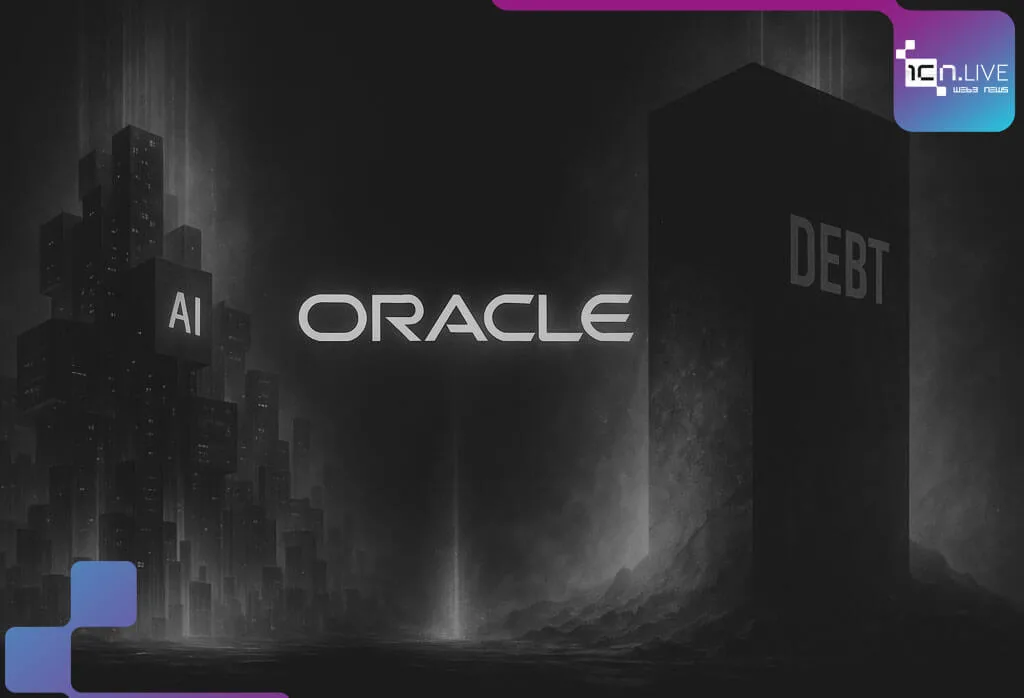
Oracle faces pressure to show that a $500 billion AI expansion, a $455 billion backlog, and $100 billion in debt can all coexist. The upcoming earnings report will decide if investors believe the company’s ambitious strategy is sustainable.
Analysts expect Oracle’s Q2 FY26 results to show around 14–16% revenue growth and continued strength in cloud revenue. Yet the core debate isn’t about earnings per share. It’s about balance sheet durability, debt structure, and how secure the backlog truly is.
Oracle’s backlog raises new scrutiny
Oracle’s remaining performance obligations jumped to $455 billion, tripling in one quarter. Around $300 billion of that figure links to OpenAI’s compute commitments. Investors see this as both an opportunity and a risk. If OpenAI continues to expand, Oracle’s data centers could deliver enormous value. But if demand slows, the same backlog could expose hidden weaknesses in AI monetization.
Market analysts warn that the OpenAI-related commitments may take years to translate into real income. Most of the revenue impact would appear beyond FY27, meaning the next few years depend on faith, not cash flow. This delay raises questions about whether Oracle’s massive AI infrastructure buildout is moving too fast relative to proven demand.
Highlight: Debt mounts as Oracle doubles down on AI
Oracle’s balance sheet shows around $10.4 billion in cash and nearly $91 billion in borrowings. Net debt sits near $100 billion, and the company’s debt-to-equity ratio is above 4x. Despite an operating cash flow of $21.5 billion, Oracle’s capex hit $27.4 billion in the last year, leaving free cash flow negative by almost $6 billion.
This negative cash flow is not accidental. Oracle is intentionally spending on GPU-heavy data centers across the United States, betting that its AI infrastructure contracts will generate future profits. Bonds worth $18 billion were issued earlier this year, with some long-term notes already trading lower as tech credit spreads widened. Banks have also pledged $38 billion in loans to fund data center projects in Texas and Wisconsin.
BNP Paribas estimates Oracle may need another $25–30 billion in new debt to finish the current build phase. That’s less than worst-case estimates, but enough to keep investors cautious.
ANOTHER MUST-WATCH ON ICN
Credit markets signal rising risk
Oracle’s 5-year credit default swaps have roughly doubled, now around 100–110 basis points. This signals higher perceived credit risk, though still within investment-grade limits. Analysts see CDS trading as a hedge against an “AI correction,” not a direct sign of imminent distress.
Even so, analysts like CFRA’s Angelo Zino expect free cash flow to stay negative for two or three years. Capital spending could climb to $80–90 billion by the late 2020s. For investors, this means debt costs, repayment schedules, and market access will remain central issues long after the next earnings call.
Highlight: Investor focus shifts to diversification
If OpenAI’s growth slows or Gemini gains market share, Oracle must replace that lost demand. Deals with Meta, xAI, and other AI developers are part of that diversification effort. But analysts note that Wall Street’s long-term forecasts still depend on strong OpenAI revenue. Any sign of delay or weakness in those contracts could drag both Oracle’s valuation and credit outlook.
From my standpoint, Oracle’s credibility now depends on communication. Investors want clarity on funding sources, capital leases, and operational cash flow. If management outlines a clear plan showing enough liquidity for the next 18–24 months, confidence could return. Otherwise, doubts about Oracle’s AI investment risks may dominate the narrative again.
Oracle’s credibility test
This earnings call is less about quarterly performance and more about narrative control. The market wants proof that Oracle’s $500 billion plan can be financed without breaking its balance sheet. Analysts believe even a modest show of discipline—such as delaying new bond issues or proving near-term cash resilience—could lift sentiment.
If that message fails, traders might treat Oracle as an “OpenAI leverage short” rather than a true long-term AI infrastructure leader. The outcome will define whether Oracle’s story becomes one of steady growth or overstretched ambition.