

icnlive

ICN.live

Adnan Al-Jaziri

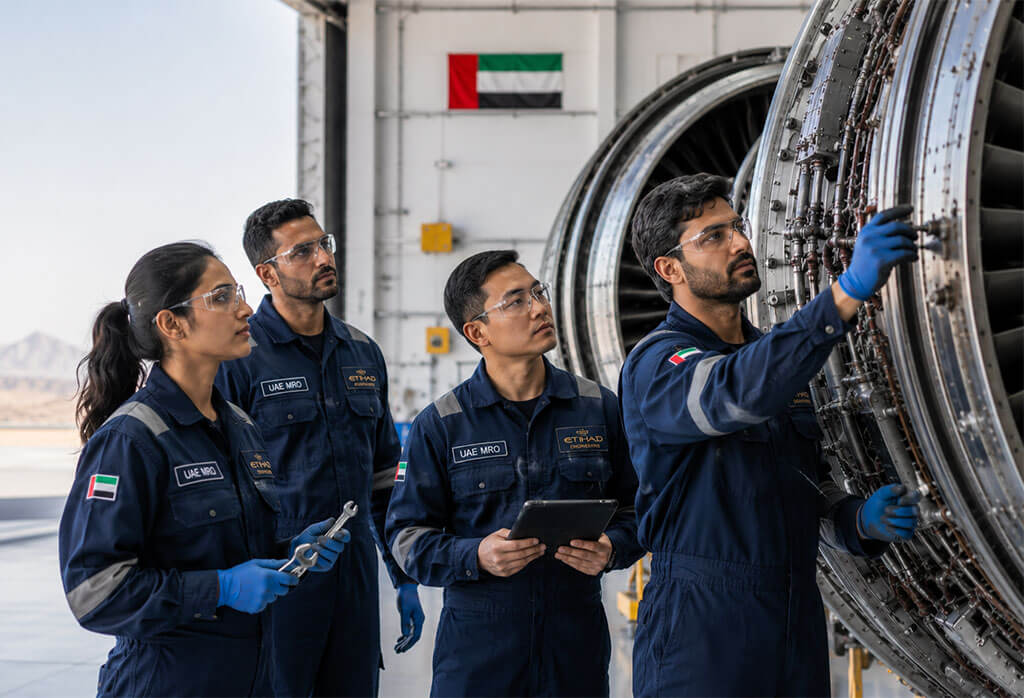
  • The engine repair centre developed in Al Ain will cost AED480 million and repair 65,000 parts each year once fully operational by 2030.
  • Sanad, backed by Mubadala, plans to become the world’s fifth-largest engine MRO provider through this major facility.
  • The 17,600 square metre hub will serve five major engine platforms, including LEAP, GTF, GEnx, Trent 700, and V2500.
  • The project will create more than 350 jobs with a strong focus on Emirati talent and Abu Dhabi aerospace growth.

The engine repair centre developed in Al Ain marks a defining moment for the UAE aviation sector. Sanad, backed by Mubadala Investment Company, announced an AED480 million commitment to build a new Repair Centre of Excellence. The facility targets a position among the top five engine overhaul providers across the global MRO industry. Your understanding of this investment starts with knowing how big the demand shift truly is.

Global engine volumes keep rising as airlines expand fleets and retire older aircraft faster. Sanad already served over 80 customers worldwide before this new facility entered the plan. In 2025 alone, the company added 24 new airline customers to its growing international network. Engine inductions are forecast to rise from 230 annually in 2025 to over 500 by 2035. That doubling of volume makes in-house repair capability a financial and operational priority for the firm.

Engine Repair Centre Developed in Al Ain Anchors Abu Dhabi Aerospace Strategy

The 17,600 square metre facility will sit inside Al Ain Aerospace Park and open fully by 2030. Sanad will consolidate all its repair work into one integrated platform for greater speed. The hub will cover five major engine types: Trent 700, V2500, LEAP, GEnx, and GTF. Repair volumes are expected to reach 65,000 parts per year once the site reaches full output. In 2025, the company inspected 43,000 parts and completed engine overhaul work on 19,000 components. That growth gap shows exactly why this new investment is necessary for Sanad to scale.

Mansoor Janahi, Managing Director and Group CEO of Sanad, put the strategy clearly. He said: “Repairs are increasingly becoming the defining factor in engine MRO.” He added that building capabilities in-house is critical to improving turnaround times and creating in-country value. As I see it, this statement signals a deliberate shift away from relying on third-party repair providers. Bringing key functions under one roof reduces cost exposure and strengthens delivery reliability for airline clients.

ANOTHER MUST-READ ON ICN.LIVE: Dubai Launches World’s First AI-Native Financial Centre at DIFC Today

Sanad Targets Top Five MRO Ranking Through Strategic Al Ain Investment

The engine repair centre developed in Al Ain will also serve other MRO providers needing specialist support. This opens a second revenue stream beyond direct airline contracts and adds commercial flexibility. No other independent MRO in the MENA region currently offers repair capabilities at this scale. Sanad will hold a unique market position once the facility reaches full operational status in 2030. That position strengthens the broader Abu Dhabi aerospace push to become a recognised global aviation hub.

Mubadala’s support gives Sanad the financial backing to commit to long-term infrastructure at this level. The greenfield design means the facility starts fresh with workflows built for efficiency from day one. Workers will not face the delays common in retrofitted or repurposed industrial buildings. Operational speed and precision matter greatly in MRO, where aircraft downtime carries serious financial consequences for airlines.

The facility will also support the UAE’s wider economic agenda by localising high-value aerospace skills. More than 350 jobs will come from this project, with Emirati nationals prioritised across technical and operational roles. This aligns directly with national workforce development goals and the UAE’s broader diversification strategy.

The Centre Sets a New Regional Standard

The engine repair centre developed in Al Ain sends a clear signal to the global MRO community. Sanad now competes not just regionally but on a world stage with the largest engine service providers. The company’s contracted backlog already reached AED38 billion, covering more than 1,000 shop visits over three decades. That backlog confirms sustained demand and gives investors confidence in the long-term revenue outlook. You can read this investment as both a capacity decision and a competitive statement.

The Abu Dhabi aerospace sector gains a significant anchor asset through this single project. Sanad’s engine overhaul expertise, combined with the new facility’s scale, creates a compelling case for airline operators worldwide. Airlines choosing MRO partners weigh cost, turnaround speed, and platform coverage above almost everything else. This facility addresses all three of those factors in one integrated location. The engine repair centre developed in Al Ain now stands as the clearest proof of the UAE’s aerospace ambitions.

TAGS

EXPLORE MORE ON:

2026 FIFA World Cup Round of 32

2026 FIFA World Cup Round of 32 fixtures have produced late goals, shocks, and thrilling drama. You can already feel the tension rising across stadiums in the United States and Canada. Canada made history by beating South Africa 1-0 at SoFi Stadium in Los Angeles. Stephen Eustáquio struck a dramatic stoppage-time winner to seal his nation’s first knockout victory. Captain Alphonso Davies returned from injury to inspire the Canadian team in front of home fans. Five-time champions Brazil then survived a brutal late test against a brave Japan side. Kaishu Sano equalized Casemiro’s opener before Gabriel Martinelli grabbed the decisive goal in the 96th minute. The Arsenal star broke Japanese hearts and pushed Brazil safely into the next round.

Penalty shootouts end two European dreams

The biggest shocks of the round arrived from the penalty spot in two thrilling games. Paraguay stunned the four-time champions Germany in a massive upset played in Foxborough, Massachusetts. Julio Enciso scored a spectacular header before Kai Havertz leveled the tie for Germany. After a tense 1-1 draw across extra time, Paraguay won the shootout 4-3 cleanly. Morocco then matched the heroics by beating the Netherlands in another nerve-shredding penalty battle. Issa Diop forced extra time with a stoppage-time goal after Cody Gakpo had scored. The Dutch then lost their nerve as Morocco prevailed 3-2 on the spot kicks. Morocco defender Noussair Mazraoui said afterward, “Morocco never lost belief until the final minute.” Norway also advanced after beating Ivory Coast 2-1 in a tight, physical knockout contest. Antonio Nusa and star striker Erling Haaland scored the goals for the Norwegian side.

2026 FIFA World Cup Round of 32 reshapes the bracket

These early World Cup 2026 results have already reshaped expectations across the entire knockout draw. Fans tracking the World Cup Round of 32 bracket now see fresh names advancing deep. Several 2026 World Cup upsets have removed traditional powers from the race for glory. These 2026 FIFA World Cup Round of 32 results show how quickly fortunes can change. Germany and the Netherlands both exited early, which few experts had predicted before kickoff. More World Cup 2026 knockout stage drama awaits as the remaining fixtures kick off soon. France face Sweden, while Mexico meet Ecuador and England take on a spirited DR Congo. Each of these games promises tension, late goals, and another shot at a famous upset. My analysis suggests these matchups will decide which contenders belong among the favorites now.

Golden Boot race heats up before the next rounds

The World Cup 2026 Golden Boot race has become one of the tournament’s best stories. Argentina’s Lionel Messi leads the chart with six goals before the next round begins. Four players sit one step behind him on four goals each at the moment. Kylian Mbappé and Ousmane Dembélé carry France’s hopes in this fierce scoring chase together. Erling Haaland and Vinícius Júnior round out the chasing group with four goals apiece. You should watch these forwards closely as the stakes climb higher each passing day. The 2026 FIFA World Cup Round of 32 still has plenty of drama left to deliver. You can expect the 2026 FIFA World Cup Round of 32 to crown surprising new heroes.

Base44 launches its own AI model

Base44 launches its own AI model to give users faster app building at lower cost. The Tel Aviv company built this model after Wix bought it for 80 million dollars. Base44 was barely six months old then, with a small team of eight people. You now see the platform roll out Base1 across its main app creation tools. The new model relies on tens of millions of real user interactions for training. Base1 ranks as the first model from a vibe coding platform in live production use. Maor Shlomo, Base44 founder, explains clearly why owning a full model beats renting one.

Founder Shlomo described the payoff during the launch using clear and direct public language. “Having our own model allows us to continuously improve performance and reduce vendor dependency.” Base44 trained Base1 on its own data instead of leaning on outside model makers. You benefit because a focused model often handles app tasks faster than broad rivals. The company calls Base1 a step toward owning its full technical stack end to end. Rivals such as Lovable still rent frontier models from larger outside AI model providers. Shlomo expects more peers to train models once they reach real scale and speed.

Why Base44 launches its own AI model now

Cost pressure pushes many AI firms to rethink how they pay for model compute. Enterprise clients question the return from using top frontier models for every single task. Owning the Base44 Base1 model gives the firm direct control over compute and inference spend. Stronger margins would help the company after Wix announced layoffs across its wider teams. Wix recently confirmed a plan to cut twenty percent of its worldwide staff base. Base44 instead grew its headcount and passed 100 million dollars in annual recurring revenue. You should watch costs because inference fees now drive margins across AI native firms.

Base1 builds on an open-source model, fine-tuned hard for app creation tasks. Shlomo says a frontier model from scratch would cost several billion dollars to build. A narrow tool tuned for one job can beat a broad model on speed. Base44 wants Base1 to feel faster, cheaper, and sharper on real design work for you. The vibe coding platform faces fast-moving rivals on every side of the market. Lovable reached 500 million dollars in annual recurring revenue earlier during this same month. Replit, Bolt, and Figma also chase users inside the same growing app building category.

A bigger test of AI startup defensibility

AI startup defensibility now rests on data, distribution, and a solid owned technical stack. A venture investor at Headline names these three pillars as the core of survival. Base44 now owns all three pillars through its own data, reach, and proprietary LLM. The sharper threat now arrives from frontier labs moving into the vibe coding space. From my standpoint, this race rewards firms with data, scale, and tight cost control. Base44 launches its own AI model at a moment of rising pressure on margins. You will watch closely as Base44 launches its own AI model into a crowded field. Shlomo calls Base1 a long engineering effort with much bigger model versions still ahead. The outcome will shape how you build apps and what each prompt costs you.

UAE cancels conflict-based travel

UAE cancels conflict-based travel restrictions to Lebanon, opening the door for Emirati citizens once more. The UAE Ministry of Foreign Affairs confirmed the change starting Monday, June 29, 2026. Officials lifted a weeks-long ban tied directly to the recent wider Middle East war. You can now plan a trip there again, though several clear rules still apply. Emiratis travel to Lebanon only after they finish one mandatory registration step before departure.

The government built this safeguard around its Tawajudi emergency response and consular registration service. Tawajudi registration lets the state reach you quickly during any sudden emergency while abroad. Travelers must share their accommodation details, list emergency contacts, and explain the visit purpose. You also notify the authorities through the same platform once you return home. Officials also warn that unregistered citizens face suspended travel procedures and possible legal accountability afterward.

From my standpoint, this dual approach keeps both safety and personal freedom in balance. Lebanese families across the Emirates welcomed the news with clear relief and quiet joy. Officials had grouped the UAE travel ban Iran Iraq Lebanon measures together back in April. Authorities cited regional developments and the broader war as reasons behind the original decision.

Why UAE cancels conflict-based travel restrictions to Lebanon now

The April ceasefire calmed the region and changed the security picture for Gulf states. During the fighting, Gulf states absorbed much of Iran’s retaliatory aerial campaign last spring. Those earlier strikes followed US and Israeli action against Iran beginning on February 28. Calmer conditions then gave the UAE room to ease its stance toward Lebanon again.

The UAE Lebanon travel ban lifted news reached Beirut within hours on Monday morning. Lebanese tourism officials greeted the shift, hoping Gulf visitors return to hotels and beaches. When the UAE cancels conflict-based travel restrictions to Lebanon, local businesses expect a real lift. Hotels, restaurants, and tour operators near Beirut prepare for a stronger summer season now. You should still check official advice, since safety guidance can change at short notice. Registration through the consular platform stays firm, even with the ban now fully gone.

What the UAE Ministry of Foreign Affairs decided

The UAE Ministry of Foreign Affairs framed the step around protecting citizens during their stay. Officials stated the country would allow citizens to visit the “sisterly Lebanese Republic” from Monday. Beyond the ban itself, the move signals warmer ties between Abu Dhabi and Beirut. Travelers heading to Lebanon now read a clear set of steps before any departure. When the UAE lifts conflict-based travel restrictions to Lebanon, you gain options, yet duties remain. Lebanon still stays a draw for Gulf visitors, with food, history, and Mediterranean coastline. The parallel ban on Iran, though, stayed in place, even as Lebanon reopened fully. Flights between Tehran and Dubai resumed Monday, but Emirati nationals still cannot visit Iran.

What this means for your travel plans

Your next step starts with the consular platform, well before you book any ticket. Keep your accommodation and contact details current, since officials check them during your stay. After the UAE announced the cancellation of the travel restrictions to Lebanon, smooth trips reward careful early planning. Stay alert and follow Ministry guidance.

Share this post

on your favourite social platforms

or copy the link