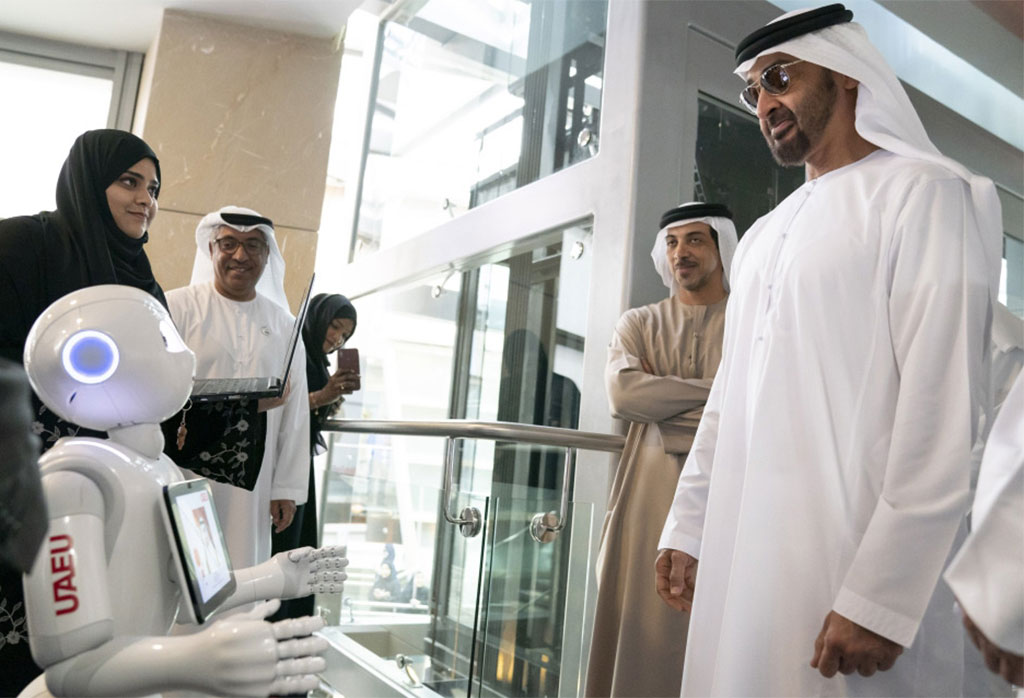
The United Arab Emirates has progressively transformed higher education from a conventional academic service into a strategic component of its economic infrastructure.
Today, universities across the UAE are developing Emirati talent, attracting international students and academics, supporting scientific research, producing advanced professional skills and strengthening the country’s ability to compete in knowledge-intensive industries.
This transformation has helped position the UAE as an increasingly attractive global destination where students can pursue internationally competitive education, experience one of the world’s most dynamic economies and, in many cases, begin their professional careers within the country.
Dubai illustrates the scale of this expansion. During the 2024–25 academic year, enrolment in private higher-education institutions regulated by the Knowledge and Human Development Authority reached 42,026 students, representing annual growth of around 20%. International students increased strongly and represented approximately 35% of total enrolment, while the sector offered more than 700 academic programmes.
The ambition extends considerably further. Dubai’s higher-education strategy aims to increase the proportion of international students, expand educational tourism and raise the sector’s contribution to the economy, demonstrating that education is increasingly being developed not only as a social investment, but also as an internationally tradable, knowledge-based economic activity.
Leadership Vision: Empowering Emirati Youth, Building Future Leaders and Advancing Sustainable Development
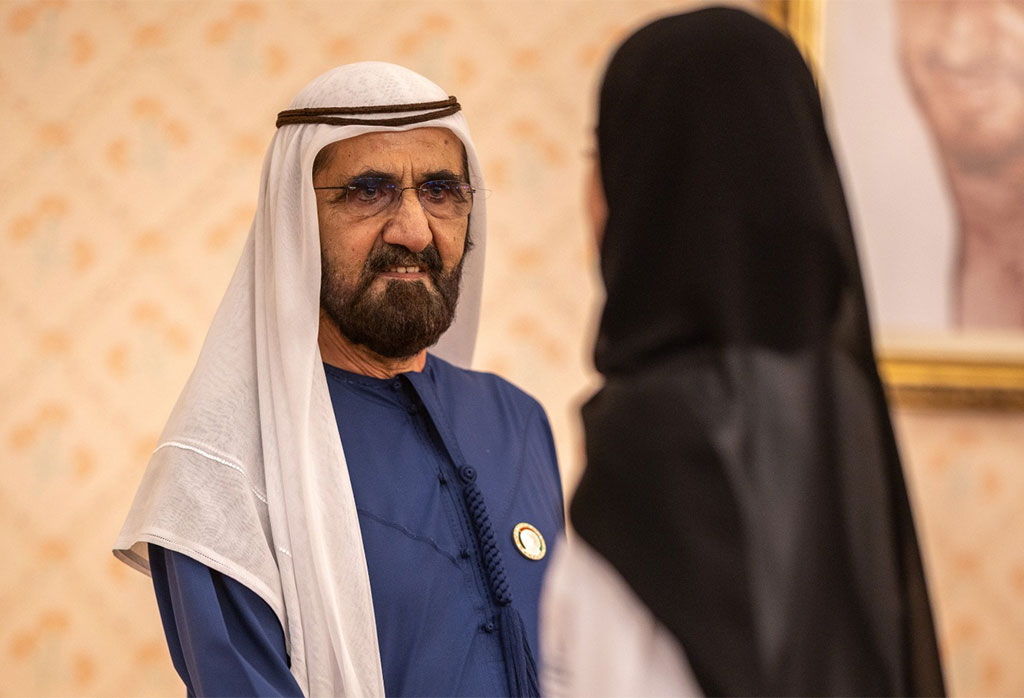
The most important asset within any advanced economy is ultimately not its physical infrastructure, natural resources or financial capital alone. It is its human capital.
This principle has become deeply embedded in the UAE’s development philosophy.
Under the leadership of His Highness Sheikh Mohamed bin Zayed Al Nahyan, President of the United Arab Emirates, investment in people—and particularly in Emirati youth—remains at the heart of the nation’s long-term development direction.
The strategic importance given to youth reflects the recognition that the next phase of the UAE’s progress will depend increasingly on the ability of young Emiratis to become scientists, entrepreneurs, engineers, physicians, economists, researchers, technology specialists, policymakers and leaders of both public and private institutions.
The objective is therefore much greater than increasing university graduation rates.
It is about creating generations capable of leading the country’s transition towards a sophisticated knowledge economy.
University education consequently represents one of the most important channels through which this national ambition can be achieved.
The UAE has developed a higher-education environment that provides young Emiratis with access to federal universities, internationally recognised private institutions, specialised technological universities and branch campuses of leading global academic institutions.
This sophisticated educational landscape supports the transition from education to productivity, from knowledge to innovation and from qualifications to leadership.
The development of Emirati youth also forms an essential component of broader national strategies aimed at increasing citizens’ participation in high-value economic sectors.
The National Youth Agenda 2031, for example, seeks to strengthen young Emiratis’ participation in economic development, expand access to future-oriented academic and vocational qualifications and encourage youth-led enterprises in promising economic sectors.
This direction closely complements national employment policies designed to increase Emirati participation in technology, artificial intelligence, financial services, energy, healthcare, advanced sciences and other strategic sectors.
Universities therefore sit at the centre of a much larger economic equation.
They provide the intellectual and professional foundation upon which Emiratisation, economic diversification, entrepreneurship and national leadership development can be sustainably built.
Alongside this national direction, His Highness Sheikh Mohammed bin Rashid Al Maktoum, Vice President and Prime Minister of the UAE and Ruler of Dubai, has consistently placed education, future readiness, government innovation and human development among the foundations of the UAE’s global competitiveness.
His government’s future-focused approach has helped reinforce a model in which education is expected not only to respond to existing labour-market requirements, but to anticipate the professions, industries and technologies of tomorrow.
Artificial intelligence, digitalisation, advanced engineering, data science, sustainability, biotechnology, entrepreneurship and future government capabilities are consequently becoming increasingly embedded within the UAE’s academic landscape.
The philosophy is particularly important.
Successful university systems cannot simply educate students for jobs that exist today. They must create the knowledge and analytical capabilities required for industries that may dominate the economy ten or twenty years from now.
The country’s flagship national strategy, We the UAE 2031, reinforces this principle by identifying human capital, future skills, global talent attraction and advanced education among the foundations of national development.
The vision calls for cutting-edge education capable of developing knowledgeable, highly skilled individuals who can contribute to shaping the future, while simultaneously strengthening the UAE’s ability to attract international talent.
This creates a complementary economic model.
On one side, the UAE invests heavily in preparing Emirati youth to become the principal national source of leadership, innovation and professional capability.
On the other, it remains open to international students, researchers, professors and specialists whose knowledge strengthens the country’s wider innovation ecosystem.
This combination of national talent development and international intellectual attraction is one of the UAE higher-education system’s most significant strategic advantages.
University Education and the UN Sustainable Development Goals
The UAE’s educational agenda also has an important international dimension through its alignment with the United Nations Sustainable Development Goals.
The most direct connection is with SDG 4 – Quality Education, which promotes inclusive, equitable and high-quality education alongside lifelong learning opportunities.
However, the impact extends significantly beyond education itself.
Universities contribute directly to SDG 8 – Decent Work and Economic Growth by strengthening employability and productivity; SDG 9 – Industry, Innovation and Infrastructure through research and technology development; and the broader sustainability agenda through expertise in clean energy, climate science, sustainable cities, healthcare and responsible economic development.
The UAE has increasingly encouraged universities to become active participants in this sustainable-development process.
Academic research is being connected to policy priorities, while universities are encouraged to contribute practical solutions to economic, environmental and social challenges.
The collaboration between national academic institutions and sustainable-development programmes demonstrates an important evolution in the role of higher education.
A university today is not simply expected to teach.
It is expected to research, innovate, collaborate with industry, support public policy and generate measurable social and economic value.
The combined leadership vision of developing Emirati youth, attracting international knowledge and preparing society for future economic transformation has therefore made university education one of the principal instruments through which the UAE can simultaneously advance its national development agenda and contribute to global sustainable-development objectives.
Diversity, Academic Quality and Advanced Programs
The UAE has built one of the region’s most diverse higher-education ecosystems, combining federal universities, private institutions, specialised research universities, technological colleges and international branch campuses.
Major institutions include United Arab Emirates University, Khalifa University, Zayed University, Higher Colleges of Technology, Abu Dhabi University, Mohamed bin Zayed University of Artificial Intelligence, New York University Abu Dhabi and Sorbonne University Abu Dhabi.
This breadth combines academic quality, specialisation, employability, research and international standards.
UAE Universities Rising in Global Academic Competition
The international rankings achieved by UAE universities provide further evidence of the sector’s development.
In the QS World University Rankings 2027, Khalifa University reached 147th globally, becoming the first UAE institution to enter the QS global top 150.
United Arab Emirates University ranked 217th, the American University of Sharjah 258th, the University of Sharjah 283rd, and Abu Dhabi University 348th globally.
These positions reflect an increasingly competitive academic environment.
Rankings are not themselves a complete assessment of university quality, but sustained improvements in research citations, academic reputation, international faculty representation, employer reputation and graduate outcomes provide useful indications of how strongly UAE universities are integrating into the global higher-education system.
The presence of international branch campuses further increases the country’s academic offering.
Students in the UAE can access institutions connected with internationally recognised universities from the United Kingdom, Australia, France, India, the United States and other countries.
The result is an educational market combining domestic academic capacity with international institutional expertise.
The Economic Return: Higher Education as a Driver of UAE 2031, D33 and Abu Dhabi Economic Vision 2030
Higher education generates value beyond tuition through employment, research and spending across housing, transport, retail, hospitality, technology and professional services. Its most important long-term contribution, however, is human-capital formation and productivity.
A highly educated workforce enables firms to adopt technology, commercialise innovation and move into higher-value sectors. This directly supports We the UAE 2031 and its ambition for talent, investment and knowledge-based growth.
The same principle underpins the Dubai Economic Agenda D33, where growth in trade, investment, technology and advanced services requires skilled professionals, and Abu Dhabi Economic Vision 2030, which emphasises a productive workforce, diversification and knowledge-intensive industries.
The strategic conclusion is clear: economic diversification cannot be sustainable without corresponding diversification in skills and knowledge.
Abu Dhabi University: A Model of Academic Development and Labor-Market Alignment
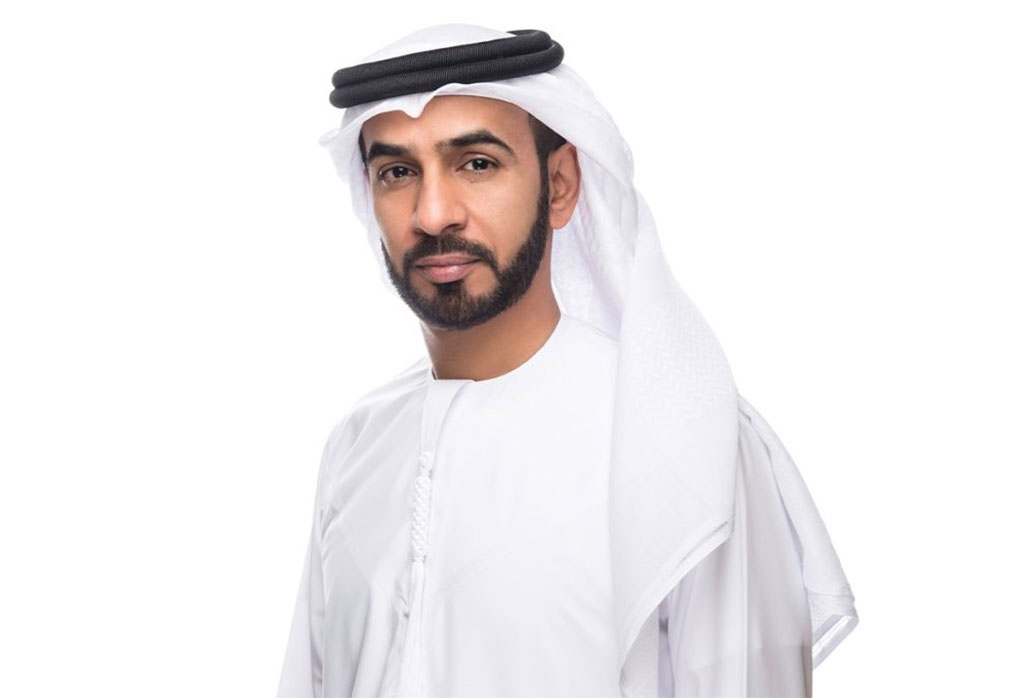
Abu Dhabi University provides an important example of the rapid development occurring across the UAE’s higher-education sector.
Under the chairmanship of Dr Ali Saeed Bin Harmal Al Dhaheri, the university has strengthened its academic standing, expanded its programmes and reinforced its focus on employability, research and international quality standards.
The university reached 348th globally in the QS World University Rankings 2027, representing another significant improvement in its international position.
It has also achieved notable recognition across international academic assessments and has strengthened its reputation among employers.
One of its major recent achievements came through its College of Business, which achieved the highly prestigious AACSB, EQUIS and AMBA Triple Crown accreditation.
Only a small proportion of business schools internationally achieve all three accreditations, making the accomplishment particularly significant for the university and the UAE’s business-education sector.
Adding further weight to this progress, on 17 September 2026, Abu Dhabi University was awarded an overall QS Stars 5+ rating, following an independent assessment under the QS Stars methodology. Significantly, ADU achieved five stars across all nine evaluated categories: Teaching, Research, Employability, Facilities, Good Governance, Social Impact, Global Engagement, Diversity, Equity & Inclusion, and MBA Programme Strength. This broad-based recognition is particularly relevant because it evaluates institutional performance beyond conventional rankings and demonstrates strength across both academic quality and student outcomes.
The scale of ADU’s academic community further illustrates its development. The university now reports more than 10,000 students representing over 100 nationalities, 32,000 graduates and more than 65 accredited programmes, strengthening its role as an internationally diverse institution while contributing to the UAE’s objectives in talent development, innovation and the knowledge economy.
Abu Dhabi University’s importance should, however, be considered beyond ranking positions.
A fundamental strength of modern universities is their ability to translate academic education into employment outcomes and economic participation.
ADU’s career services and employer-engagement activities seek to connect students with private companies, public institutions and professional opportunities through job matching, career counselling, interview preparation, CV and LinkedIn development and employer networking.
This model reflects a wider requirement across the UAE.
Universities should not operate independently from employers.
Curriculum development, internships, professional qualifications, research and career services should continuously respond to economic transformation.
Under Dr Ali Saeed Bin Harmal Al Dhaheri’s leadership, Abu Dhabi University’s progress provides an example of how UAE-based institutions can combine academic expansion, international standards, private-sector responsiveness and national development objectives.
Its continued improvement also supports Abu Dhabi’s broader ambition to establish itself as an international centre for education, research and innovation.
Education Exhibitions: Creating a One-Stop Marketplace for Academic Opportunity
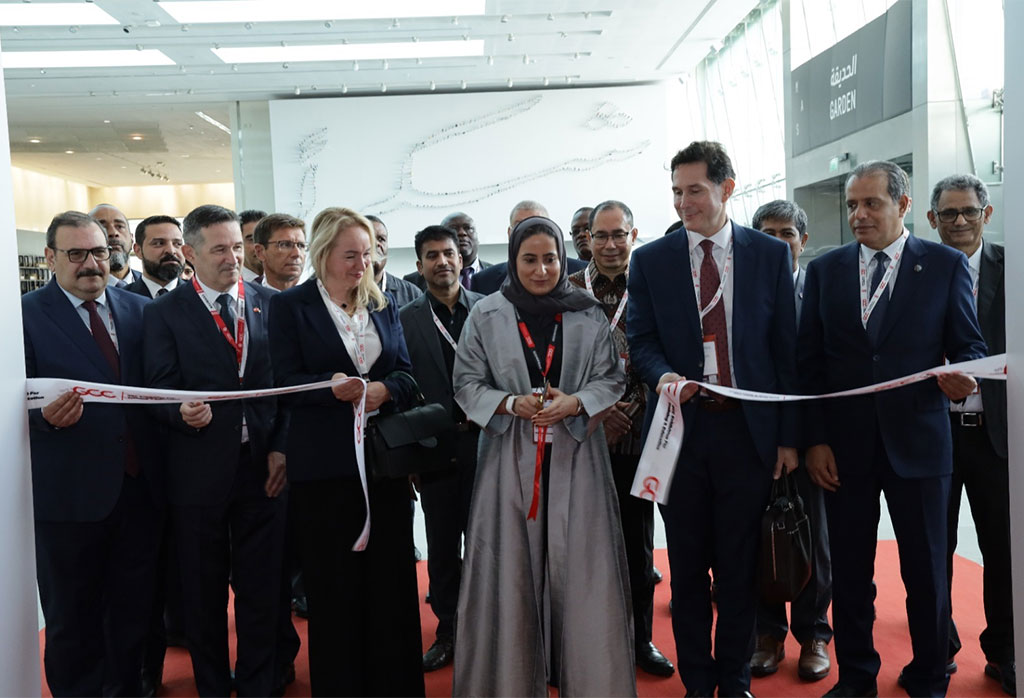
As the UAE’s university ecosystem becomes larger and more diverse, students and parents require effective platforms through which they can understand the rapidly expanding range of educational choices.
University and training exhibitions therefore play a valuable role by bringing education providers, students, families and professional-training organisations together under one roof.
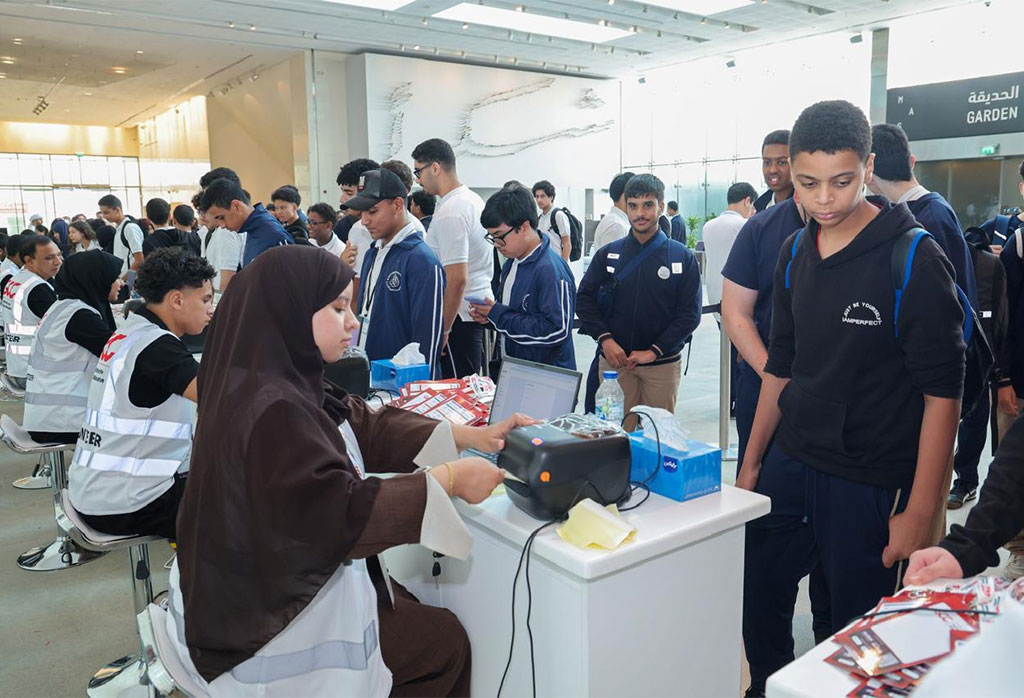
An outstanding example was the Gulf Exhibition for Training & Education – Abu Dhabi 2026, held from 14 to 16 September 2026 at Manarat Al Saadiyat in Abu Dhabi and organised by Midpoint.
The event became an important educational gathering connecting young people directly with universities and academic institutions.
Approximately 60 universities and educational institutions from the UAE and internationally participated, while the exhibition attracted more than 8,000 students from government and private schools.
These numbers demonstrate the scale of demand for direct academic guidance.
For a young student approaching graduation, choosing a university can be one of the most consequential economic and professional decisions of his or her life.
Students must assess disciplines, future employment opportunities, tuition costs, scholarships, accreditation, postgraduate opportunities and career prospects.
The Gulf Exhibition helped consolidate much of this information into a one-stop educational marketplace.
Students and parents could speak directly with admissions specialists, compare universities, understand scholarship opportunities and evaluate programmes without depending exclusively on websites, advertisements or overseas education agents.
The exhibition brought together a strong representation of the UAE university sector.
Participating institutions included Liwa University, Higher Colleges of Technology, RAK Medical and Health Sciences University, Zayed University, University of Sharjah, University of Al Dhaid, United Arab Emirates University, American University of Sharjah, University of Kalba, Ajman University and Abu Dhabi University.
Specialised institutions and training providers also participated, including ADNOC Technical Academy and hospitality and professional education providers, alongside international universities and education organisations.
This diversity was one of the exhibition’s strongest characteristics.
Students could evaluate conventional academic degrees alongside vocational, technical and professional education pathways.
That distinction is important because future labour markets will require multiple forms of expertise.
Not every successful career requires the same academic pathway, and modern economic development increasingly depends upon technicians, programmers, hospitality professionals, engineers, healthcare specialists and skilled vocational employees alongside conventional university graduates.
From an economic perspective, exhibitions such as the Gulf Exhibition for Training & Education also help reduce information asymmetry within the education market.
Universities can communicate directly with prospective students.
Students gain clearer information about programmes and admission standards.
Parents obtain greater transparency regarding educational choices.
Scholarship providers can reach suitable candidates.
Training institutions can present alternative career routes.
International institutions can better understand UAE student demand.
The exhibition therefore performs an important function at the intersection of education supply, student demand and future workforce planning.
Its organisation in Abu Dhabi also reinforces the capital’s rapidly developing position as a centre for knowledge, culture, higher education and international academic exchange.
As university choice becomes more sophisticated, such exhibitions will increasingly form part of the infrastructure required to guide young people towards disciplines that correspond not only with their personal ambitions, but also with the UAE’s future economic requirements.
Education as Strategic Economic Infrastructure
The next phase of UAE economic development will increasingly depend not only on physical infrastructure, but on the country’s ability to develop intellectual infrastructure.
Universities sit at the heart of this challenge.
They educate Emirati youth, attract international talent, strengthen scientific research, create intellectual property, support entrepreneurship and supply the skills required by artificial intelligence, advanced manufacturing, healthcare, financial services, renewable energy, aerospace, logistics and the digital economy.
More importantly, they help transform the UAE from a destination that primarily attracts financial investment into one that also attracts knowledge, researchers, students, innovators and future leaders.
The country’s higher-education strategy can therefore be understood as the development of an integrated education–research–innovation–talent–employment ecosystem.
Its ultimate success will not be measured simply by the number of university campuses or graduates.
It will be measured by the quality of Emirati leadership emerging from those institutions, by the employability and productivity of graduates, by scientific discoveries and commercialised research, by businesses created, by international talent attracted and by the contribution universities make to the UAE’s long-term economic competitiveness.
In this sense, education represents far more than a public service.
It is strategic economic infrastructure—and one of the most important long-term investments the UAE can make in its future prosperity.