
 Bitcoin
  Ethereum
  Tether
  BNB
BNB  Solana
  XRP
XRP  USDC
USDC  Lido Staked Ether
  Cardano
  Avalanche


Key points
FIFA on Netflix launches as a football simulation inside Netflix Games
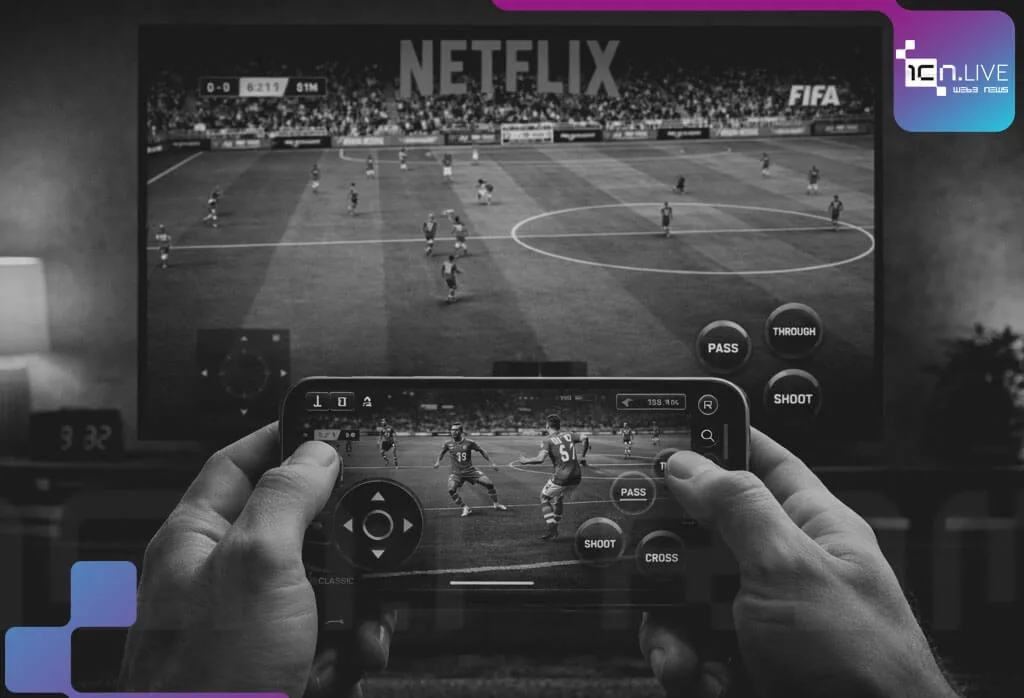
Your phone works as the main controller during TV play
FIFA World Cup 2026 frames the release window and global focus
Netflix members receive free access without extra purchases
Early expectations around FIFA on Netflix focus on access, speed, and shared play.
The project targets players without consoles. Netflix Games wants football sessions to feel quick, clear, and social. The setup centers on TV play paired with a phone controller. This model removes hardware barriers and shortens entry time. Netflix positions the title around global football interest ahead of the FIFA World Cup 2026.
The announcement confirms solo matches and online sessions with friends. Netflix avoids deep technical details during this phase. Launch regions remain unnamed. Supported TV models also remain unknown. Release timing points toward summer near the tournament. More details will arrive in 2026, according to Netflix.
FIFA on Netflix and the move toward simple living room play
Netflix Games places FIFA on Netflix beside films and series on supported TVs. Players open the game directly from the TV interface. A phone then connects as a controller. This approach follows earlier Netflix experiments with party games. Football brings a larger audience and stronger brand power.
Phone controller design supports fast learning. Touch controls handle movement, passes, and shots. Netflix describes gameplay as thrilling to master without long tutorials. This signals a focus on accessibility rather than complex button maps. Football fans new to gaming receive an easier entry path.
TV play raises important questions. Performance depends on TV hardware, network stability, and phone response time. Netflix avoids claims about frame rates or graphics depth. The football simulation angle suggests balanced visuals rather than realism extremes. Accessibility leads design priorities.
Netflix Games aims for wide appeal across age groups. Football fans watching the World Cup receive a clear invitation to play. Friends join remotely without extra purchases. Free access for members supports fast adoption across regions.
ANOTHER MUST-READ ON ICN.LIVE
ADGM global financial institutions expansion strengthens Abu Dhabi finance role
Phone controller design shapes the FIFA on Netflix experience
Using a phone controller removes the need for consoles or gamepads. Most households already own smartphones. This lowers cost and friction. Netflix Games relies on familiar gestures rather than complex inputs. Taps, swipes, and holds guide player actions.
This design supports short play sessions. A match fits into the breaks between shows. Group play also becomes easier. Friends join online using existing Netflix accounts. Social friction drops further.
Netflix highlights fast learning as a core goal. Football simulation rules remain familiar. Passing, shooting, and defending follow common football logic. New players grasp basics quickly. Experienced fans focus on timing and strategy.
This approach also supports younger players. Simple controls reduce frustration. Parents avoid extra spending on gaming gear. Football becomes a shared activity across screens and ages.
FIFA World Cup 2026 drives timing and global focus
FIFA World Cup 2026 anchors the release strategy. The tournament spans multiple host nations and massive audiences. Netflix calls the event a defining cultural moment. Launch timing aligns with global football attention.
FIFA president Gianni Infantino supports the partnership. He frames the project as innovation in football gaming. Netflix Games president Alain Tascan highlights simplicity and broad reach. Quotes emphasize football roots and button-level access.
Delphi Interactive leads development and publishing. The studio focuses on accessible multiplayer experiences. This choice reinforces Netflix’s goals around speed and inclusion rather than deep simulation complexity.
Free access for Netflix members stands out. Traditional sports games rely on full price releases and annual updates. FIFA on Netflix avoids that structure. Membership access changes expectations around value and reach.
What players should watch before launch
Several open questions remain. Launch countries remain unconfirmed. TV compatibility also needs clarity. Online matchmaking details remain limited. Server capacity and latency will matter during peak World Cup periods.
TV play success depends on execution quality. Phone controller response must feel immediate. Network delays would damage trust. Netflix Games must deliver stable performance across regions.
Content updates also matter. Teams, tournaments, and modes shape replay value. Netflix has not shared post-launch plans. Football fans will look for regular updates during the tournament window.
From my perspective, FIFA on Netflix represents a strategic shift toward friction-free sports gaming. The model prioritizes reach over depth. Success depends on polish, stability, and social fun.
Netflix plans more announcements during 2026. Those updates will determine whether FIFA on Netflix becomes a living room staple or a limited experiment. The idea holds promise through simplicity, timing, and scale.