• bitcoinBitcoin (BTC) $ 42,977.00 0.18%
  • ethereumEthereum (ETH) $ 2,365.53 1.12%
  • tetherTether (USDT) $ 1.00 0.2%
  • bnbBNB (BNB) $ 302.66 0.19%
  • solanaSolana (SOL) $ 95.44 1.28%
  • xrpXRP (XRP) $ 0.501444 0.1%
  • usd-coinUSDC (USDC) $ 0.996294 0.34%
  • staked-etherLido Staked Ether (STETH) $ 2,367.26 1.4%
  • cardanoCardano (ADA) $ 0.481226 2.68%
  • avalanche-2Avalanche (AVAX) $ 34.37 1.19%
  • bitcoinBitcoin (BTC) $ 42,977.00 0.18%
    ethereumEthereum (ETH) $ 2,365.53 1.12%
    tetherTether (USDT) $ 1.00 0.2%
    bnbBNB (BNB) $ 302.66 0.19%
    solanaSolana (SOL) $ 95.44 1.28%
    xrpXRP (XRP) $ 0.501444 0.1%
    usd-coinUSDC (USDC) $ 0.996294 0.34%
    staked-etherLido Staked Ether (STETH) $ 2,367.26 1.4%
    cardanoCardano (ADA) $ 0.481226 2.68%
    avalanche-2Avalanche (AVAX) $ 34.37 1.19%
image-alt-1BTC Dominance: 58.93%
image-alt-2 ETH Dominance: 12.89%
image-alt-3 BTC/ETH Ratio: 26.62%
image-alt-4 Total Market Cap 24h: $2.51T
image-alt-5Volume 24h: $144.96B
image-alt-6 ETH Gas Price: 5.1 Gwei
 

MORE FROM SPONSORED

LIVE Web3 News


ARTICLE INFORMATION

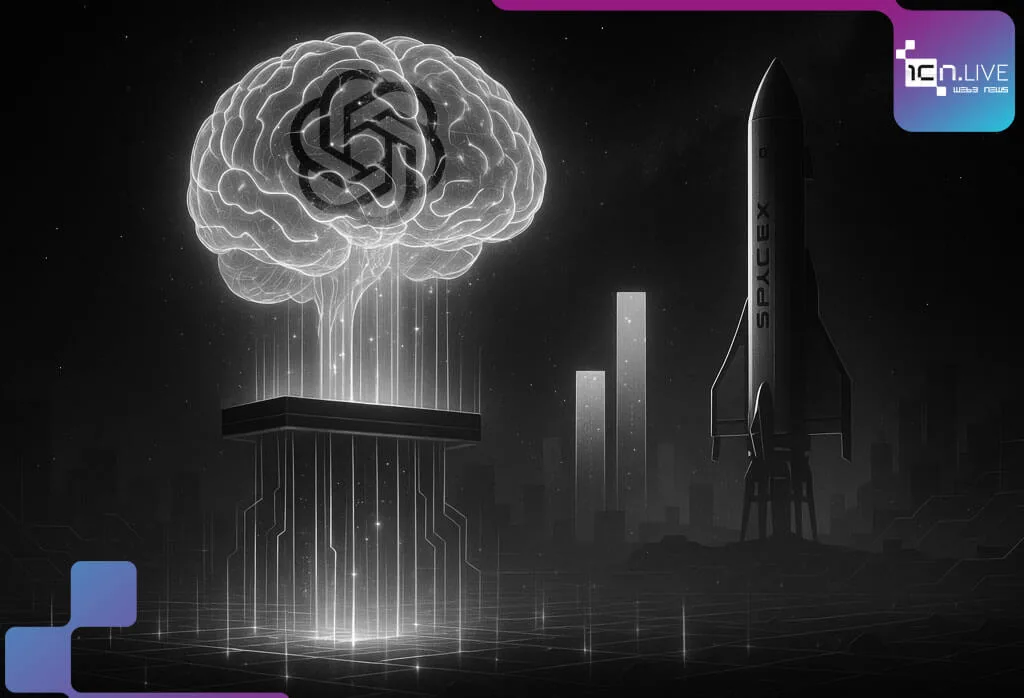
OpenAI has become the world’s largest startup

OpenAI has become the world’s largest startup with $500B valuation surpassing SpaceX

Khaled Darwish

Key Points

  • OpenAI has become the world’s largest startup with a $500 billion valuation.

  • SpaceX, ByteDance, and Anthropic trail far behind.

  • Crypto leaders like Tether and Coinbase struggle to reach even one-fifth of OpenAI’s value.

  • Stablecoins may link AI and blockchain growth in the digital economy.


OpenAI has become the world’s largest startup after reaching a $500 billion valuation in a secondary share sale.

Investors, including Thrive Capital, SoftBank, Dragoneer, Abu Dhabi’s MGX, and T. Rowe Price, bought $6.6 billion worth of stock from current and former employees, according to Bloomberg.

This milestone places OpenAI ahead of SpaceX, Elon Musk’s high-profile company valued at $400 billion. Other global giants, such as ByteDance at $220 billion and Anthropic at $183 billion, now fall well behind OpenAI. The scale of growth highlights how AI has quickly taken the lead as the most attractive sector for investors.

AI dominance over traditional startups

The $500 billion valuation shows how investors see AI as central to future digital infrastructure. While OpenAI towers over its competitors, crypto companies provide a sharp contrast. Coinbase, the largest publicly traded crypto exchange, holds only $89 billion in market value. Ripple, Circle, and Binance also remain below $100 billion.

Tether, the largest stablecoin issuer, is considered the closest competitor from the crypto side. Artemis CEO Jon Ma recently suggested that Tether, if publicly listed, could reach a $515 billion valuation. Such a figure would place it nearly equal to OpenAI, making it the 19th-largest public company.


ANOTHER MUST-READ ON ICN.LIVE:

Sora 2 app launch with AI video generator, realistic motion, Cameo feature, and AGI


Tether and stablecoins as AI partners

Stablecoins are becoming more relevant in this debate. On Sept. 3, Galaxy Digital CEO Mike Novogratz argued that AI agents will be the biggest users of stablecoins. His reasoning was clear, as automated systems need efficient digital money for constant micro-transactions.

Recent research by CEX.io revealed that over 70% of stablecoin transactions in Q3 2025 were linked to bots. This signals the beginning of the overlap between AI activity and crypto. From my standpoint, such figures point toward a world where AI systems increasingly rely on stablecoin liquidity.

Building digital infrastructure with AI and crypto

Novogratz is also betting directly on AI. His firm, Galaxy Digital, secured a $1.4 billion loan in August to fast-track its Texas Helios AI data center. The facility will support CoreWeave’s AI and high-performance computing services. Forecasts suggest that the center could generate more than $1 billion in annual revenue.

This underlines how AI and blockchain both act as pillars of digital infrastructure. On one side, AI drives software and automation. On the other hand, stablecoins and crypto provide financial rails.

The two may evolve together, offering complementary solutions to the global economy.


Why OpenAI leads while crypto lags

OpenAI’s $500 billion valuation reflects investor belief in AI as a near-term revenue generator. In contrast, crypto companies face regulatory hurdles and slower adoption in mainstream finance. SpaceX remains a strong competitor in aerospace, but the capital flowing into AI shows a broader economic priority shift.

The contrast also proves that size alone does not guarantee leadership. Crypto needs clear regulations and public trust before valuations can match AI leaders. Stablecoins, however, appear to be the exception. With growing global usage, Tether might be the only crypto entity capable of matching OpenAI’s valuation.

The story of OpenAI’s rapid rise highlights a turning point. With $500 billion in value, it shows how AI has become the central focus for investors. The combination of AI with stablecoins may shape the next stage of digital infrastructure, bringing software and finance together in new ways.


SHARE

Why has OpenAI become the world’s largest startup?

OpenAI’s rise to a $500 billion valuation is mainly fueled by investor demand for AI-driven innovation. Investors like Thrive Capital, SoftBank, and T. Rowe Price bought $6.6 billion in employee shares, signaling long-term belief in OpenAI’s growth. The company is seen as central to the development of AI models that power applications in business, education, healthcare, and finance. OpenAI’s valuation also reflects its leadership in generative AI, which has gained mainstream adoption faster than most technologies. Unlike other startups, OpenAI benefits from both rapid adoption and continuous funding. Its technology is already reshaping industries, which gives investors confidence that future earnings will justify its high market value. By surpassing SpaceX and ByteDance, OpenAI has established AI as the most attractive industry for global capital flows.

How does OpenAI compare to crypto companies like Tether or Coinbase?

OpenAI’s $500 billion valuation is far ahead of leading crypto firms. Coinbase has a market capitalization of $89 billion, while Ripple, Circle, and Binance are all below $100 billion. Tether is considered the closest crypto rival. According to Artemis CEO Jon Ma, if Tether went public, it could be worth $515 billion, which would nearly equal OpenAI’s size. This difference illustrates how investors currently view AI as more mature and monetizable than crypto. At the same time, stablecoins are becoming critical in global markets, and Tether’s position as the largest issuer gives it a unique advantage. Still, for now, AI is leading, with crypto playing catch-up in terms of trust, regulation, and adoption.

Why are stablecoins important in the AI discussion?

Stablecoins provide fast, digital money that suits the needs of automated systems like AI agents. Galaxy Digital CEO Mike Novogratz has said that AI agents will be the biggest stablecoin users in the near future. Analysts already report that 70% of stablecoin transactions are linked to bots, which may include AI-driven systems. This means AI and stablecoins are becoming linked in practice, not just in theory. Stablecoins make it possible for AI to engage in continuous micro-transactions, such as buying data, computing resources, or services without human intervention. This makes stablecoins critical for scaling AI-driven digital economies. If adoption increases, stablecoins could act as the bridge between AI development and blockchain finance.

What does this mean for the future of startups like SpaceX, ByteDance, and Anthropic?

The fact that OpenAI has surpassed SpaceX, ByteDance, and Anthropic shows how quickly investor sentiment has shifted toward AI. SpaceX still holds a $400 billion valuation, proving strength in aerospace, but it trails AI in investment excitement. ByteDance at $220 billion and Anthropic at $183 billion remain far behind. This does not mean these companies are weak, but it signals that capital markets prioritize software-based growth with faster returns. AI is seen as more scalable than space travel or social media. From my perspective, companies like SpaceX will remain leaders in their fields, but the immediate wave of capital will flow toward AI projects. This makes OpenAI the clear leader of the next generation of startups, at least in terms of valuation.

FEATURED

EVENTS

Days
Hr
Min
Sec
 

ICN TALKS EPISODES