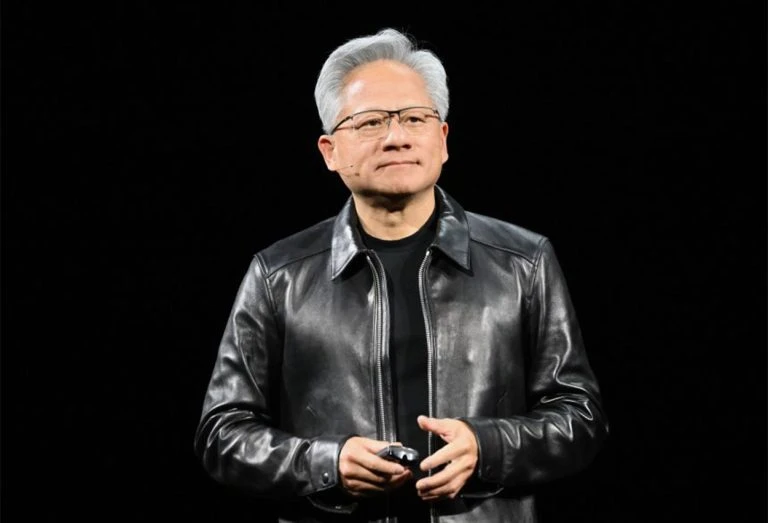



Nvidia’s chip exports are back under scrutiny in Washington after Jensen Huang resigned as chief executive of the company he helped start in 1993. He stepped down on November 12. Reports had linked him to two affairs. One involved a subordinate. The other involved Alice Huang, a former executive at Megaspeed whom US officials suspected of ties to Chinese intelligence.
Colette Kress, the finance chief, is now interim CEO. The personal story has drawn the headlines. Beneath it sit open questions about who buys Nvidia hardware and where that hardware ends up.
Huang pushed for China sales
For years, Huang argued that Nvidia’s chip exports to China should grow. At the Milken Institute in 2025, he put the eventual Chinese market for AI chips at $50 billion. Washington took a different view. The Biden administration restricted sales to keep advanced chips away from China’s military and AI programs.
Nvidia answered with the H20, a weaker chip built to meet those rules. In April 2025, the Trump administration required licences for that chip too. Nvidia said the move would cost it $5.5 billion.
Policy then shifted. In December 2025, President Donald Trump said Nvidia could sell its H200 to approved buyers in China, with 25 percent of the revenue going to the US government. Rules issued in January 2026 added a review for each deal, third-party testing, and a cap on China volumes at half of US sales. Approval for Nvidia H200 China sales came with those conditions attached. By May, 10 Chinese companies had clearance to buy the chip.
What the Megaspeed investigation covers
Megaspeed is a cloud computing firm based in Singapore. Analysts estimate it has bought more than $4 billion in Nvidia chips. Investigators want to know whether some of that hardware reached China in breach of US rules.
The Commerce Department opened the Megaspeed investigation in 2024. In June 2025, its officials and Singapore police carried out an on-site check and interviewed Alice Huang, whom they identified as the company’s CEO. The Justice Department now leads a criminal probe. This case tests how closely Nvidia’s chip exports are tracked after they leave the company.
Megaspeed calls itself a legitimate and lawful business. It has hired outside lawyers for an internal review. The company says Alice Huang left in August 2025. Nvidia placed Megaspeed on its own block list in June 2025, halting direct sales.
Why the Entity List fight matters for Nvidia’s chip exports
The Entity List is the Commerce Department’s trade blacklist. Companies on it face strict limits on buying US technology. Treasury Secretary Scott Bessent said on November 13 that four departments had wanted Megaspeed listed for months. Commerce, led by Howard Lutnick, has not added it.
People familiar with the matter say officials briefed Lutnick months ago on the relationship between the two Huangs. The dispute has prompted talk inside the administration about whether he should stay. In a statement, the White House said Trump has complete confidence in him.
A company left off the list faces none of the limits a listing brings. That gap sits at the center of the debate over Nvidia export controls.
AI chip smuggling cases extend beyond Megaspeed
Megaspeed is not the only case. In March 2026, prosecutors charged the founder of Super Micro Computer, a server maker based in California, with smuggling $2.5 billion in servers carrying Nvidia chips to China. Three people face charges. The company was not named in the indictment and says it is cooperating fully.
Both cases show how AI chip smuggling can run through third parties outside China. Each one adds pressure on the agencies that enforce the rules. Nvidia’s chip exports now face that pressure without the founder who argued for them.