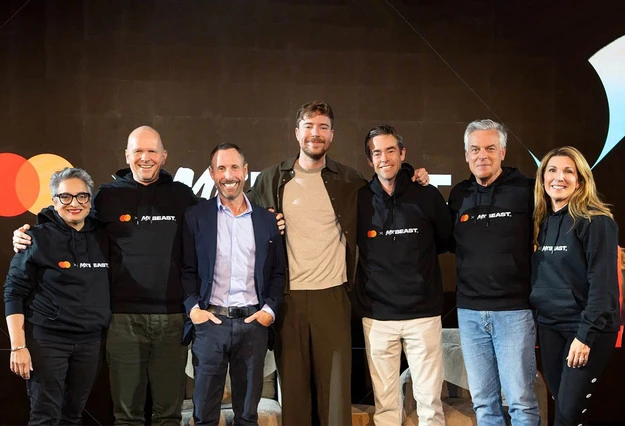



Beast Industries and Mastercard have agreed to build a group of co-branded card programs aimed at digital creators and the younger consumers who follow them. The companies describe the work as a way to move people from watching content to owning businesses. Behind that language sits a commercial question worth examining. Who governs the money, and who answers for the terms.
The agreement covers consumer and creator cards, member experiences, business tools, and financial education. Mastercard brings its payments network, loyalty systems and digital capabilities. Beast Industries brings the audience built around Jimmy Donaldson, the YouTube creator known as MrBeast and the most-subscribed name on the platform. Both sides frame the deal as support for the creator economy rather than a single product.
A partnership built for the creator economy
Mastercard has spent recent years positioning itself inside the Mastercard creator economy conversation, where content, commerce and financial services increasingly overlap. The company has already issued debit products designed for creators, following moves by rival networks into the same segment. This agreement extends that push by pairing a payments giant with one of the largest creator brands in the world. On its most recent earnings call, Mastercard described the program as covering both consumer and small-business creator cards.
For Beast Industries, the logic runs the other way. The company has grown from a single channel into a business spanning media, consumer products, technology and financial services. Adding card programs gives it a direct line to how its audience earns, spends and saves. The reach, both companies argue, reflects how a younger generation finds ideas and builds on them.
What Beast Industries and Mastercard have not disclosed
The announcement is notable for what it leaves open. Beast Industries and Mastercard have not named the issuing bank, the markets where the cards will launch, or a launch date. For a co-brand card, those details decide almost everything a cardholder cares about.
A co-brand card involves three parties. The brand on the front supplies the audience and the perks. A network moves each payment. The issuing bank sets the interest rate, the fees and the credit terms, and it carries the risk. Until the issuer is named, the cost of the product stays unknown. The brand with its name on the card holds the least control over what a user pays.
Who issues the card decides who sets the terms
This is where the governance question becomes concrete. Marketing language around turning fans into founders describes an aspiration. The issuing agreement describes the obligations. A creator who signs up for a card wants to know the rate, the protection, and the recourse if something goes wrong, and none of that has been published.
Mastercard’s announcement ran on its United States newsroom. Co-brand programs often launch in one market and expand slowly. A card available only to creators in one country would leave out much of the global audience the partnership points to. The gap between the stated ambition and the disclosed detail is the part worth tracking.
From followers to founders
The partnership does carry a clear strategic idea. Creators today operate as founders. They hire teams, launch products, and sell to customers across borders. Mastercard and Beast Industries plan to combine the payments network with the creator ecosystem to help these businesses manage cash flow and grow.
Jill Kramer, Mastercard’s chief marketing and communications officer, said the next generation is shaping culture and building new forms of commerce at once, and framed the work as opening paths from influence to economic opportunity. Jeff Housenbold, chief executive of Beast Industries, said the deal gives the company a chance to help people gain practical skills and push ambitious ideas further.
The financial plumbing is already partly in place. Earlier in 2026, Beast Industries acquired Step, a United States fintech offering banking and financial-literacy tools to teens and young adults. Step runs through a partnership with a chartered bank and issues a card with no monthly fees to a user base reported in the millions. That purchase moved MrBeast financial services from idea to infrastructure, giving the group an existing product to build on. The Mastercard agreement adds network reach and loyalty tools on top of what the company already owns.
Education, philanthropy and the 2030 pledge
The third strand of the deal involves access and learning. Through the Mastercard Center for Inclusive Growth and Beast Philanthropy, the two organizations plan to widen creator economy financial education and community resources. The stated goal is practical information tied to everyday decisions about earning, saving, and protecting what people build.
That piece connects to a wider Mastercard commitment. The company has pledged to connect and protect 500 million people and small businesses on their path to financial health by 2030. Placing the Beast Industries deal under that umbrella ties it to a public target the company can be measured against. A pledge with a date attached invites accountability, which is the useful part for anyone watching.
Why governance sits at the center
Strip away the framing and the creator economy co-brand cards represent a bet on where commerce is heading. A payments network treating creators as a small-business segment worth its own program signals how seriously the industry now takes online work as a source of income. It also places a well-known brand between users and a regulated banking product, which raises the stakes on clear terms.
For the people the deal targets, the value will rest on specifics still to come. Which bank issues the card matters more than the celebrity on the front. Launch markets matter more than the Priceless experiences on offer. Financial education helps only if it reaches people before they sign, not after.
Beast Industries and Mastercard have set out an ambition and a timeline worth holding them to. The partnership between Jimmy Donaldson Beast Industries and one of the world’s largest payments networks could give creators better tools to run their businesses. Whether it delivers on the promise of ownership depends on terms that remain, for now, undisclosed. The story to follow is not the announcement. It is who ends up governing the product, and on whose terms.