
 Bitcoin
  Ethereum
  Tether
  BNB
BNB  Solana
  XRP
XRP  USDC
USDC  Lido Staked Ether
  Cardano
  Avalanche


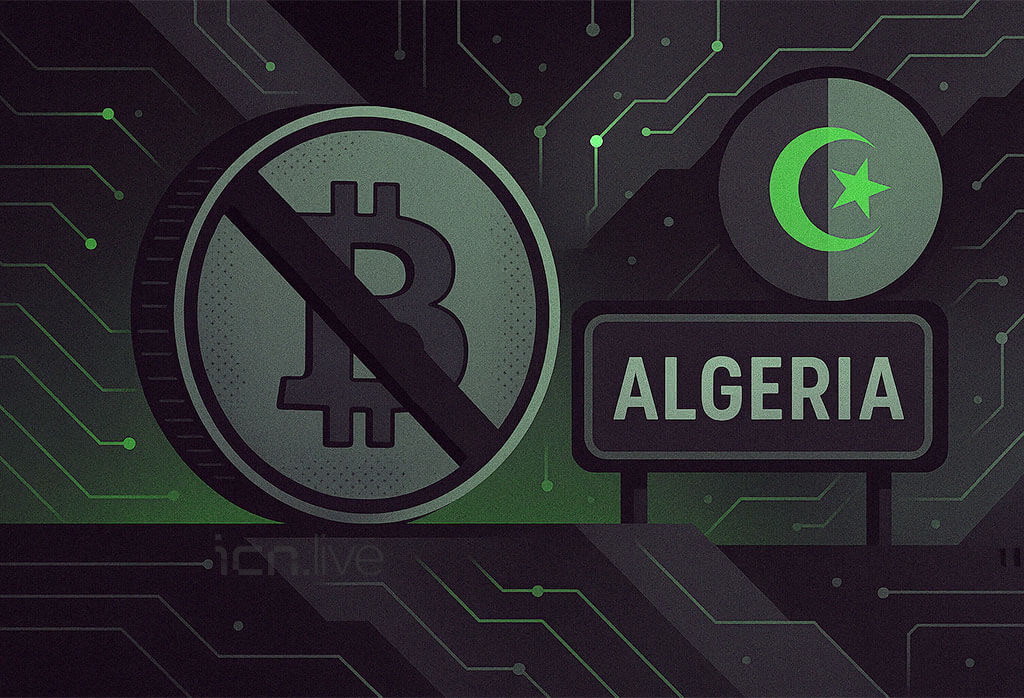
Algeria’s crypto ban is now official and comprehensive, targeting all digital asset activities nationwide.
According to the article published on Algerian news and information, Fibladi, the newly enacted Law No. 25-10, passed on July 24, makes it illegal to own, trade, mine, or even promote cryptocurrencies in Algeria. This sweeping legislation includes Bitcoin, Tether, and other digital tokens under its scope. The law also prohibits the use of digital wallets and any involvement with crypto exchanges.
Penalties for violating the Algerian crypto ban include jail time ranging from two months to one year. Fines can climb up to one million Algerian dinars, roughly $7,700. More severe punishments are expected for offenders tied to organized crime or financial misconduct.
Crypto crackdown aims to tighten national security
Algeria’s government claims this crackdown is a move to strengthen its financial system. The law aligns with anti-money laundering and anti-terrorism standards outlined by the Financial Action Task Force (FATF). Authorities say crypto use among tech-savvy youth and off-grid miners in southern Algeria has raised concerns.
The country’s low electricity costs have made it a hotspot for underground mining operations. These activities are now criminalized, with enforcement expected to increase both digitally and physically. The Bank of Algeria and the Banking Commission will work alongside judicial and security authorities for monitoring.
ANOTHER MUST-READ ON ICN.LIVE:
Tesla and Samsung in $16.5 billion deal for next-gen AI chip production
Algeria’s crypto ban covers everything, even wallets and VPN use
One of the more aggressive aspects of the Algerian crypto ban is its scope. It criminalizes not just ownership but also the use of crypto wallets, mining rigs, and trading via VPNs. Algerians using Binance, OKX, or Bybit are now legally exposed, even if they try to hide their activities online.
Digital assets are classified as “property, income, funds, or financial assets” regardless of their purpose. This broad classification allows the law to treat any crypto use as a financial crime. Even non-commercial use, such as holding a small amount of Bitcoin, is now illegal.
Global isolation or financial stability?
The Algerian crypto ban puts the country in a rare club of nations that have fully outlawed crypto. While some see this as a step toward financial stability and international compliance, others argue it isolates Algeria from the digital economy.
Young Algerians who engage with crypto as a source of income or innovation are particularly affected. Critics worry this law may push them further underground or out of the country. Whether the ban proves effective in curbing financial crime remains to be seen.