• bitcoinBitcoin (BTC) $ 42,977.00 0.18%
  • ethereumEthereum (ETH) $ 2,365.53 1.12%
  • tetherTether (USDT) $ 1.00 0.2%
  • bnbBNB (BNB) $ 302.66 0.19%
  • solanaSolana (SOL) $ 95.44 1.28%
  • xrpXRP (XRP) $ 0.501444 0.1%
  • usd-coinUSDC (USDC) $ 0.996294 0.34%
  • staked-etherLido Staked Ether (STETH) $ 2,367.26 1.4%
  • cardanoCardano (ADA) $ 0.481226 2.68%
  • avalanche-2Avalanche (AVAX) $ 34.37 1.19%
  • bitcoinBitcoin (BTC) $ 42,977.00 0.18%
    ethereumEthereum (ETH) $ 2,365.53 1.12%
    tetherTether (USDT) $ 1.00 0.2%
    bnbBNB (BNB) $ 302.66 0.19%
    solanaSolana (SOL) $ 95.44 1.28%
    xrpXRP (XRP) $ 0.501444 0.1%
    usd-coinUSDC (USDC) $ 0.996294 0.34%
    staked-etherLido Staked Ether (STETH) $ 2,367.26 1.4%
    cardanoCardano (ADA) $ 0.481226 2.68%
    avalanche-2Avalanche (AVAX) $ 34.37 1.19%
image-alt-1BTC Dominance: 58.93%
image-alt-2 ETH Dominance: 12.89%
image-alt-3 BTC/ETH Ratio: 26.62%
image-alt-4 Total Market Cap 24h: $2.51T
image-alt-5Volume 24h: $144.96B
image-alt-6 ETH Gas Price: 5.1 Gwei
 

MORE FROM SPONSORED

LIVE Web3 News


ARTICLE INFORMATION

Australia CBDC trial

Australia’s CBDC trial explores wholesale finance with tokenized digital money

ICN

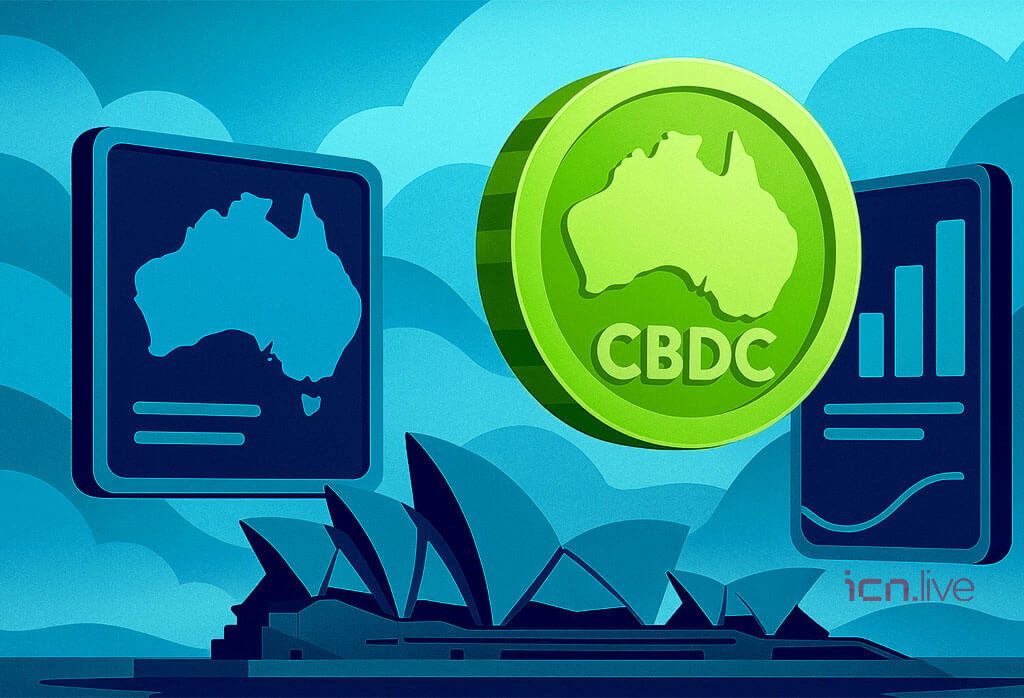
Australia’s CBDC trial has entered a new phase as the Reserve Bank of Australia tests wholesale digital currency applications.

The pilot, part of Project Acacia, is focused on using digital money and tokenization to improve financial market infrastructure. The initiative is a collaboration between the RBA and the Digital Finance Cooperative Research Centre, aiming to modernize settlement systems. In this six-month phase, stablecoins, deposit tokens, and a central bank digital currency (CBDC) will be tested.

The trial will explore 24 distinct use cases. Of those, 19 involve real monetary transactions and five are conceptual. These cover a wide range of assets like carbon credits, fixed-income securities, and trade receivables. The RBA’s involvement signifies a serious step toward transforming how digital assets interact with Australia’s economy.

Major banks onboard Australia CBDC trial for market transformation

Australia CBDC trial includes three of the country’s biggest banks: Commonwealth Bank (CBA), ANZ, and Westpac.

CBA is collaborating with JPMorgan to enhance repo market operations using digital currencies and blockchain-based collateral. Repo markets are vital for short-term liquidity, and digital tools promise to make these more efficient and less risky.

ANZ is leading a trial for tokenized trade payables, aiming to solve cash flow issues faced by suppliers. The bank is also testing tokenized fixed-income securities using wholesale CBDC to improve credit settlements. These applications show how digital currencies can boost financial efficiency.

The testing even extends to how commercial banks might use central bank accounts more effectively. The scope and depth of this phase suggest Australia is preparing for a future where traditional banking blends with Web3 technology.

ANOTHER MUST-READ ON ICN.LIVE:

Revolut $65B valuation signals fintech’s bold new growth chapter

Green lights and regulatory flexibility for testing

Australia CBDC trial is receiving active regulatory support to push innovation while managing risk.

The Australian Securities and Investments Commission (ASIC) has offered temporary exemptions from certain regulations. This allows participants to work with digital assets currently outside legal definitions. ASIC Commissioner Kate O’Rourke highlighted the agency’s openness to innovation while emphasizing the importance of safeguards.

This regulatory relief is essential to test blockchain use in a real-world setting. The regulators’ engagement is seen as a strong sign that Australia is embracing new financial technologies.

Where crypto regulation stands in Australia

The Australia CBDC trial occurs as the government shapes its crypto framework. The Labor Party-led administration has proposed bringing crypto exchanges under existing financial service laws.

Additionally, Australia is in talks with its major banks to address de-banking concerns that affect crypto platforms. Since 2022, consultations have been underway to define digital asset rules, showing a comprehensive approach to Web3 integration.

SHARE

What is the Australia CBDC trial trying to achieve?

The Australia CBDC trial, under Project Acacia, aims to explore how digital money and tokenized assets can improve wholesale financial markets. It tests technologies like stablecoins, deposit tokens, and central bank digital currency (CBDC) in real-world scenarios. The trial includes major financial institutions and fintechs and covers diverse assets such as fixed income and carbon credits. The goal is to evaluate efficiency, liquidity, and settlement enhancements using blockchain and tokenization. Results from this pilot could shape Australia’s future monetary infrastructure and influence regulatory policies related to digital assets and financial innovation.

Which banks are participating in the Australia CBDC trial?

Three of Australia’s top four banks—Commonwealth Bank (CBA), ANZ, and Westpac—are active participants. CBA is working with JPMorgan to optimize the repo market using digital currency and blockchain records. ANZ is exploring tokenized trade payables and fixed-income settlements using a wholesale CBDC. These use cases show how CBDCs could improve market liquidity, reduce counterparty risks, and support efficient capital movement. The inclusion of these banks demonstrates the seriousness and institutional support behind the project, adding credibility to Australia’s exploration of digital financial systems.

What kind of assets are being tested in the CBDC pilot?

The Australia CBDC trial involves a variety of asset classes to test how tokenized money can be applied across sectors. These include carbon credits, trade receivables, private equity, and fixed-income products. Out of 24 use cases, 19 involve actual money transactions, and the remaining five are proof-of-concept models. This diverse mix ensures the technology is examined under different conditions. By simulating both traditional and emerging asset classes, the RBA and partners aim to determine practical use cases for digital currencies in Australia’s evolving financial landscape.

How does Australia’s crypto regulation align with this CBDC trial?

Australia’s crypto regulatory approach is evolving alongside the CBDC trial. The government has proposed regulating crypto exchanges using current financial services legislation. Industry consultations started in 2022 to craft a clear crypto framework. Meanwhile, regulatory bodies like ASIC have granted temporary exemptions to allow the trial to test digital assets outside existing legal definitions. This dual-track strategy—encouraging innovation while establishing rules—positions Australia to be a leader in responsible digital finance. The CBDC trial provides real-world data to support future regulatory decisions and build a secure digital asset ecosystem.

FEATURED

EVENTS

Days
Hr
Min
Sec
 

ICN TALKS EPISODES