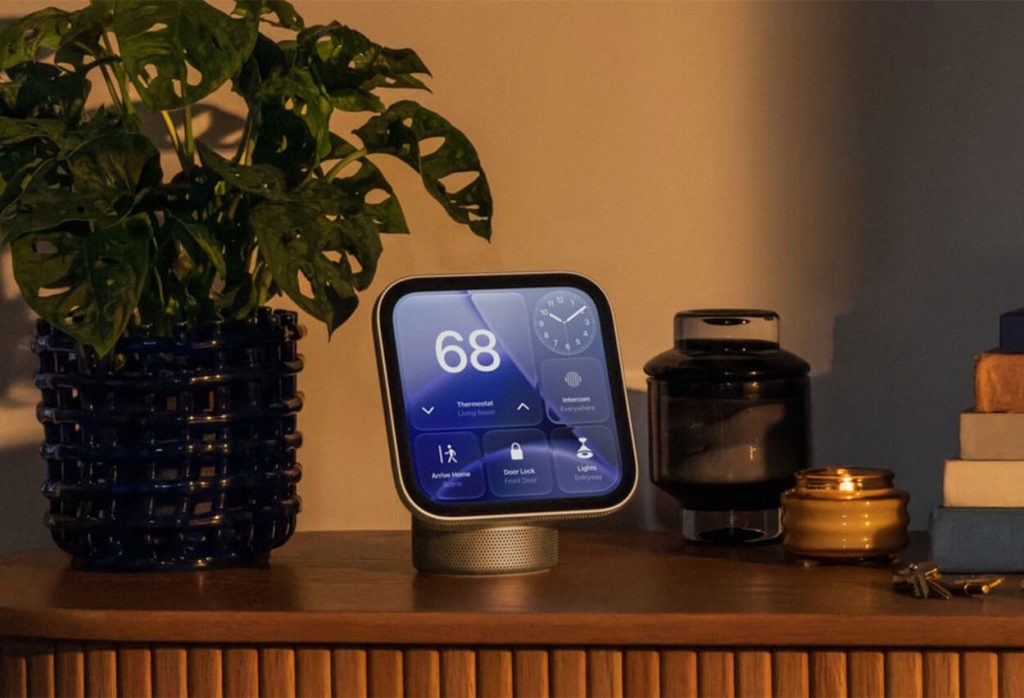
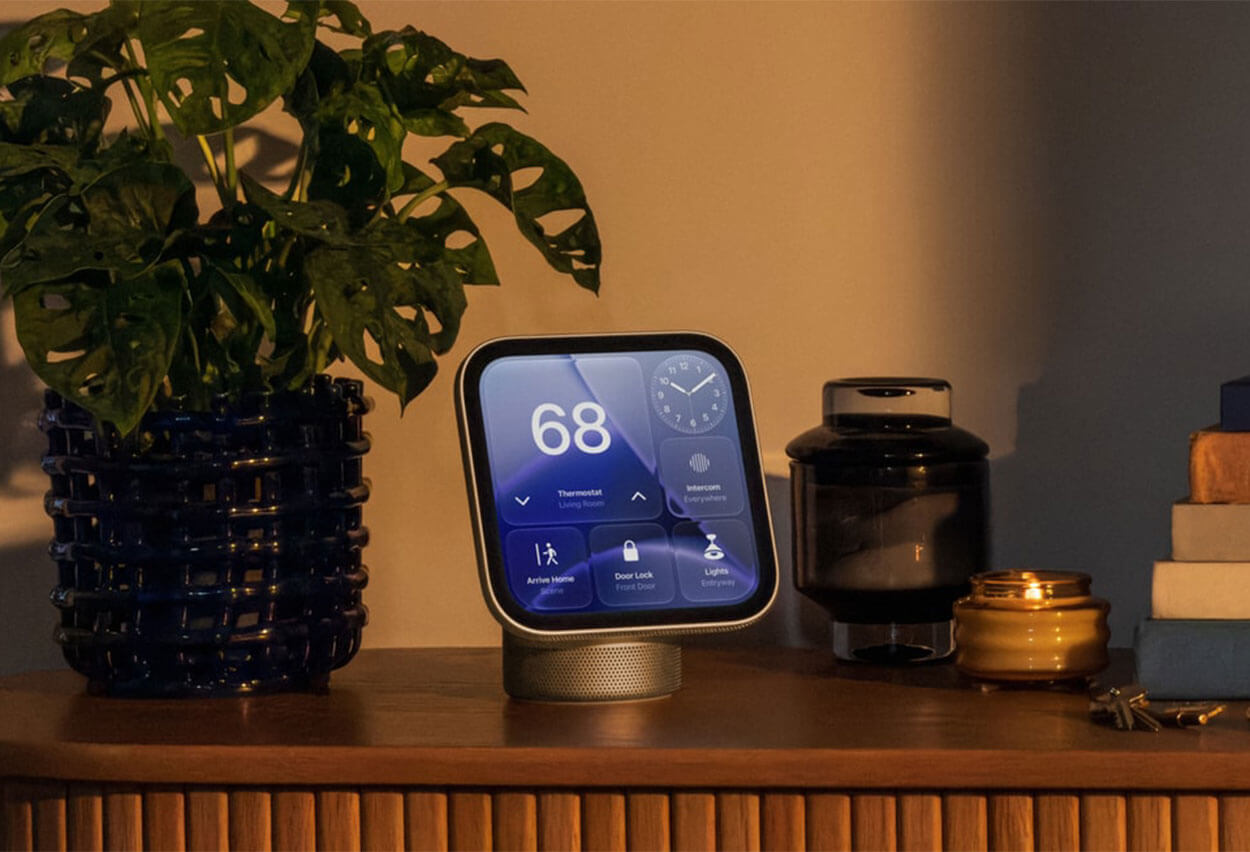



Apple HomeView is the company’s first dedicated smart home display, a product category Apple studied for years before committing to it. The device is a 7-inch screen that sits on a counter or mounts to a wall, and it pulls a household’s entertainment, communication, and home controls into one surface. Pre-orders opened the day of the announcement, and units reach buyers in mid-November.
A category Apple waited to enter
The move places Apple in a market Amazon and Google defined more than half a decade ago. The structural logic is clear. Apple already sells the phones, watches, and speakers that fill many homes, and a shared screen gives those products a fixed point to orbit. HomeView recognizes each person by their face and adapts, so one household device can surface private content from Messages, FaceTime, Calendar, Reminders, and Find My without mixing one user’s information with another’s. Reports put the ceiling at six enrolled users. That design answers a problem every shared-screen maker has faced, which is how to keep a communal device personal. Apple’s answer leans on hardware it already controls and on identity tied to the iPhone.
What Apple HomeView does
The feature set spans four jobs. It plays media, connects people, manages the smart home, and runs hands-free automations by voice. For music, HomeView works with Apple Music and shows animated album art and lyrics, and it supports Apple Podcasts, Apple News, Apple TV, and compatible third-party audio and video apps. Handoff lets a user move a song from iPhone to the display by placing the phone in front of it. Set up several HomeView, HomePod, and AirPlay speakers around a house, and audio can follow a person from room to room.
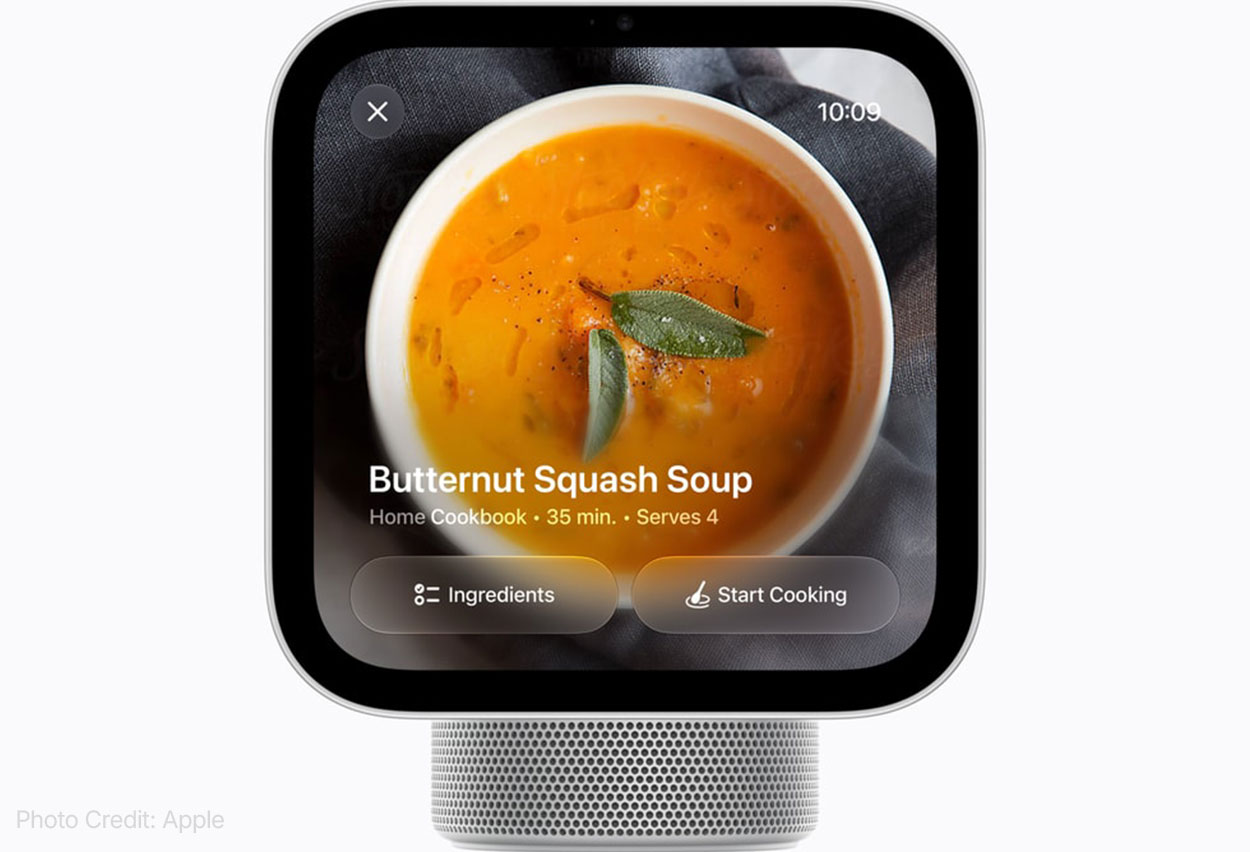
Communication runs through FaceTime with Center Stage, which keeps people framed as they move. Messages can be read and answered by voice or keyboard. Intercom broadcasts a short message to one room or the whole house. In the kitchen, the display converts web recipes into step-by-step instructions with hands-free timers.
Design built for any room
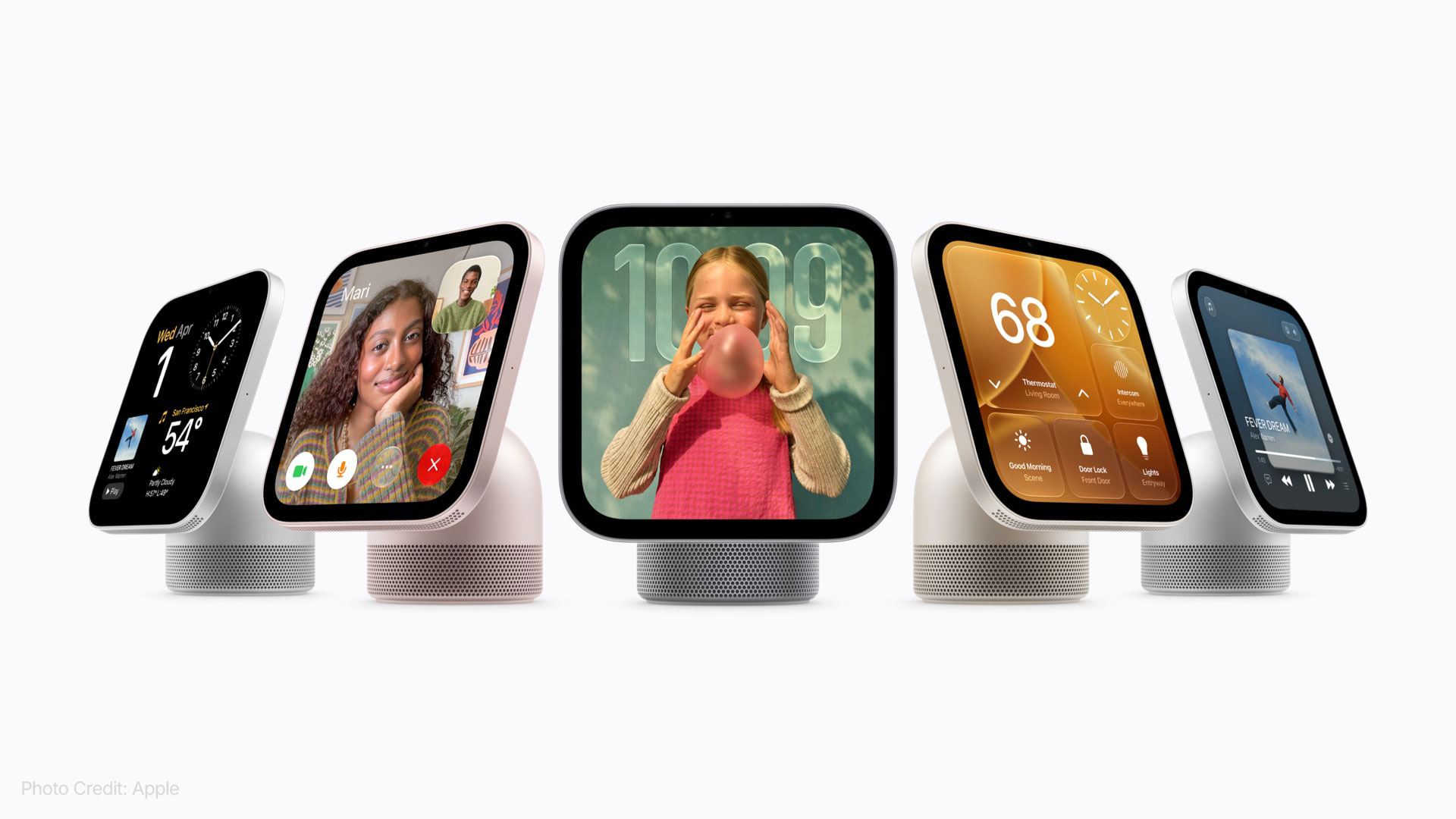
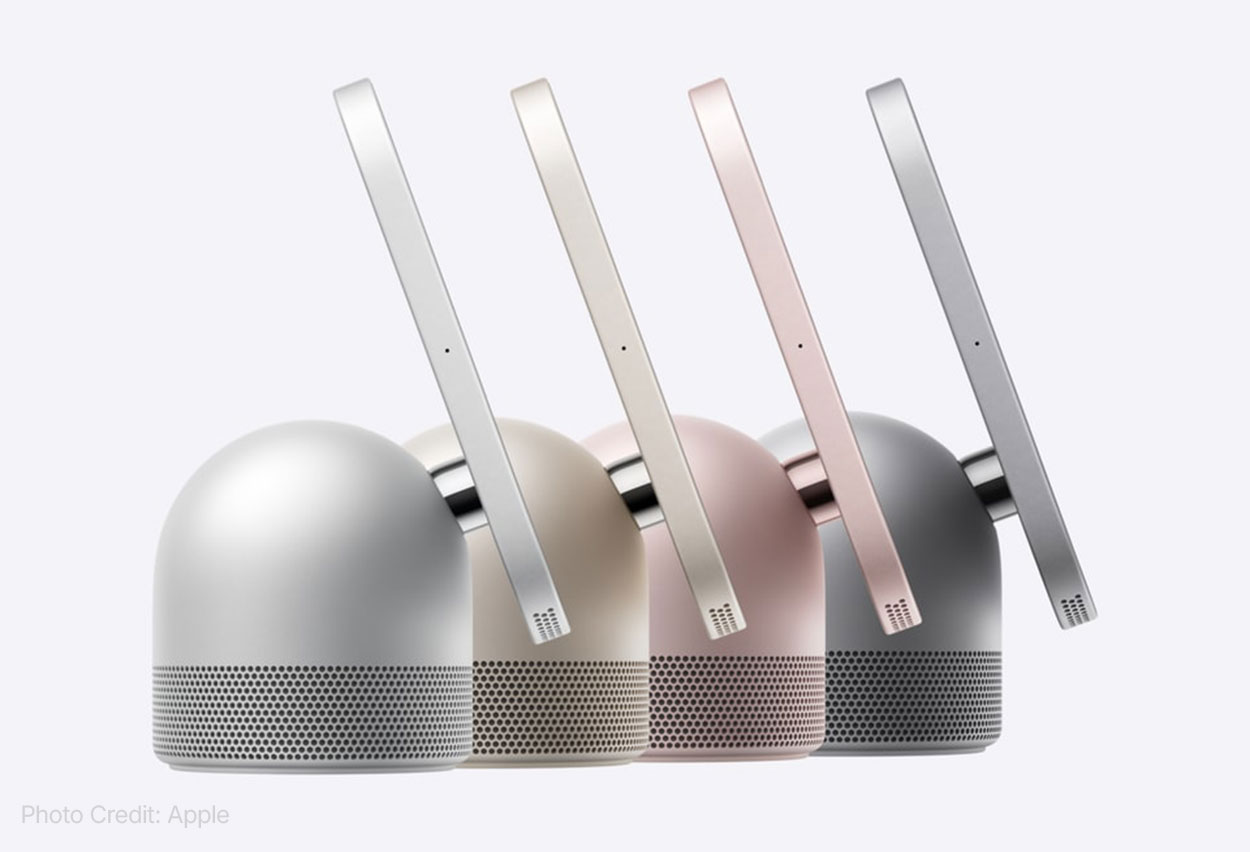
HomeView uses an aluminum body and a 7-inch Liquid Retina display joined to a domed speaker base by a stainless steel hinge that tilts for comfortable viewing. The tabletop model comes in silver, starlight, rose pink, and space gray, each with a matching cable. A separate wall-mounted version, offered in space gray and silver, carries the same screen and audio and attaches with three purpose-built mounts from Schneider Home, with self-install or professional options.
The display adapts to its surroundings. True Tone and adaptive brightness run from 500 nits in a sunlit room down to 0.3 nits for a nightstand. The interface also changes with distance, showing simple information from across the room and richer detail up close. Sound comes from two full-range drivers in the display plus a down-firing woofer and two force-cancelling passive radiators in the base, tuned in real time by computational audio.
Siri AI at the center
The most consequential part is Siri AI, a rebuilt assistant powered by the next generation of Apple Intelligence and newer Apple silicon. Apple describes it as more capable and conversational, with broad world knowledge, so anyone in the home can ask a question and get an answer. Paired with an Apple Intelligence iPhone or iPad, Siri AI draws on personal context. It can act across apps and surface details from Messages, Calendar, and Apple Music playlists.
Conversations started on the display continue in the Siri app, syncing privately through iCloud across iPhone, iPad, Mac, Apple Watch, and Apple Vision Pro. Users can tune the voice’s pace and expressiveness, and that setting carries over. People without an Apple Intelligence device still get the broad knowledge and improved music discovery. Siri AI is the thread meant to tie Apple’s home products together, which raises the stakes on how well it performs in daily use.
A dashboard for the connected home
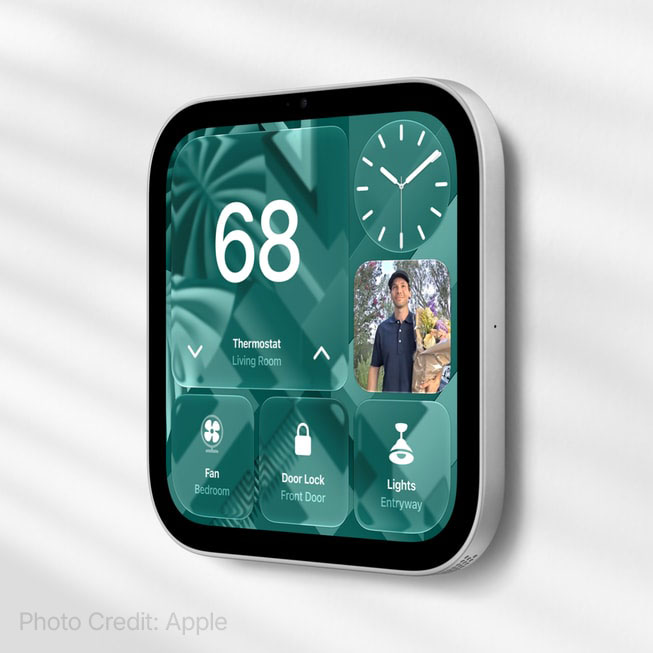
HomeView doubles as a control panel for a connected house. By touch or voice, a user can view camera feeds, set the thermostat, adjust lights, lock doors, or close blinds. The Home Camera face livestreams up to nine feeds at once. With a supported iCloud+ plan, the display works with compatible cameras to recognize people, familiar faces, pets, packages, and vehicles using end-to-end encryption, and it can alert the household when someone reaches the door. Video descriptions summarize HomeKit Secure Video clips so users grasp what happened without watching. The device also detects smoke and carbon monoxide alarms and sends alerts to a phone, tablet, or watch.
Much of this depends on the Apple Home Collection, a new lineup of cameras, thermostats, and a lock developed with LG Electronics and Schneider Electric. HomeView also supports other Works with Apple Home and Matter accessories, which keeps it open to hardware Apple did not build.
Privacy handled on the device
Apple built HomeView around on-device protection. The A18 chip includes Secure Exclaves, compartmentalized runtimes that process camera and microphone data apart from the rest of the system. Data handled there stays out of reach of the software, apps, the user, and Apple. Personal content in apps like Messages and Calendar appears only when the enrolled user is recognized by face, and their paired iPhone or iPad is present and was recently unlocked. Siri requests run on the device or through Private Cloud Compute, where data is not stored or made accessible to anyone. For a shared screen that watches and listens, that framing is the pitch to cautious buyers.
The Apple HomeView price and release date
The commercial terms are straightforward. The Apple HomeView price is set at $299 for both the tabletop and wall-mounted versions, though wall mounting adds installation and power costs. The Apple HomeView release date is November 13, after pre-orders that opened on announcement day. The timing lands the product in stores before the holiday buying season, when smart home devices sell in volume. Apple introduced it alongside refreshed home hardware and the Apple Home Collection, signaling a coordinated push rather than a single launch.
Where HomeView fits the market
The structural question is whether Apple can convert its installed base into a smart home display habit it has never owned. HomeView costs more than its direct rivals. Amazon’s Echo Show 8 launched at $179.99, and the Echo Show 11 at $219.99, and both run Alexa and double as hubs with wider protocol support. Google’s Nest Hub occupies the same shelf. Apple’s wager is that facial personalization, tighter iPhone integration, and a stronger privacy story justify the premium for households already inside its ecosystem. For Android homes, the value is thinner. The verdict rests on Siri AI. If the assistant performs, HomeView becomes the anchor of a coherent home line. If it falls short, a well-built screen risks becoming an expensive photo frame. Either way, Apple has now committed to a category it long avoided, and that commitment reshapes how its home strategy reads.
Built with the environment in mind, HomeView uses 100 percent recycled aluminum in its enclosure base, recycled gold and tin in its circuit boards, and recycled rare earth elements in its magnets, as part of Apple’s plan to reach carbon neutrality across its footprint by 2030.