

icnlive

WATCH LIVE. THINK BUSINESS.

© 2026 ICN.LIVE

ICN.live

PUBLISHED BY ICN PRESS

  • e& UAE ran the first eRedCap live network test announced by a telecom operator, proving the technology on its commercial 5G network.
  • The test reached download speeds of up to 10Mbps on eRedCap devices using a 5MHz slice of NR-FDD spectrum.
  • eRedCap can extend IoT battery life to 5 to 10 years and matches LTE Cat-1 on cost, coverage, and battery life.
  • The result gives utilities, factories, and logistics firms a route to move IoT fleets onto 5G Standalone as LTE winds down.

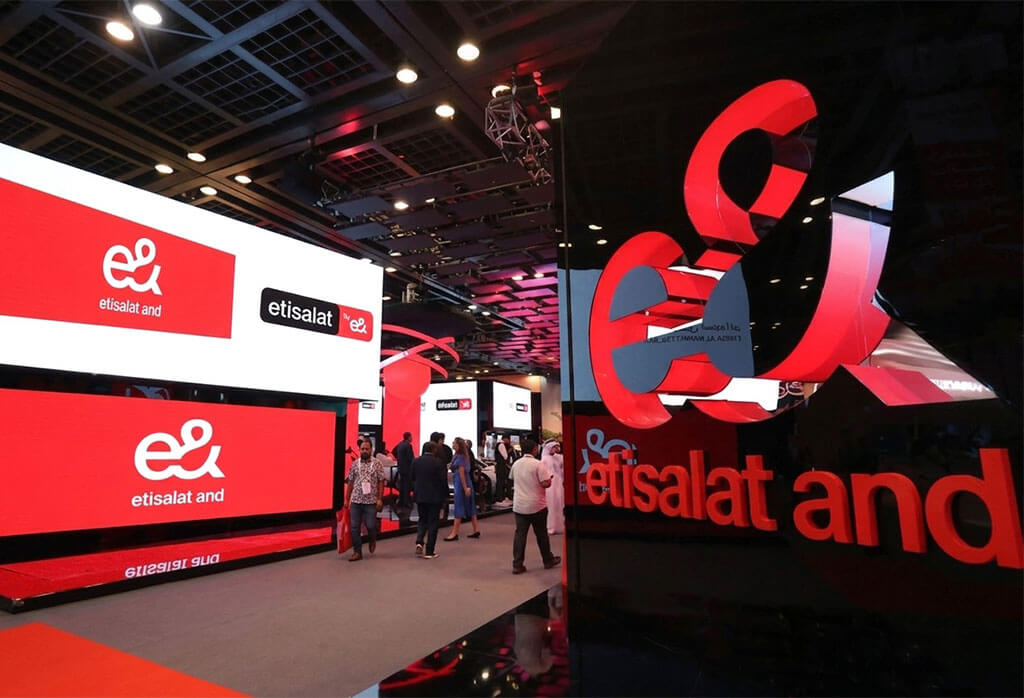
e& UAE has completed an eRedCap live network test on its commercial 5G network, the first such test announced by any telecom operator. eRedCap, short for enhanced Reduced Capability, is a stripped-down version of 5G built for devices that do not need full 5G speed or power. The company said the result gives businesses and public bodies a practical way to move Internet of Things (IoT) equipment off older LTE technology and onto a 5G-native IoT platform.

What the eRedCap live network test showed

The eRedCap live network test ran on e& UAE’s live commercial network, not a lab setup. Engineers reached download speeds of up to 10Mbps on eRedCap devices while using a 5MHz slice of NR-FDD spectrum. A Data Transmission Unit, a module that sends device data across the network, confirmed the service worked from end to end. That narrow 5MHz channel matters. It keeps device hardware simple and cheap, which suits equipment made in large volumes.

eRedCap 5G IoT sits between two extremes. Full 5G handles phones and heavy data. Low-power options like NB-IoT handle slow trickles of data from simple sensors. Many devices fall in the middle. Smart utility meters, industrial sensors, fleet trackers, payment terminals, building systems, and some wearables need steady coverage and long battery life, not top speed. The technology targets that middle band. It runs on a 5G Standalone network, meaning a 5G core rather than one leaning on 4G underneath.

RedCap battery life is already improved on standard 5G. RedCap pushes it further. Because peak data rates stay low and the channel is narrow, a device can run 5 to 10 years on one battery, against 1 to 3 years for RedCap. That figure sits close to the low-power radio technologies many meters use today. On cost, coverage, and battery life, eRedCap matches LTE Cat-1 and Cat-1bis. That makes it an LTE Cat-1 replacement built for 5G, which matters as operators plan to switch off LTE and reclaim that spectrum.

What it means for enterprises

The step builds on earlier work. In 2024, e& UAE became the first operator in the Middle East and Africa to bring Ericsson’s 5G Standalone RedCap into a commercial network. eRedCap extends that effort to an even lower cost and power tier.

Abdulrahman Al Humaidan, Senior Vice President, Access Network Development at e& UAE, said eRedCap brings everyday IoT applications into the 5G era at the right cost, power, and coverage. He said proving the capability on a live commercial network gives utilities, manufacturers, logistics providers, and smart-city operators a credible path to scale connected devices and prepare for the shift beyond LTE. e& UAE’s eRedCap live network test points beyond a single demo.

The practical gain is fewer parallel networks to run. Firms can move more IoT use cases onto 5G Standalone instead of keeping separate paths for high-performance 5G and LTE-based devices. That can simplify how devices are managed over their lifetime and tighten security across large fleets. It also supports the long-term reuse of LTE spectrum, since not every device would need full 5G hardware to make the move. The eRedCap live network test gives that transition an early proof point on a working network.

TAGS

EXPLORE MORE ON:

how to build discipline

How founders build discipline depends on system design, not personal willpower. Many people frame discipline as a fixed trait. They believe a person either has it or does not. The evidence points elsewhere. Discipline usually reflects the environment around a choice. It rarely reflects the character of the person making it. For a founder, that gap matters. A company runs on thousands of small choices made under pressure. The design of a day, a calendar, and a workspace shapes what a founder does next. Small structural choices carry more weight than raw effort.

How Founders Build Discipline Without Relying On Motivation

Willpower is a limited resource. It drains as the day goes on. Strong morning plans often fall apart by evening. A founder who runs on motivation loses focus once fatigue sets in. Structure works another way. A system holds a decision in place no matter the mood or the hour. This idea sits at the core of disciplined entrepreneurship. A repeatable process replaces the daily argument with oneself. The founders who last are not more motivated than their peers. They have removed the moments where motivation gets tested. Motivation feels reliable in the moment. It is not. A plan written on a calm morning survives a hard afternoon far better than a promise made under stress.

Cutting The Decision Fatigue Founders Face Every Day

Decision fatigue means the drop in judgment after many choices. The decision fatigue founders face builds fast. Each open question pulls attention from the next. One fix is to decide ahead of time. A founder maps annual goals once. Then a weekly review sets the priorities. This turns hundreds of daily debates into plain execution. Strong founder productivity habits often come down to this one move. Deciding early guards the energy a leader needs for real work. The daily habits of successful founders show fewer open choices, not more effort.

Replace Weak Habits, Do Not Ban Them

Business discipline also depends on how a founder treats weak habits. Force rarely works for long. A better method swaps the weak habit for a workable one. Then the founder improves that swap over time. Say a leader checks metrics every hour under stress. One scheduled review can take the place of that pattern. Small, staged trades outlast sudden bans. The goal is not instant perfection. It is steady movement toward a better default. Each swap should feel easy to repeat. If it feels hard to sustain, it will not hold. Founders build lasting change through small wins, not through pressure.

The Case For Boring Systems

Good systems rarely feel thrilling. That is the point. A routine full of novelty is not truly a routine. Some founders chase new tools, methods, and frameworks. They mistake motion for progress. Plain, steady execution compounds in a way flashier work cannot. This is where how founders build discipline shows from the outside. The work looks dull and repetitive. Under it sits a set of choices made once and followed without argument. Over months and years, that structure divides the founders who ship from the ones who stall. In the end, how founders build discipline is a question of design, repeated until it holds.

Oura IPO Arrives

The Oura IPO gives you a clear read on how fast the smart ring market has changed. Oura filed to go public on September 3. The Finnish company built its name on sleep and health tracking, and the numbers show the payoff. Revenue nearly doubled to $1.21 billion for the nine months ending June 30. Oura sold 3.6 million rings over the past year. It now counts around 5 million paid members. The filing follows the launch of the Oura Ring 5, the slimmest and lightest model the company has made.

Early estimates put the offering near $2.5 billion, with a planned listing on Nasdaq. That scale tells you something simple. A product once seen as niche now carries the weight of a public company. The Oura IPO puts that shift in plain numbers.

Why the Oura IPO matters to buyers

Here is what affects you. Competition tends to lower prices and speed up feature releases. More rivals usually means faster upgrades and better value for the ring on your hand. Oura led the smart ring market for years, but rivals are arriving from every direction, each with its own angle. French company Circular says its next ring will let you tap to pay. Chinese company RingConn released a ring this year with haptic vibrations, small buzzes you feel on your finger. That shift changes what a ring can do.

The money behind the challengers

Indian company Ultrahuman raised $70 million this week, with backing from Qualcomm’s venture arm. Ultrahuman wants to build a ring running software on the device itself. Over time, the company says that could power AI features and even games. As a smart ring maker, Ultrahuman is aiming well past sleep scores. Backing from a chip giant like Qualcomm shows the goal is serious.

The Ultrahuman Ring Pro shows the plan in hardware. Priced at $479, it starts shipping in the US in mid-September. It carries a redesigned heart-rate sensor built to read cleaner signals while you sleep. A new dual-core processor, a chip with two cores, handles more accurate data and more work on the device.

The Ring Pro also comes out of a legal fight. Ultrahuman’s US business stalled in October 2025 after the US International Trade Commission ruled for Oura in a patent dispute. The ruling blocked the company from importing new ring inventory. So Ultrahuman rebuilt the Ring Pro with a new form factor to work around Oura’s patent.

Payments, screens, and the race ahead

Circular plans its Ring 3 series for early next year, with a Pro model and a Slim option. Both rings include an NFC chip, the same tap-to-pay tech in your phone, for contactless payments. They also add on-finger vibrations for silent alarms, reminders, and health alerts.

The direction is easy to see. Smart rings were once sold on the idea of stepping away from a screen while keeping tabs on your health. For years, a ring felt lighter than a smartwatch, easy to forget on your finger. That quiet appeal could fade if rings keep adding screens and buttons. Now the race is about how many phone-like features fit inside a two-gram titanium band. Some rings already carry screens, like the Pebble Halo, sold in India for now. Others promise touchpads, like the Dreame Ring. The Oura IPO lands in the middle of this rush.

What Oura Ring alternatives offer now

Shopping for Oura Ring alternatives now means more real choice. Buyers hunting for the best smart rings in 2026 can weigh payments, vibrations, and on-device software against Oura’s tracking. The Oura IPO does not settle the contest. It raises the stakes for every smart ring maker trying to lead. For you, more competition tends to mean more features and better prices ahead.

OpenAI GPT-6 Astra

GPT-6 Astra is OpenAI’s new frontier model, and its arrival brings two questions to the center of the AI market: what these systems can do, and what they cost to run. OpenAI describes Astra as its most capable and most aligned model so far. Access opened first to a limited set of organizations, then widened to paid users across ChatGPT Plus, Pro, Business, and Enterprise. The GPT-6 Astra release date fell in early September, with a limited preview ahead of broader access.

Developers can reach the model through the OpenAI API, Microsoft Azure, and Amazon Bedrock. The company built Astra for long, multi-step work rather than short chat. That design shows in the strongest gains, which sit in GPT-6 Astra computer use. OpenAI says the model can fill out online forms, update customer records, organize a calendar, run research, and draft summaries inside a user’s email or document editor. The aim is a system that finishes tasks, not one that only answers questions.

Business Intelligence & News

  • OpenAI’s advertising revenue reached a $1 billion annualized run rate, the company said.
  • The ad business is about 200 days old and now runs in more than 40 countries.
  • Self-service buying is expanding to India, Europe, the Middle East, and North Africa.
  • The push comes as OpenAI prepares to go public and defends an $852 billion valuation.

What the GPT-6 Astra benchmarks show

The GPT-6 Astra benchmarks published by the company are aggressive. OpenAI says the model saturates FrontierMath Tier 4 at close to 98 percent, reaches 99.9 percent on ARC-AGI-3, and scores 100 percent on ExploitBench. Both the math and reasoning tests were designed to stay ahead of AI systems, so results this high point to a real step up. One caveat matters here. The ARC-AGI-3 score used a general-purpose setup that preserved the model’s reasoning and managed long context, so it is not a clean match with every earlier figure.

Independent testing gives a more measured read. Artificial Analysis found Astra roughly level with its predecessor on overall intelligence, and behind Claude Fable 5.1 on general reasoning, while gaining on coding at lower cost.

On computer-use speed, OpenAI reports a higher score on the OSWorld 2.0 test in about 47 percent less time per task than the prior model, GPT-5.6 Sol. For firms weighing automation of desk work, time per task can weigh as much as raw accuracy.

Cost and cybersecurity set the real test

GPT-6 Astra pricing is where the tradeoff shows most clearly. Standard rates run at 10 dollars per million input tokens and 50 dollars per million output tokens, about 2.5 times the prior flagship’s 4 and 20 dollar rates. OpenAI notes that Astra often uses fewer tokens for similar work, which can offset part of the higher rate. Whether that holds depends on the task. The number worth tracking is cost per finished result, not the headline token price.

On safety, Astra is the first OpenAI model to reach the Critical level for cybersecurity under the company’s internal framework. OpenAI says the model can find unknown security flaws and build ways to exploit them across well-defended systems without a person guiding each step. To limit misuse, the company restricts the most advanced exploit abilities and adds production safeguards. It also flagged a weakness in how well its monitors can read the model’s reasoning under pressure, and named that as open work.

The wider shift is about where value moves. As frontier models take on full tasks rather than single answers, the market question moves from capability alone to capability set against cost and risk. The OpenAI GPT-6 Astra release, arriving alongside strong models from rival labs, brings that calculation into the open for enterprise buyers.

Share this post

on your favourite social platforms

or copy the link