icnlive

ICN.live

Leila Al-Khatib

  • Kering aims to double its 2025 operating margin of 11.1% by the midterm horizon.
  • CEO Luca de Meo unveiled the ReconKering strategy during Capital Markets Day in Florence.
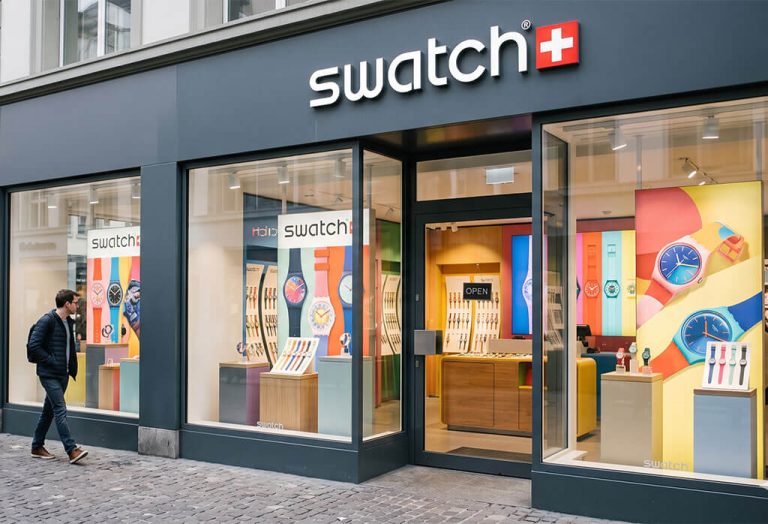
  • The company will cut Gucci outlets by one-third and refurbish two-thirds of stores.
  • Leather goods, ready-to-wear, and jewelry categories receive fresh revenue targets through 2030.

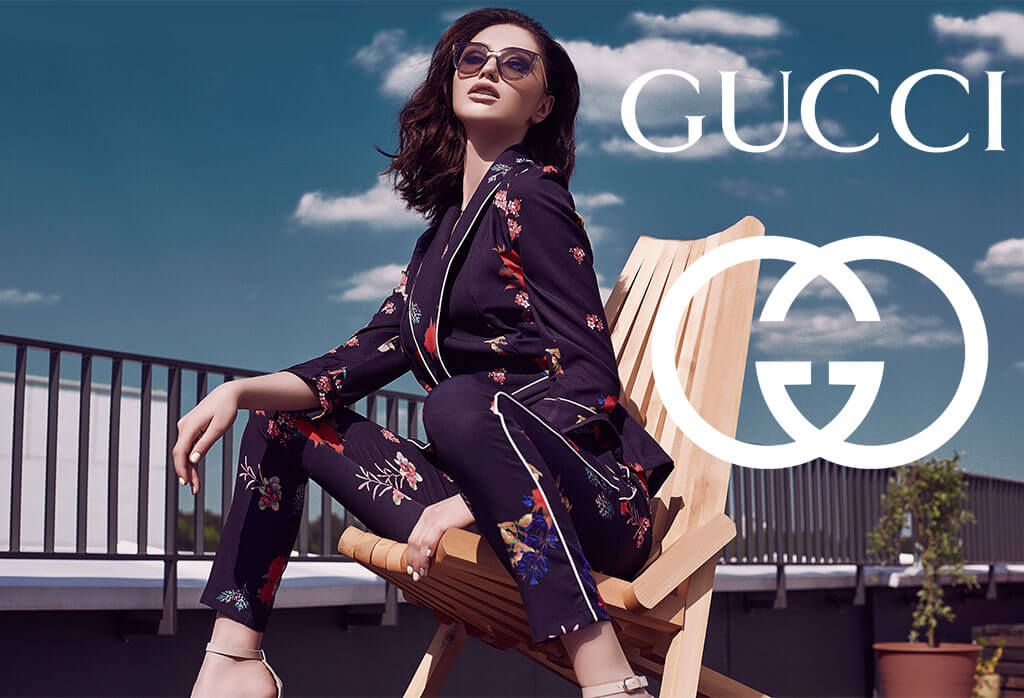
Gucci eyes a revival plan as Kering pushes a bold reset to escape a long luxury slump. CEO Luca de Meo shared the strategy during Capital Markets Day in Florence on Thursday. The plan, named ReconKering, targets double operating profits and stronger returns for patient investors. Kering wants to lift its 2025 operating margin of 11.1% to over 20% return on capital. Shares dropped 4.3% by mid-morning as markets weighed execution risk against ambitious long-range goals.

Kering turnaround plan sets new financial targets

The Kering turnaround plan reshapes how the group runs stores, inventory, and pricing across its brands. Kering will refurbish or relocate two-thirds of Gucci outlets before the 2030 deadline. You will see selling space drop 20% and total store count fall by one third. The group wants to cut overall inventory by 1 billion euros over the next twelve months. De Meo stated clearly, “A model that worked for a decade is no longer effective for us.”

From my standpoint, these targets signal a sharper focus on quality revenue over flashy scale. Kering also wants to double sales density at Gucci by streamlining stores and lifting productivity everywhere. The ReconKering strategy guides every major decision inside the Florence-based luxury conglomerate today.

ANOTHER MUST-READ ON ICN.LIVE: John Ternus Is the New Apple CEO as Tim Cook Shifts to Chairman

Gucci eyes a revival plan through product and category resets

Gucci eyes a revival plan that places product identity and craftsmanship back at the center. Gucci leather goods will double their contribution to 20% of brand revenue by 2030. Kering targets an extra 1 billion euros from bags, 600 million from shoes, and ready-to-wear. Jewelry and watches will add another 500 million euros across the midterm horizon. De Meo said his priority is to make Gucci unmistakable, not louder or more complex.

He also noted the brand has lost some of its shine during the recent downturn. The team now builds fewer narratives, each one sharper and more coherent for loyal customers worldwide. You can see this reset already in stores through tighter collections and cleaner category pyramids.

Luca de Meo tackles the wider luxury slump

Luca de Meo took over seven months ago and moved fast on debt and structure. He closed the sale of the beauty division to L’Oreal in March for 4 billion euros. Citi analysts asked how quickly Gucci can return to healthy growth during this luxury slump. Gucci posted its 11th straight quarter of organic sales decline, according to Tuesday’s Kering report. The Middle East conflict also weighed on demand across several key retail regions this quarter.

Kering wants to reduce group dependence on Gucci by strengthening Saint Laurent, Bottega Veneta, and Balenciaga. Saint Laurent will push fashion authority, menswear, and Asia with a sharper focus through 2030. Bottega Veneta becomes the emblem of deep luxury inside the wider group portfolio. Balenciaga targets younger shoppers through bold creative direction and tighter category execution. Gucci eyes a revival plan, and the wider Kering turnaround plan shapes every brand inside the group.

TAGS

EXPLORE MORE ON:

NBQ's 2026 half-year profit

NBQ’s 2026 half-year profit came in at AED271 million for the six months to 30 June. Behind that figure sit the depositors, borrowers and staff who keep the lender running. The National Bank of Umm Al Qaiwain results point to steady footing at a small bank that families and businesses in the northern emirates lean on for everyday needs.

What NBQ’s 2026 half-year profit shows

The bank credited its first-half showing to a wider mix of income and a broader balance sheet, paired with tight cost control. Total interest income reached AED503 million over the period. Net interest income held about flat at AED310 million, against AED309 million a year earlier. That flat line matters more than it looks. Interest rates fell over the year, so keeping core income steady took real work on both pricing and funding.

For a customer, this shows up in small ways. Your deposit stays safe. Loan terms stay predictable. A bank that earns steadily can keep the lights on for the people who bank with it.

Balance sheet growth and deposits

NBQ total assets rose to AED24.1 billion by the end of June, up 5 percent from December and 20 percent from a year earlier. Customer deposits did much of the heavy lifting. They climbed 29 percent to AED17.1 billion, a sign that more people trusted the bank with their money. Net loans and advances grew 4 percent over the year to AED8.7 billion. Shareholders’ equity reached AED6.4 billion, up 3 percent from June 2025.

Deposit growth on that scale tells a human story. When savers move money into a bank, they place a bet on its stability. That trust gives the lender room to fund loans for homes, shops and small firms across the emirate.

Capital strength and asset quality

The capital adequacy ratio stood at 31 percent, well above the floor the Central Bank of the UAE sets under Basel III rules. Put simply, the bank holds a thick cushion against shocks. The non-performing loans ratio came in at 0.4 percent, up slightly from 0.3 percent at the end of 2025 but far below the 2.2 percent seen a year earlier. Fewer bad loans mean fewer customers in distress and a cleaner book. NBQ net profit after tax landed at AED271 million on the back of these numbers.

Adnan Al Awadhi, Chief Executive Officer of NBQ, said the bank delivered solid results despite geopolitical uncertainty and lower interest rates. He pointed to a diversified model, careful balance sheet management and a focus on lasting growth. Al Awadhi said the bank kept strong capital and liquidity while supporting customers and the wider economy through prudent risk management and better asset quality.

He added that NBQ kept investing in digital tools to improve the customer experience and to make its platforms safer and more reliable. Partnerships would widen its services further, he said. Al Awadhi also restated the bank’s pledge to Emiratisation, leadership development, sustainability and community work.

Why NBQ’s 2026 half-year profit matters to customers

Numbers like these can feel far from daily life. Yet a stable bank shapes real choices for real people. NBQ’s 2026 half-year profit gives the lender the means to keep lending, keep hiring and keep serving the towns it calls home. For anyone who banks there, that steadiness is the point.

e& completes Vodafone stake sale

News that e& completes Vodafone stake sale confirms a full exit from a holding the Abu Dhabi group built over four years. Emirates Telecommunications Group Company PJSC moved all 3,944,743,685 of its ordinary Vodafone shares to three banks, namely BNPP Financial Markets, Crédit Agricole Corporate and Investment Bank, and Société Générale. That transfer settled a binding agreement reached on 10 July 2026 with Vega, an acquisition vehicle wholly owned by the Niel family group. The e& Vodafone stake sale ends a position worth about 16.21 percent of Vodafone’s share capital and 17.13 percent of its voting rights.

Gross cash proceeds came to AED21.5 billion, or US$5.84 billion, at close to 110.5 pence per share. One payment is still to come. e& will receive a final dividend of 2.02 pence per share, worth AED0.4 billion or US$0.11 billion, on 30 July 2026. That dividend relates to Vodafone’s FY2026 results. Once it lands, the total climbs to AED21.9 billion, equal to US$5.95 billion.

What the Vodafone stake sale $5.95 billion deal returns

The e& net cash return from the deal stands at AED4.8 billion, or US$1.3 billion. That figure measures the gain over what the group paid to build the stake. e& started buying into Vodafone in February 2022, taking an initial 9.8 percent holding for US$4.4 billion, then adding to it in stages. Secondary reporting set the sale price at 112.5 pence per share, a premium of about 13 percent to Vodafone’s market price before the announcement.

Ownership at the UK operator now shifts. The deal makes Xavier Niel Vodafone’s largest shareholder, giving the Iliad founder a stake that carries 17.13 percent of total voting rights. Niel has long argued for consolidation across Europe’s telecom sector. Through the Vega Vodafone acquisition, he takes that position without a wider bid for the company. The Vodafone stake sale, a $5.95 billion transaction, leaves him as a long-term minority holder for now.

Why e& completes Vodafone stake sale now

The timing fits a wider redirection of capital. e& completes Vodafone stake sale as part of a review of its international investment portfolio. The group said the exit sharpens its focus on core businesses while realising the value built through the investment. Last month it sold 12.5 percent of Careem Technologies to Uber for US$100 million, citing the same discipline over where it puts money. First quarter revenue rose about 15 percent from a year earlier to Dh19.4 billion.

The exit also changes e&’s role at Vodafone. Its Relationship Agreement with the operator has ended, and its board representative resigned as a non-executive director. That closes a strategic tie formed in 2023. For the group, e& completes Vodafone stake sale as a way to turn a large minority holding into cash it can direct toward markets it controls.

A sharper capital focus for e&

Set against the group’s recent moves, the sale points to a tighter model. e& has trimmed holdings that sit outside its operating control and steered capital toward businesses it runs directly across the Middle East, Africa, and Asia. The Vodafone exit and the earlier Careem reduction follow one logic. Cash from a passive minority position now returns to the balance sheet, where the group can fund networks and services in markets it manages each day.

Amina Taher is the new Chairwoman

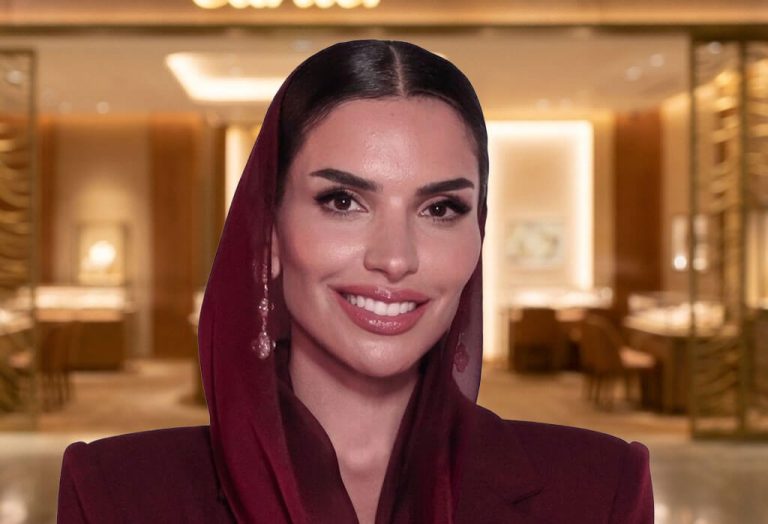
Amina Taher is the new Chairwoman of the Arab Fashion Council, and the fit reads clean. The appointment took effect on 9 July 2026. Taher spent two decades leading brand and communications across aviation, fintech, media and sport. She earned an MBA from London Business School and a master’s from Harvard. Now she takes the top governance seat at a body that speaks for fashion across the 22 nations of the Arab League. Known in the UAE business scene, and her name is familiar. She served as Vice President of Marketing at Etihad Airways, where she helped shape the airline’s global identity. From there, she moved into fintech as Chief Marketing Officer of Wio Bank. That career sits at the crossroads of money, media and brand, which is close to where fashion is heading.

What the Arab Fashion Council built

The Arab Fashion Council spent the past decade turning a thin fashion scene into real infrastructure. It co-founded Dubai Fashion Week with Dubai Design District, and grew it into a platform buyers and press now track. That event sits on the international calendar next to New York, London, Milan and Paris. The Council also pushed Arab designers onto runways that once looked past them. Picture laying track before the trains arrive. The rails are down, and traffic is building. What matters now is speed and direction, and that is where the new leadership comes in.

The gap Taher steps into

Great institutions hit a ceiling when they lean on passion alone. What the Council needs next is weight: government backing, diplomatic reach, and partnerships measured in years rather than seasons. Taher has built that kind of trust across her career, working with public bodies and global brands alike. Founder and Chief Executive Officer Jacob Abrian called her arrival a sign of how far the Council has come, not a shift in course. “Amina Taher’s appointment is not a change of direction,” he said. His point was that the move reflects the standing the Council now holds, and a promise to hold it with more seriousness. That is the room Taher walks into.

What Amina Taher wants for Arab designers

Taher points her focus at the next wave of talent. She wants more room for young Arab designers to reach a global audience and build real businesses. “I am honoured to build on that strong foundation,” she said, crediting the institutions, partnerships and credibility built over the past decade. Her goal is a wider creative economy and more open doors for people entering the field. Amina Taher is the new Chairwoman at a moment when the region’s fashion voice carries serious reach, and she plans to push it further. Growth in the creative economy tends to follow the money and the platforms, and the Council now has both.

What comes next

Taher will present her vision at an invitation-only gala in September 2026. Until then, the plan stays in outline, with the full manifesto still to come. One thing is clear already. In choosing her, the Council made it official: Amina Taher is the new Chairwoman, and she builds for the present and what comes after.

Share this post

on your favourite social platforms

or copy the link