

icnlive

WATCH LIVE. THINK BUSINESS.

© 2026 ICN.LIVE

ICN.live

PUBLISHED BY ICN PRESS

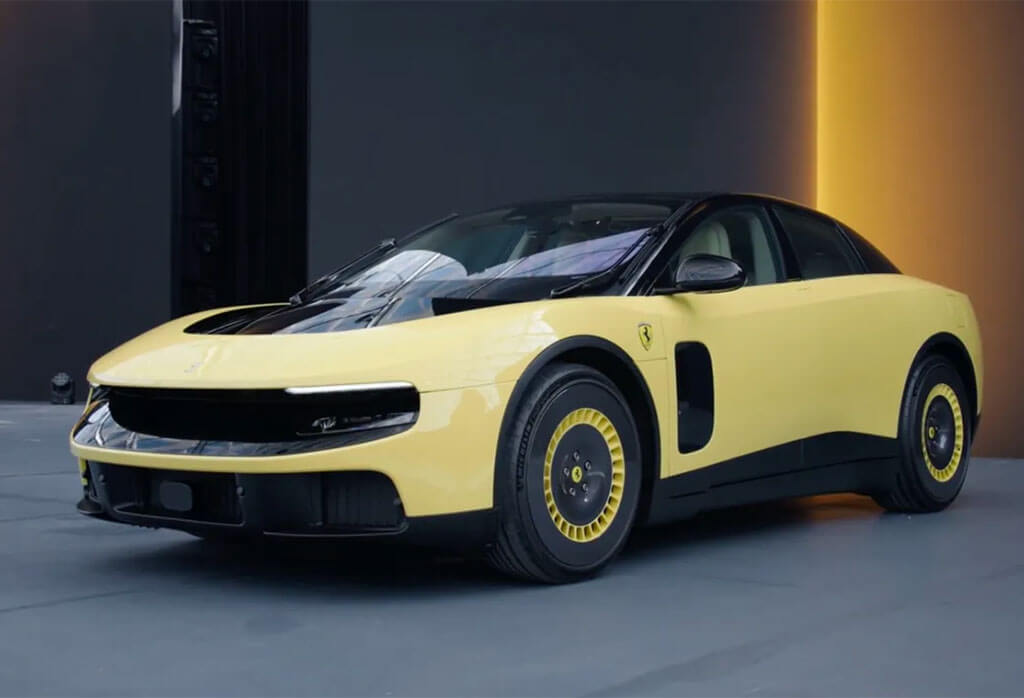
  • Ferrari Luce is the brand’s first fully electric car, with four doors and five seats.
  • The Ferrari Luce price starts at 550,000 euros, roughly 640,000 US dollars, before local taxes.
  • Four electric motors deliver more than 1,050 horsepower and a sub-2.5-second sprint.
  • Jony Ive and LoveFrom led a glasshouse design unlike any earlier Ferrari road car.

Ferrari Luce arrived in Rome as the brand’s first fully electric four-door road car. The carmaker picked the Vela di Calatrava complex in Rome for the global launch. Rome holds deep meaning because the brand won its first race here in 1947. Driver Franco Cortese steered the Ferrari 125 S to victory at the Caracalla circuit. Some 79 years later, the marque returns to push the limits of its engineering. CEO Benedetto Vigna told reporters the model is “the result of five years of work.”

Ferrari Luce price and specs reset the numbers

The Ferrari Luce price starts at 550,000 euros, or roughly 640,000 US dollars today. Deliveries begin in the fourth quarter of 2026, with United States sales following later. Four electric motors give the car more than 1,050 horsepower across all four wheels. The Ferrari Luce specs include a 122 kWh battery and quick 0-100 km/h sprints. Ferrari quotes a range above 500 kilometers and a top speed of 310 km/h. This Ferrari electric car sits beside petrol and hybrid models rather than replacing them. The brand built every key part in-house, from motors to the battery pack. More than 60 new patents back the engineering behind this electric four-door grand tourer.

Jony Ive’s Ferrari design rewrites the look

The Jony Ive Ferrari partnership shaped a glasshouse silhouette unlike any past model. Ive and Marc Newson led the design work through their creative collective called LoveFrom. Smooth, continuous surfaces wrap the body and cut drag to the lowest in brand history. Four doors and five seats give the Prancing Horse its first family-ready cabin. Record 23-inch front and 24-inch rear wheels rank as the largest Ferrari has fitted. Active grilles and an adjustable ride height keep airflow and cooling in fine balance. Inside, soft leather, glass, and recycled aluminum meet physical dials and clear digital displays. Chief commercial officer Enrico Galliera described the new model as “absolutely stunning” to reporters.

Sound, comfort, and what the Ferrari Luce means for you

Sound stays central, so engineers built a system around a precision accelerometer in the axle. The patented setup filters and amplifies real vibrations, much like an electric guitar would. Drivers shift from quiet calm to full volume using the e-Manettino and the paddles. A first elastically mounted subframe and active suspension cut road noise inside the cabin. Executive chairman John Elkann said a Ferrari has always been defined by feeling, not power. For buyers, this first electric Ferrari opens a calmer, roomier path into the brand. You gain five seats, a 600-liter trunk, and daily comfort without losing real pace. Rivals like Porsche and Lamborghini have lately pulled back electric plans due to weak demand. The brand instead moves ahead, betting wealthy families want a quieter, more practical option. Not every fan welcomes the change, and some critics question the bold styling choices. Ferrari shares dipped after the reveal before recovering part of the early market loss. From my standpoint, the brand balances heritage and clear risk with surprising discipline here. The Ferrari Luce now tests whether tradition and electric power can share one badge. You will see the answer as deliveries reach roads through 2026 and into 2027.


TAGS

EXPLORE MORE ON:

Parkin's regional growth plans

Parkin’s regional growth plans now stretch past the UAE, after the Dubai-listed parking operator signed a memorandum of understanding to take its technology into Egypt.

The agreement brings in three local partners: Modon Misr for Asset and Facility Management, transport services provider Mwasalat Misr, and Redcon Properties. They control the ground. Parkin brings the cameras and the software.

What the Egypt agreement covers

The partners plan to deploy Automatic Number Plate Recognition parking systems, AI-enabled parking cameras, barrierless entry, digital permits and parking management platforms across assets the Egyptian companies already run. They will also work out technical, operational and commercial models that suit the Egyptian market.

Read that carefully. An MoU is a framework, not a contract. No sites, dates or pricing have been fixed.

Parkin says the goal is better parking efficiency and a smoother experience for drivers in Egypt’s growing cities. Chief Executive Mohamed Abdulla Al Ali called the deal a step in the company’s regional expansion, and said technology, data and operational know-how would carry the weight in building parking systems that work.

Inside Parkin’s regional growth plans

Line up the past four months and the pattern gets obvious.

In May, Parkin Company PJSC signed a long-term framework agreement with Sharjah master developer Arada, covering up to 9,900 spaces at the Aljada megaproject, phased between 2026 and 2030. The smart paid parking system there went live on 15 July, the company’s first paid operation outside Dubai. On 10 August came an MoU with Abu Dhabi’s Q Mobility, the operator behind Mawaqif, aimed at linking digital payments and AI-driven occupancy management across the two emirates.

Egypt is the first step outside the country altogether. Parkin’s regional growth plans have moved from one emirate to three markets in under four months, and every deal so far has been a partnership rather than a purchase.

Why the technology travels

Parkin holds a 49-year concession over Dubai’s paid public parking. That covered roughly 229,000 spaces at the end of 2025 and 141 million transactions last year. Volume at that scale teaches a system what a busy Thursday evening looks like, and that learning is the exportable part.

Think of a car park as a checkout lane. The old version needed a ticket, a barrier, and a queue behind whoever lost their ticket. The smart parking solutions UAE operators have been rolling out since 2024 read the plate on the way in, start the clock, and charge the wallet on the way out. Nobody stops. Nobody hunts for coins.

That model does not care which country the tarmac sits in, which is why Parkin smart parking systems can move across borders faster than physical infrastructure usually does.

What Egyptian drivers could see

Egypt keeps building new cities and communities, and each one arrives with parking demand attached. Modon Misr chief executive Mohamed Aboutaleb said the partnership could support how parking and mobility develop as that construction continues.

For now, nothing is switched on. The partners still have to agree on what the technology costs, who operates it, and where it lands first. Parkin Egypt remains an intention on paper.

Watch the next announcement instead. If a named development and a go-live date appear, the Egypt move stops being exploratory and starts being a business.

Iran trade suspension in the UAE

Iran trade suspension in the UAE took effect late on August 18, covering all trade, commercial exchanges, and financial transactions until further notice. Afra Al Hameli, director of the strategic communications department at the Ministry of Foreign Affairs, announced the decision. She cited regional escalations undermining regional and international peace and security. Officials gave no end date.

Abu Dhabi moved hours after its Ministry of Defence said air defences detected two ballistic missiles launched from Iran toward the country. One fell outside UAE territorial waters, and the second landed inside them. Neither caused reported damage or casualties.

Tehran rejected the account. Iranian Foreign Ministry spokesman Esmaeil Baghaei called the claim baseless. He said such accusations run against the principle of good neighbourliness and damage efforts to build trust among regional states.

What the Iran trade suspension in the UAE covers

The scope of the Iran trade suspension in the UAE reaches beyond merchandise. Banks, shipping lines, logistics operators and commodity traders with Iranian exposure face a blanket prohibition on payments and commercial dealings. Firms holding open contracts have no published guidance on wind-down periods or exemptions. Implementation details will decide how hard the measure bites.

UAE-Iran trade has run through Dubai for decades. Mark Kimmitt, a retired US general and former assistant secretary of state, told Al Jazeera the emirate had quietly become Iran’s largest supplier, ahead of China and Turkiye, providing roughly a third of Iranian imports each year. On that estimate, the embargo could cut deeper than measures Washington has imposed.

A brief reopening now reversed

Direct cargo shipping between the two countries stopped in early March, days after the war began. Sailings resumed in late June through Dubai’s Jebel Ali Port. That window lasted under two months.

Authorities also suspended roaming services for Iranian mobile users in the UAE ahead of the trade decision, cutting calls, messages and banking access for residents and travellers. Shipping and oil market fallout. Strait of Hormuz shipping remains close to a standstill. Kpler data show 10 crossings on Monday and two on Sunday. Five-day average traffic sits near 10 transits, against roughly 130 daily before the war.

A vessel sailing outbound through the strait took a hit from an unknown projectile early on Tuesday. UKMTO reported damage to the engine room and one crew death. Oman’s coastguard assisted the surviving crew. Brent crude oil price settled above $91 a barrel on Tuesday as traders weighed the risk of a longer closure. Roughly 25 percent of seaborne crude and petroleum product trade, and about 19 percent of liquefied natural gas, passed through the strait in 2025.

Diplomacy stalled

Iran trade suspension in the UAE lands one day after the 60-day window tied to the June 17 US-Iran memorandum of understanding expired without a final deal. President Donald Trump said Washington holds no talks with Tehran and has none scheduled. He also said the strait is open and cleared of mines, a claim transit data does not support.

UAE-Iran relations had shown tentative improvement earlier in the summer. Abu Dhabi has denied claims that frozen Iranian funds were released or moved through its banking system. Whether the Iran trade suspension in the UAE proves temporary will depend on the missile investigation and on any return to negotiations.

Ministry upgrades the online service

The paper form that once stood between a business owner and a protected brand name has been retired for anyone preparing to register a trademark in Bahrain. Officials at the Bahrain Ministry of Industry and Commerce have rebuilt the service for registering trademarks and service marks in a single class, trimming the documents, approvals, and time an application used to require. An online trademark application now replaces the paper file.

The change looks small. Its reach runs wider than the form it replaced.

Inside the upgraded service

Applications face a technical and legal review first, then move into the later stages of registration. The ministry has simplified the steps, reworked the interface and turned paper forms into electronic ones. It has also standardised service information published across different channels, so an applicant reads the same instructions wherever they look.

Eman Ahmed Al Doseri, Undersecretary of the Ministry of Industry and Commerce, said the upgrade belongs to a continuing review of ministry services and delivery standards, meant to improve efficiency and give customers clearer sight of what each procedure involves. She added that the ministry stays committed to shaping services around what beneficiaries need, while raising service quality and the effectiveness of its work system.

Sound, scent and a single class

Al Doseri explained that applicants can now register a trademark in Bahrain electronically, covering a national trademark or service mark in one class under the Nice International Classification of Goods and Services. Visible marks qualify, including words and images. So do marks nobody can see. Sound marks and scent marks sit inside the service, subject to approved requirements.

The Nice Classification groups goods and services into numbered classes used across most of the world. One class is the boundary here. Bahrain does not accept applications covering several classes at once, so a company selling both software and clothing files twice.

What it takes to register a trademark in Bahrain

Trademark registration in Bahrain runs through the Trademark Office at the Industrial Property Directorate, where nationals and residents of the kingdom file directly, while foreign applicants living outside Bahrain work through IP registration agents or law firms authorised by the directorate. Protection lasts ten years from the application date, and holders can renew it for further terms. 

Legislative Decree No. 11 of 2006 sets the rules. Businesses that register a trademark in Bahrain gain rights they can enforce against unauthorised use, counterfeiting, or imitation. Bahrain also belongs to the Madrid Protocol, so a company can reach the market by extending an international registration rather than filing locally.

After examination, the ministry publishes an accepted mark, and third parties get 60 days to oppose it. Errors made at filing tend to surface at that stage. Where nothing is contested, guides to the process put the wait from filing to registration at roughly six months. 

A wider push on government services

The trademark work sits inside a broader re-engineering of public services. More than 1,300 government services have been documented, translated and published. Around 800 more are being developed and re-engineered across government sectors.

Proposals and feedback shape the queue. They arrive through Tawasul, the national system for suggestions and complaints, through investor feedback, and through secret shopper reports assessing government services. Guidance manuals and service-level agreements have followed.

For a small company weighing whether to register a trademark in Bahrain, the calculation now turns less on paperwork and more on the choice of class and the strength of the mark itself.

Share this post

on your favourite social platforms

or copy the link