

icnlive

WATCH LIVE. THINK BUSINESS.

© 2026 ICN.LIVE

ICN.live

PUBLISHED BY ICN PRESS

  • Salik’s AED1.55 billion profit lifted annual earnings and supported a larger cash return for investors.
  • Net income increased 33.4 percent year on year, showing stronger operating performance across 2025.
  • Salik shareholders approved a second-half dividend worth AED890.3 million during the annual meeting.
  • The declared payout equals AED 0.118 per share, including second-half profit and exceptional gains.

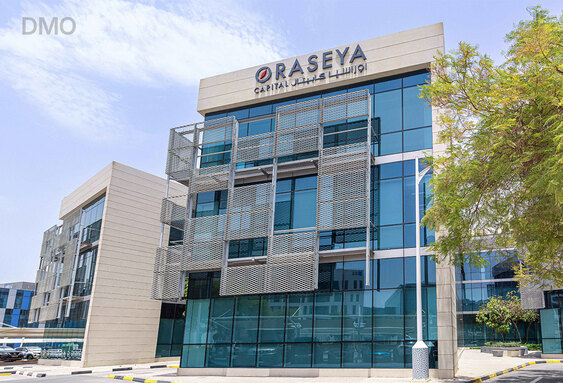
Salik reported strong momentum across its business during 2025, supported by steady toll crossing activity. The company remains the exclusive operator managing Dubai toll gates across major commuting routes. Those assets give Salik direct exposure to daily travel demand across the wider emirate network. Higher usage and disciplined operations helped lift earnings without placing extra pressure on operating costs. Management presented the annual report during the General Assembly meeting led by Mattar Al Tayer. Chief Executive Ibrahim Al Haddad attended the session with board members and company representatives.

The assembly ratified the board report and financial statements for the fiscal year ending 2025. That formal approval gave investors a clearer picture of performance and cash distribution plans. Salik also reinforced its status as a transport-linked stock with steady local revenue exposure. Many regional investors value such businesses because demand often follows daily movement patterns in Dubai.

Salik’s AED1.55 billion profit shows why investors keep watching this stock

Salik’s AED1.55 billion profit also reflects a business model linked closely with Dubai traffic growth. As road movement rises, toll collections often follow, supporting stable, recurring revenue generation for Salik. This pattern matters for income-focused investors seeking predictable cash flow from listed companies. The declared payout covers the full second-half profit of AED782.5 million reported today.

It also includes AED107.8 million in exceptional profits added to the total distribution amount. Such a move signals confidence in cash strength and capital allocation discipline for management today. Salik shareholders, therefore, receive both operating earnings and extra gains within one payment cycle. From my standpoint, this result strengthens Salik’s dividend appeal for yield-focused regional investors. Income investors often study payout consistency before increasing exposure to transport-related stocks in Dubai.
These figures give them a cleaner basis for judging future return potential and stability.

A larger payout gives investors a direct reason to watch future results

Salik dividend details also carry a wider meaning for sentiment in Dubai equity markets today. A full profit distribution often draws attention from investors seeking regular income opportunities locally. The size of this payment suggests management sees enough resilience in near-term earnings. That message often supports confidence during periods when investors compare payout quality levels carefully. Income visibility matters because listed transport businesses rarely offer rapid growth and strong yields together.
Salik appears to offer both traits while keeping a simple operating structure intact today. The market will also monitor future toll crossings for signs of continued earnings support. Any steady rise in commuting volumes would help protect revenue quality during 2026 for Salik.

What investors should watch after this Salik dividend announcement

Salik’s AED1.55 billion profit gives the company stronger visibility with analysts following regional infrastructure plays. Investors will now watch whether future toll activity keeps matching recent expansion trends closely. They will also track any policy changes affecting traffic flows or route usage patterns. Dubai traffic growth still looks central because higher road movement supports core revenue directly. The present numbers place Salik in a stronger position entering the new fiscal period. For readers, the main takeaway is simple: profit rose sharply, and payouts followed quickly.

TAGS

EXPLORE MORE ON:

how to build discipline

How founders build discipline depends on system design, not personal willpower. Many people frame discipline as a fixed trait. They believe a person either has it or does not. The evidence points elsewhere. Discipline usually reflects the environment around a choice. It rarely reflects the character of the person making it. For a founder, that gap matters. A company runs on thousands of small choices made under pressure. The design of a day, a calendar, and a workspace shapes what a founder does next. Small structural choices carry more weight than raw effort.

How Founders Build Discipline Without Relying On Motivation

Willpower is a limited resource. It drains as the day goes on. Strong morning plans often fall apart by evening. A founder who runs on motivation loses focus once fatigue sets in. Structure works another way. A system holds a decision in place no matter the mood or the hour. This idea sits at the core of disciplined entrepreneurship. A repeatable process replaces the daily argument with oneself. The founders who last are not more motivated than their peers. They have removed the moments where motivation gets tested. Motivation feels reliable in the moment. It is not. A plan written on a calm morning survives a hard afternoon far better than a promise made under stress.

Cutting The Decision Fatigue Founders Face Every Day

Decision fatigue means the drop in judgment after many choices. The decision fatigue founders face builds fast. Each open question pulls attention from the next. One fix is to decide ahead of time. A founder maps annual goals once. Then a weekly review sets the priorities. This turns hundreds of daily debates into plain execution. Strong founder productivity habits often come down to this one move. Deciding early guards the energy a leader needs for real work. The daily habits of successful founders show fewer open choices, not more effort.

Replace Weak Habits, Do Not Ban Them

Business discipline also depends on how a founder treats weak habits. Force rarely works for long. A better method swaps the weak habit for a workable one. Then the founder improves that swap over time. Say a leader checks metrics every hour under stress. One scheduled review can take the place of that pattern. Small, staged trades outlast sudden bans. The goal is not instant perfection. It is steady movement toward a better default. Each swap should feel easy to repeat. If it feels hard to sustain, it will not hold. Founders build lasting change through small wins, not through pressure.

The Case For Boring Systems

Good systems rarely feel thrilling. That is the point. A routine full of novelty is not truly a routine. Some founders chase new tools, methods, and frameworks. They mistake motion for progress. Plain, steady execution compounds in a way flashier work cannot. This is where how founders build discipline shows from the outside. The work looks dull and repetitive. Under it sits a set of choices made once and followed without argument. Over months and years, that structure divides the founders who ship from the ones who stall. In the end, how founders build discipline is a question of design, repeated until it holds.

Oura IPO Arrives

The Oura IPO gives you a clear read on how fast the smart ring market has changed. Oura filed to go public on September 3. The Finnish company built its name on sleep and health tracking, and the numbers show the payoff. Revenue nearly doubled to $1.21 billion for the nine months ending June 30. Oura sold 3.6 million rings over the past year. It now counts around 5 million paid members. The filing follows the launch of the Oura Ring 5, the slimmest and lightest model the company has made.

Early estimates put the offering near $2.5 billion, with a planned listing on Nasdaq. That scale tells you something simple. A product once seen as niche now carries the weight of a public company. The Oura IPO puts that shift in plain numbers.

Why the Oura IPO matters to buyers

Here is what affects you. Competition tends to lower prices and speed up feature releases. More rivals usually means faster upgrades and better value for the ring on your hand. Oura led the smart ring market for years, but rivals are arriving from every direction, each with its own angle. French company Circular says its next ring will let you tap to pay. Chinese company RingConn released a ring this year with haptic vibrations, small buzzes you feel on your finger. That shift changes what a ring can do.

The money behind the challengers

Indian company Ultrahuman raised $70 million this week, with backing from Qualcomm’s venture arm. Ultrahuman wants to build a ring running software on the device itself. Over time, the company says that could power AI features and even games. As a smart ring maker, Ultrahuman is aiming well past sleep scores. Backing from a chip giant like Qualcomm shows the goal is serious.

The Ultrahuman Ring Pro shows the plan in hardware. Priced at $479, it starts shipping in the US in mid-September. It carries a redesigned heart-rate sensor built to read cleaner signals while you sleep. A new dual-core processor, a chip with two cores, handles more accurate data and more work on the device.

The Ring Pro also comes out of a legal fight. Ultrahuman’s US business stalled in October 2025 after the US International Trade Commission ruled for Oura in a patent dispute. The ruling blocked the company from importing new ring inventory. So Ultrahuman rebuilt the Ring Pro with a new form factor to work around Oura’s patent.

Payments, screens, and the race ahead

Circular plans its Ring 3 series for early next year, with a Pro model and a Slim option. Both rings include an NFC chip, the same tap-to-pay tech in your phone, for contactless payments. They also add on-finger vibrations for silent alarms, reminders, and health alerts.

The direction is easy to see. Smart rings were once sold on the idea of stepping away from a screen while keeping tabs on your health. For years, a ring felt lighter than a smartwatch, easy to forget on your finger. That quiet appeal could fade if rings keep adding screens and buttons. Now the race is about how many phone-like features fit inside a two-gram titanium band. Some rings already carry screens, like the Pebble Halo, sold in India for now. Others promise touchpads, like the Dreame Ring. The Oura IPO lands in the middle of this rush.

What Oura Ring alternatives offer now

Shopping for Oura Ring alternatives now means more real choice. Buyers hunting for the best smart rings in 2026 can weigh payments, vibrations, and on-device software against Oura’s tracking. The Oura IPO does not settle the contest. It raises the stakes for every smart ring maker trying to lead. For you, more competition tends to mean more features and better prices ahead.

OpenAI GPT-6 Astra

GPT-6 Astra is OpenAI’s new frontier model, and its arrival brings two questions to the center of the AI market: what these systems can do, and what they cost to run. OpenAI describes Astra as its most capable and most aligned model so far. Access opened first to a limited set of organizations, then widened to paid users across ChatGPT Plus, Pro, Business, and Enterprise. The GPT-6 Astra release date fell in early September, with a limited preview ahead of broader access.

Developers can reach the model through the OpenAI API, Microsoft Azure, and Amazon Bedrock. The company built Astra for long, multi-step work rather than short chat. That design shows in the strongest gains, which sit in GPT-6 Astra computer use. OpenAI says the model can fill out online forms, update customer records, organize a calendar, run research, and draft summaries inside a user’s email or document editor. The aim is a system that finishes tasks, not one that only answers questions.

Business Intelligence & News

OpenAI’s advertising revenue reaches $1 billion run rate before its IPO

  • OpenAI’s advertising revenue reached a $1 billion annualized run rate, the company said.
  • The ad business is about 200 days old and now runs in more than 40 countries.
  • Self-service buying is expanding to India, Europe, the Middle East, and North Africa.
  • The push comes as OpenAI prepares to go public and defends an $852 billion valuation.

What the GPT-6 Astra benchmarks show

The GPT-6 Astra benchmarks published by the company are aggressive. OpenAI says the model saturates FrontierMath Tier 4 at close to 98 percent, reaches 99.9 percent on ARC-AGI-3, and scores 100 percent on ExploitBench. Both the math and reasoning tests were designed to stay ahead of AI systems, so results this high point to a real step up. One caveat matters here. The ARC-AGI-3 score used a general-purpose setup that preserved the model’s reasoning and managed long context, so it is not a clean match with every earlier figure.

Independent testing gives a more measured read. Artificial Analysis found Astra roughly level with its predecessor on overall intelligence, and behind Claude Fable 5.1 on general reasoning, while gaining on coding at lower cost.

On computer-use speed, OpenAI reports a higher score on the OSWorld 2.0 test in about 47 percent less time per task than the prior model, GPT-5.6 Sol. For firms weighing automation of desk work, time per task can weigh as much as raw accuracy.

Cost and cybersecurity set the real test

GPT-6 Astra pricing is where the tradeoff shows most clearly. Standard rates run at 10 dollars per million input tokens and 50 dollars per million output tokens, about 2.5 times the prior flagship’s 4 and 20 dollar rates. OpenAI notes that Astra often uses fewer tokens for similar work, which can offset part of the higher rate. Whether that holds depends on the task. The number worth tracking is cost per finished result, not the headline token price.

On safety, Astra is the first OpenAI model to reach the Critical level for cybersecurity under the company’s internal framework. OpenAI says the model can find unknown security flaws and build ways to exploit them across well-defended systems without a person guiding each step. To limit misuse, the company restricts the most advanced exploit abilities and adds production safeguards. It also flagged a weakness in how well its monitors can read the model’s reasoning under pressure, and named that as open work.

The wider shift is about where value moves. As frontier models take on full tasks rather than single answers, the market question moves from capability alone to capability set against cost and risk. The OpenAI GPT-6 Astra release, arriving alongside strong models from rival labs, brings that calculation into the open for enterprise buyers.

Share this post

on your favourite social platforms

or copy the link