icnlive

WATCH LIVE. THINK BUSINESS.

© 2026 ICN.LIVE

Amira Khalil

Writer,

icn.live

Follow

Amira Khalil writes for ICN.live since early 2024 and covers Health, AI trends, and global markets, with contributions to Finance Magnates, The National Business, and DailyMoney. Her writing reflects a strong interest in cultural change within digital economies. She studied Broadcast Journalism at Cairo University.

IMF boss on global economic crises

IMF boss on global economic crises warned readers about slower growth, higher debt, and stubborn energy costs. The new message placed the EU under sharper focus after a deep cut in 2026 output expectations. Such a weak reading signals pressure on jobs, wages, credit demand, and household planning. Kristalina Georgieva described a world economy facing several shocks at the same time.

Her message linked war risks, supply strains, debt burdens, and inflation across major regions. For the EU, the downgrade matters because weaker output usually reaches families through daily expenses. Banks, employers, and public agencies all read such forecasts when planning budgets and hiring. Public debt risks now matter more because governments carry less room for broad relief programs. Higher debt also leaves countries exposed when interest costs rise for several years.

Georgieva argued governments should target help toward vulnerable groups instead of universal subsidies. Her warning focused on choices that look popular today yet create longer pain tomorrow. Large fuel tax cuts or export curbs often distort markets and delay adjustment. Those steps may ease anger early, yet they keep shortages and mispricing alive.

IMF boss on global economic crises points to lasting pressure

Energy price pressure still hurts transport, industry, food chains, and monthly family budgets across Europe. The EU feels part of this strain through imported costs and weaker demand abroad. When firms face higher power bills, margins shrink, and investment plans often move later. When households face pricier heating and transport, spending shifts away from other needs. Fiscal reform policy has moved higher on policy agendas as borrowing costs stay elevated. Officials need better tax collection, tighter spending choices, and smarter public investment selection.

Productivity also matters because stronger output gives governments more revenue without harsher tax moves. Georgieva said durable growth offers the best shield against future shocks and market stress. My analysis indicates households face longer pressure when growth slows before prices and rates settle. This message also speaks to investors watching budget discipline and rule stability. The financial stability outlook also looks weaker when debt grows faster than national income.
Markets usually reward credible plans that combine restraint, reform, and clearer medium-term targets.

What EU households and firms should watch next?

Readers should watch inflation trends, wage growth, energy contracts, and state borrowing costs. Each indicator offers clues about spending power, business hiring, and credit conditions ahead. Firms need tighter cash planning while demand stays softer across Europe. Exporters also need flexibility because foreign clients often delay orders during uncertain cycles.

Families may prefer stronger savings buffers while prices and loan rates remain uneasy. Policymakers now face a narrow path between relief, discipline, and growth-friendly reform. FMI signaled continued help for countries under severe stress through loans and technical guidance. Georgieva described that role as emergency support for economies under heavy strain. For the EU, the clearest lesson involves steady reform before pressure becomes harder to manage. Slower growth does not guarantee a crisis, yet complacency would raise national costs sharply.

BRIDGE Alliance announces November 28

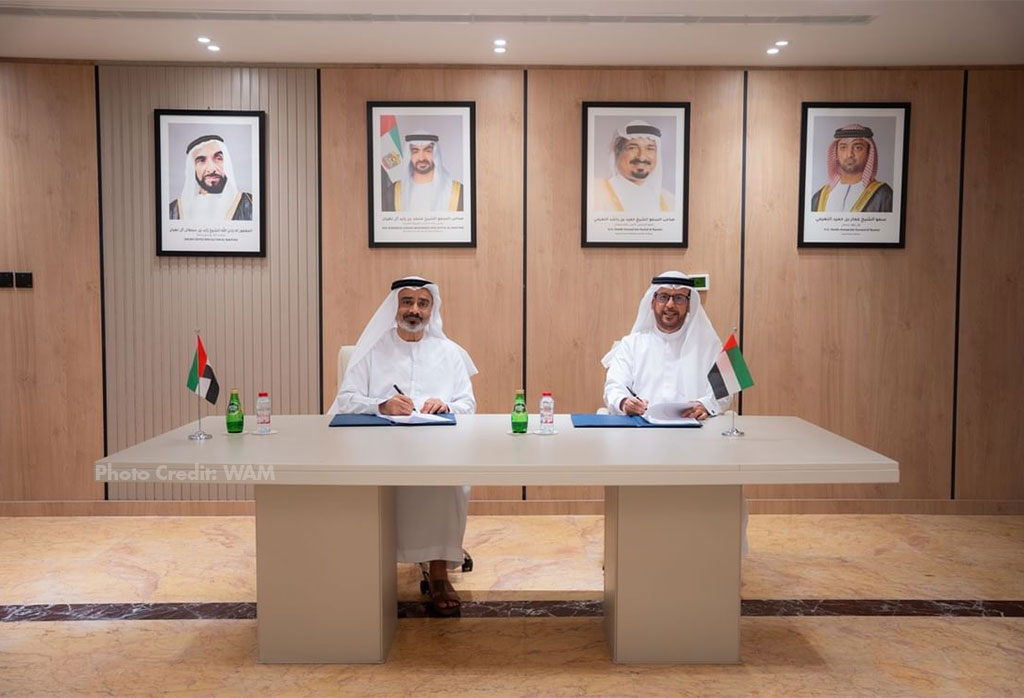
ABU DHABI, 13th April, 2026 (WAM) — The BRIDGE Alliance announced that the second edition of the BRIDGE Summit will be held from 28th November to 2nd December 2026, relocating its venue to Yas Island in Abu Dhabi in partnership with Miral Group, with the summit extended to five days, Emirates News Agency mentioned today.

This was announced during the Board of Directors meeting of the BRIDGE Alliance, chaired by Abdullah bin Mohammed bin Butti Al Hamed. The Board reviewed the outcomes of the first edition and the position it established for the summit as the largest global platform bringing together leaders and elite figures from the media, content, cultural, and creative industries across all their components, alongside decision-makers and investors, within a unified platform that enables more effective and integrated opportunities and partnerships worldwide.

The meeting addressed a wide range of topics related to planning for the BRIDGE 2026 Summit, which will witness a qualitative transformation in its structure and mechanisms. This includes transitioning from an annual event model to a year-round sustainable platform based on specialised tracks that address challenges facing the media sector, expanding partnerships, and launching practical initiatives that support responsible innovation—thereby establishing BRIDGE as a global reference for credibility and professional collaboration.

Abdullah Al Hamed affirmed, during his speech at the alliance’s third meeting, that the upcoming BRIDGE 2026 Summit will not be a mere continuation of previous editions, but rather a qualitative leap on three levels. The summit will move to Yas Island, offering a larger space that reflects the expansion of its agenda and ambitions; it will extend to five days instead of three, allowing innovation more time to flourish; and its content will focus on the creative economy, information integrity, and empowering future generations to shape a media landscape that not only conveys news but creates opportunities.

He emphasised that the goal is to transition from momentum to institutionalisation, from dialogue to execution, and from gathering voices to unifying efforts. He noted that BRIDGE serves as a bridge that brings together geopolitical contrasts at one table and unifies global ambitions under one roof.

The Chairman of the Alliance highlighted that the next phase of BRIDGE represents a decisive shift from the logic of an event to that of a system, and from seasonal activity to a long-term institutional project that redefines the role of media within the equation of development, economy, and knowledge.

For his part, Dr. Jamal Al Kaabi, Vice Chairman of the BRIDGE Alliance, affirmed that the new updates to the BRIDGE Summit reflect the UAE’s transition from supporting the media, content, and entertainment economy to engineering its operational platforms. He noted that BRIDGE represents one of the most significant practical models in this sector, and that the second edition will focus on deepening the quality of professional engagement through structured mechanisms that connect investors, producers, media and technology platforms, content creators, and innovators within a unified platform that facilitates the development of business models, co-production, and expanded access to regional and global markets.

The meeting witnessed in-depth discussions among alliance members, who contributed rich ideas and perspectives, reflecting a shared understanding that the second edition of the BRIDGE Summit carries greater responsibility than the first. The focus is no longer on proving the concept, but on amplifying its impact and transforming the momentum generated by the first edition into a deeply rooted institutional path capable of withstanding the test of time.

Discussions emphasised the importance of ensuring that the upcoming summit serves as a platform for decision-making, not merely dialogue, and that it delivers measurable and actionable outcomes reflecting the true weight of the institutions under the alliance.

UAE Japan economic partnership

The UAE-Japan economic partnership is entering a stronger phase after both sides backed a new trade framework.

The recent call between President Sheikh Mohamed bin Zayed Al Nahyan and Prime Minister Sanae Takaichi showed support for deeper commercial ties. Both governments tied their talks to the Comprehensive Strategic Partnership launched in 2022, which guides broader cooperation. Officials expect the new agreement to support faster trade flows, stronger investment links, and simpler market access. The planned deal matters because Japan has not signed a similar pact before with an Arab country.

UAE is another route to widen its trade network across Asia and nearby regions. For Japan, the deal strengthens access to a trusted partner with strong logistics reach and investment depth. From my standpoint, the agreement shows both governments want practical growth, not symbolic diplomacy alone.

Why the UAE-Japan economic partnership matters now

Trade data gives this story real weight for companies watching both markets across major sectors. Official figures show non-oil trade reached 20.3 billion dollars during 2025, up 16.7 percent year on year. Those numbers show that strong demand already exists before the agreement enters its formal implementation stage. Business groups in both countries now have a clearer path for planning future investments together.

The biggest gains look likely in advanced technology, logistics, cybersecurity, healthcare, education, and financial services. These sectors match national priorities in both countries and support long-term economic diversification goals. Japanese firms bring industrial depth, while the UAE offers capital, connectivity, and access to regional markets. This pairing helps smaller companies expand, especially in digital services and specialist manufacturing areas. Research and development stands out as a practical area for shared projects and commercial testing.

Smart mobility and energy security carry equal value because both economies are investing in future systems. Digital transformation is another important area, since public services and businesses want greater speed and efficiency. If implementation moves smoothly, private sector confidence should improve across trade, hiring, and project activity.

Sector gains under the new agreement

The CEPA fits the UAE strategy of building a knowledge-based economy with stronger innovation output. For readers, this matters because trade policy often shapes jobs, prices, services, and business opportunities. A better trade framework often reduces friction for exporters, importers, investors, and service providers alike.

In this case, the UAE-Japan economic partnership supports more reliable supply chains across important sectors. Healthcare cooperation improves medical technology exchange and opens space for joint training programmes. Education links bring research partnerships, student exchanges, and specialised learning programmes with commercial value. Cybersecurity work deserves attention because both countries rely on secure digital systems for growth. Energy security remains central as governments seek stable supply, resilience, and smarter infrastructure planning.

The agreement supports innovation through joint work in mobility, finance, and industrial problem-solving. UAE Japan trade should benefit further if companies use the agreement quickly after formal procedures finish. Success still depends on execution, business awareness, and steady follow-through from public institutions. Yet the direction is clear, both sides want broader cooperation with measurable economic returns. For now, the UAE-Japan economic partnership stands as a major step in bilateral economic policy.