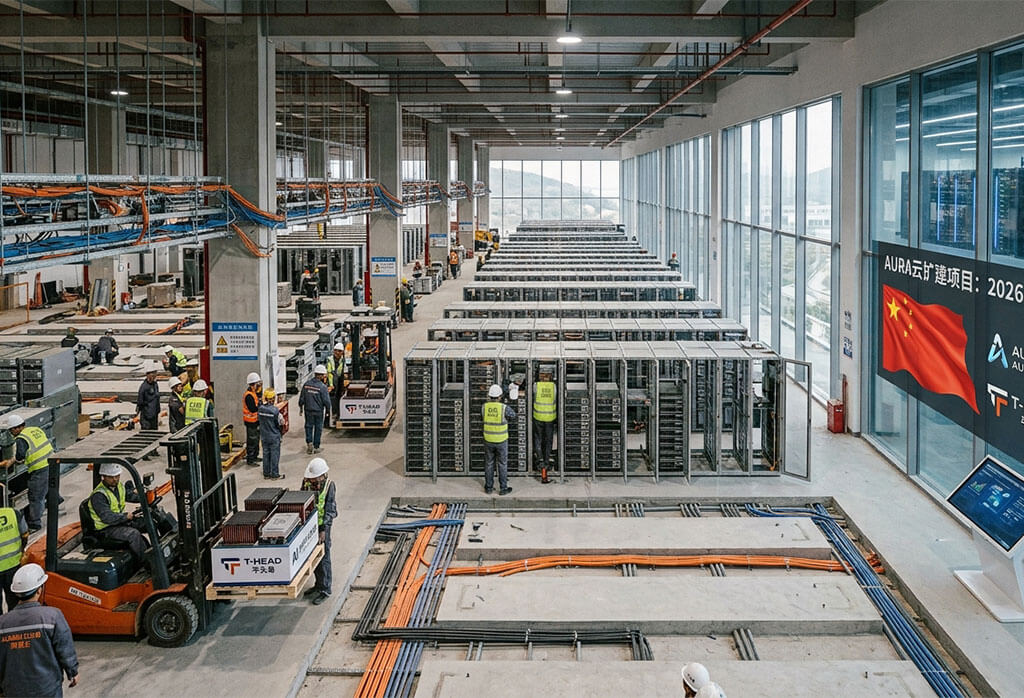



Alibaba AI infrastructure spending is climbing again, and the company wants shareholders to fund it. The Chinese ecommerce and cloud group is selling HK$80 billion of new shares, roughly $10.2 billion, with every dollar of net proceeds going into its full-stack AI capabilities. That covers chips, data centres, and the models running on top of them. The Alibaba share placement is the largest primary follow-on offering ever from a Hong Kong-listed company. Globally it ranks third this year, behind Alphabet and Intel.
Pricing tells you how the market took it. Alibaba set 710 million new shares at HK$112.70 each, against a Friday close of HK$123. Hong Kong-listed shares dropped as much as 10 percent on Monday. Buyers at the discount get exposure to the buildout. Existing holders get dilution and a longer wait for returns. US investors were excluded from the deal.
The numbers behind the raise
Alibaba AI capex hit 67.7 billion yuan in the June quarter, up 75 percent from a year earlier. Net profit fell by the same proportion over that period, to roughly $1.5 billion, and free cash outflow reached $6.6 billion. Alibaba AI infrastructure spending sits inside a three-year plan worth at least 380 billion yuan, and the company says it has already spent close to half. CEO Eddie Wu told analysts the compute capacity has to exist before the growth can be captured.
Revenue is arriving behind the bill. Alibaba Cloud revenue from AI and compute services rose 45 percent to 48.44 billion yuan in the quarter, the fastest pace in 22 quarters. Payback on AI-related investment is now expected in about 2.5 years, down from three.
What Alibaba AI infrastructure spending means for you
Hold the stock, and you absorb the dilution today for capacity that pays later, if the demand holds. Build with AI in Asia, and the calculation flips, because more compute usually means cheaper inference and stronger models. The Qwen AI model family sits at the centre of that trade. Alibaba released Qwen 3.8-Max weeks ago, and early benchmarking points to strength in agentic coding, where bots write and repair code from high-level instructions.
China AI investment runs hot
This raise lands in a market already paying up. Chipmaker CXMT pulled in $8.6 billion at listing, and its shares rose 466 percent on debut. Humanoid robotics group Unitree raised $900 million last week, with shares climbing more than 600 percent on day one after retail demand topped 5,500 times the available allotment. Moonshot’s Kimi K3 launch last month added to the mood. China AI investment at these valuations carries real risk if earnings arrive slowly.
Washington is still a problem
Regulation shapes the rest of the story. The Pentagon in June returned Alibaba to a blacklist of Chinese companies treated as a national security risk, alongside Baidu and BYD, citing alleged links to the People’s Liberation Army. Alibaba has asked a US court to overturn the order. The company denies any PLA ties and rejects the claim it takes part in military fusion, where civilian industry works with the state defence sector. Xi Jinping and Donald Trump meet in the US next week, their second summit this year, with export controls and technology restrictions on the agenda. What comes out of that room decides how far Alibaba AI infrastructure spending can travel outside China.