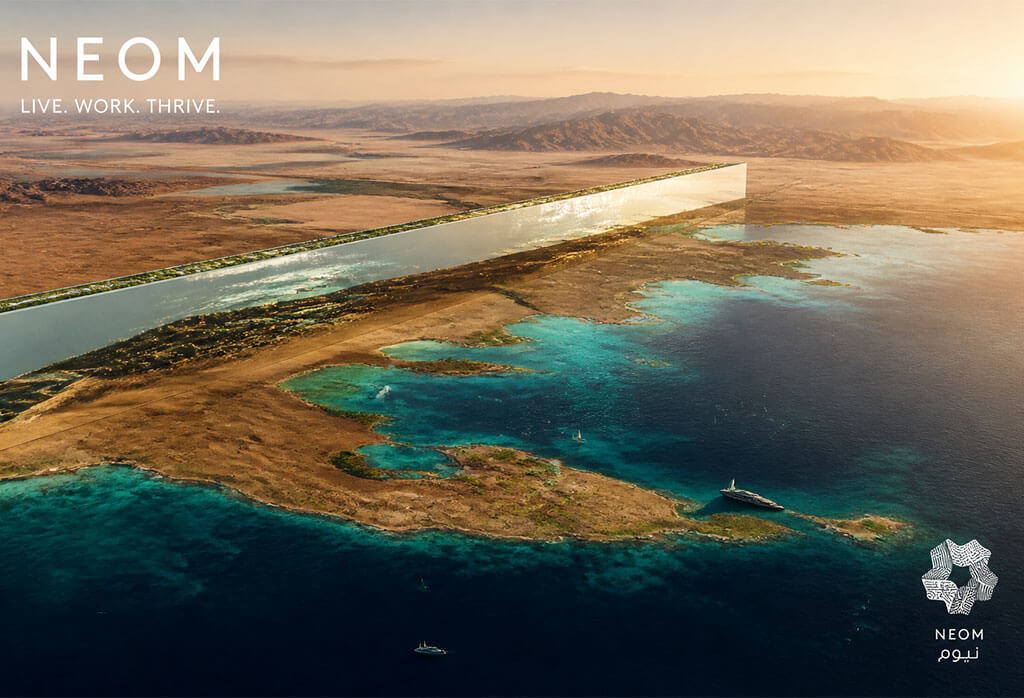



Saudi Arabia rethinks NEOM giga-project plans as new budget figures reveal billions set aside for cancellations. The 2026 to 2030 budget includes around $16 billion in payments to contractors, according to Semafor. These payments are tied to penalty clauses inside long-term agreements signed during years of rapid contracting. Saudi authorities now expect to spend more on cancelling work than on building it. You should watch this shift because it reshapes one of the world’s largest development plans.
NEOM sits under the Public Investment Fund, which now reviews spending across its entire portfolio. The fund once projected that the full project would cost more than $1 trillion to build. Officials have already spent $64 billion on the site, with progress focused on select areas. Visible work centres on Oxagon NEOM, the industrial city and port near the Red Sea. An $8.4 billion green hydrogen project also nears completion within this same coastal zone.
This reset gained pace after Aiman Al-Mudaifer became NEOM’s chief executive during the past year. His strategic review brought layoffs, corporate restructuring, and a fresh look at development plans on-site. Saudi Arabia rethinks NEOM giga-project priorities through tighter procurement and a clear focus on delivery.
THE COST OF SLOWING DOWN GROWS
The reported $16 billion bill shows that scaling back a project this size carries high costs. NEOM contract cancellation costs equal more than a third of the projected 2026 budget deficit. Negotiations with contractors might change the final figure, people familiar with the matter told Semafor. The Line Saudi Arabia plan has become the clearest symbol of this wider recalibration effort. Planners first presented it as a 170-kilometre linear city running from the coast inland. Its scale, cost, and timeline drew growing scrutiny as the kingdom reassessed spending priorities. Semafor reported earlier work on The Line stays delayed until after the year 2030. Officials now redirect this spending toward infrastructure carrying clearer strategic or commercial near-term value. Selected parts of the development stay fully active even during this broader financial pullback.
WHY SAUDI ARABIA RETHINKS NEOM GIGA-PROJECT SPENDING
Saudi Arabia rethinks NEOM giga-project budgets because deficits and weak foreign investment forced tighter choices. The Public Investment Fund now favours projects tied to clearer returns and national priorities. Those priorities include logistics, artificial intelligence, defence, and infrastructure for Expo 2030 and the 2034 World Cup. Oxagon NEOM gained importance as the Iran war disrupted shipping through the Strait of Hormuz. The Red Sea port now serves as an alternative route for goods moving into the Gulf. One Qatar-based firm moved cargo from Europe to Doha in 22 days using this route. NEOM still plans to spend $10.7 billion on new work, mostly tied to Oxagon and utilities.
WHAT THE RESET MEANS FOR YOU
By contrast, some tourism plans face long delays under the revised NEOM budget 2026 framework. MAGNA resorts and the Trojena mountain site wait until the next decade for fresh funding. As I see it, Saudi Arabia rethinks NEOM giga-project plans to protect long-term financial stability. You now see a kingdom balancing bold ambition against cost, liquidity, and tight delivery timelines. The shift signals discipline reaching every corner of the kingdom’s wider development programme today.