


For Gulf oil, new pipelines are becoming the answer to an old question. Who should control the route by which the region’s crude reaches the world? Governments in the Gulf have deferred that question since the Iran-Iraq War of the 1980s. After the US-Israeli strikes on Iran on 28 February, Tehran effectively closed the Strait of Hormuz. Saudi Arabia, the United Arab Emirates and Iraq then moved to build overland routes to the Red Sea, the Gulf of Oman and the Mediterranean.
Before the war, roughly 15 million barrels of Gulf crude passed through the strait each day, within total oil flows of about 23 million barrels. Only two producers, Saudi Arabia and the UAE, had pipelines able to carry meaningful volumes around it. Both are now expanding, and Iraq has started building.
Goldman Sachs tracked seven pipeline and export projects across the region. In its base case, they add 3.8 million barrels a day of bypass capacity by the end of 2027. By the end of 2028, the figure reaches 7.3 million barrels a day. That would insulate more than 45 percent of pre-war Gulf oil exports from disruption in Hormuz by the end of next year. A year later, the share could pass 60 percent.
Freight costs forced the decision
The money story behind this shift is freight. By mid-October, moving crude from the Gulf to Asia on a large tanker cost more than $37 a barrel, over five times the pre-war level. On the China route, freight came to equal roughly a quarter of the price of a barrel, against about 5 percent in normal times. War-risk insurance climbed as high as 10 percent of a vessel’s value. Some supertanker charters reached $1.3 million a day.
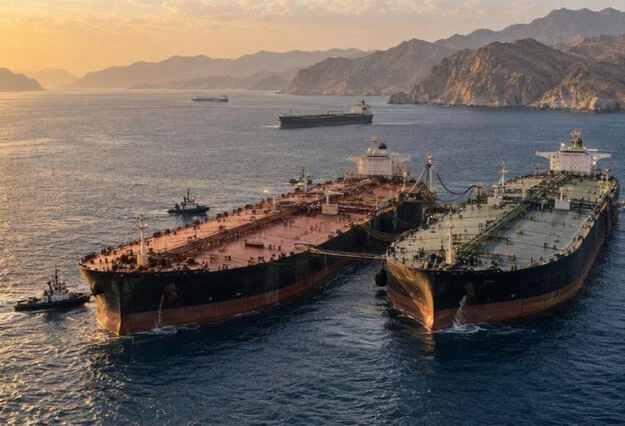
Volumes recovered faster than costs did. Middle East exports fell by 61 percent in the first phase of the closure. By the week ending 18 October, shipments averaged more than 24 million barrels a day, above the pre-war average of 23.3 million. Producers relied on an improvised system of pipeline exports, short tanker shuttles and ship-to-ship transfers in the Gulf of Oman. Much of it ran under US military protection. By the autumn, an estimated 40 percent of the region’s crude was already leaving by routes that avoided the strait.
That arrangement kept barrels moving, but it was costly and exposed. For Gulf oil, new pipelines offer a route each producer governs on its own territory, under its own security forces.
Gulf oil, new pipelines and the UAE’s route to Fujairah
The UAE is moving quickest. Its Abu Dhabi Crude Oil Pipeline runs from Habshan to Fujairah on the Gulf of Oman. It carries up to 1.8 million barrels a day. In May, Abu Dhabi Crown Prince Sheikh Khaled bin Mohamed bin Zayed directed ADNOC to speed up a second line. The West-East Pipeline will double export capacity through Fujairah.
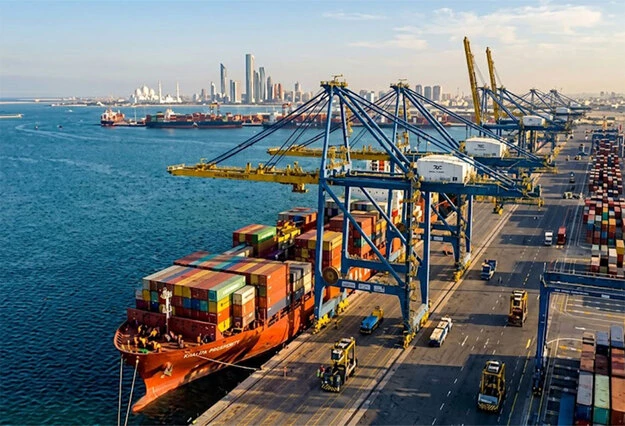
Work on the second Fujairah pipeline is roughly half done. ADNOC expects it to start operating in 2027. Kpler, the data firm, considers mid-2027 more likely because the port at Fujairah also needs to grow. The terminal has itself come under attack during the conflict. A bypass reduces exposure to Hormuz, but it does not remove risk.
Saudi Arabia widens the East-West pipeline
Riyadh holds the largest existing Strait of Hormuz bypass. Aramco’s East-West pipeline runs about 1,200 kilometres from Abqaiq in the Eastern Province to Yanbu on the Red Sea. It can move 7 million barrels a day. Aramco pushed it to full capacity within days of the closure. Drone attacks on the line later disrupted flows, and repairs followed.
Riyadh now wants more. Energy Minister Prince Abdulaziz bin Salman said in October that the kingdom wants 10 million barrels a day of pipeline capacity to destinations outside the Gulf. He gave a timeline of two to three years. The plan includes converting a domestic gas pipeline to carry about 1.2 million barrels of crude a day. Yanbu would gain roughly 800,000 barrels a day of loading capacity. Aramco chief executive Amin Nasser told analysts in November that expansion work had started.
The Saudi plan has a regional dimension. Riyadh has held preliminary talks with neighbouring producers about access to extra capacity. If those talks progress, smaller exporters would rely on Saudi infrastructure in place of the strait. The question of who holds the key to their exports would move from Tehran to Riyadh.
Iraq looks west to the Mediterranean and the Red Sea
Baghdad has the most to gain and the furthest to go. Its southern crude leaves almost entirely through Basra and the Gulf. In May, Baghdad began work on the Basra-Haditha pipeline, a 700-kilometre line to Anbar province with planned capacity of 2.5 million barrels a day. From Haditha, crude could flow toward Ceyhan in Turkey, Baniyas in Syria or Aqaba in Jordan on the Red Sea.
Baghdad is also working with Damascus to revive the old Kirkuk-Baniyas line. Each of these routes crosses a neighbour’s territory and needs a political agreement as much as steel. Iraq’s case shows the limits of the model. For Gulf oil, new pipelines can replace one dependence with another, trading exposure to Iran for reliance on Turkish, Syrian or Jordanian consent.
What a smaller Hormuz premium means for Tehran
Taken together, existing and planned routes could allow the region to export around 14 million barrels a day without touching the strait. Goldman’s timeline points to the end of 2028 for that full figure.
As alternatives come online, Iran’s main source of leverage over the oil market weakens. A closure of Hormuz would still hurt, yet it would no longer halt most of the region’s crude. An analysis published by Investing.com argued that Saudi and regional routes are beginning to cancel out Tehran’s strongest card in negotiations.
Prices already reflect that change in expectations. Goldman Sachs now sees a global surplus of about 2 million barrels a day in 2027 in its base case. The bank expects Brent to average $88 next year and ease to $78 by December 2027. In a weaker scenario, prices could fall toward $60 or lower.
The strait still matters. Liquefied natural gas and large volumes of refined fuels have no comparable overland route. For Gulf oil, new pipelines change who governs the crude trade. Authority over the route moves from Iran’s coastline to the operators in Riyadh, Abu Dhabi and Baghdad.