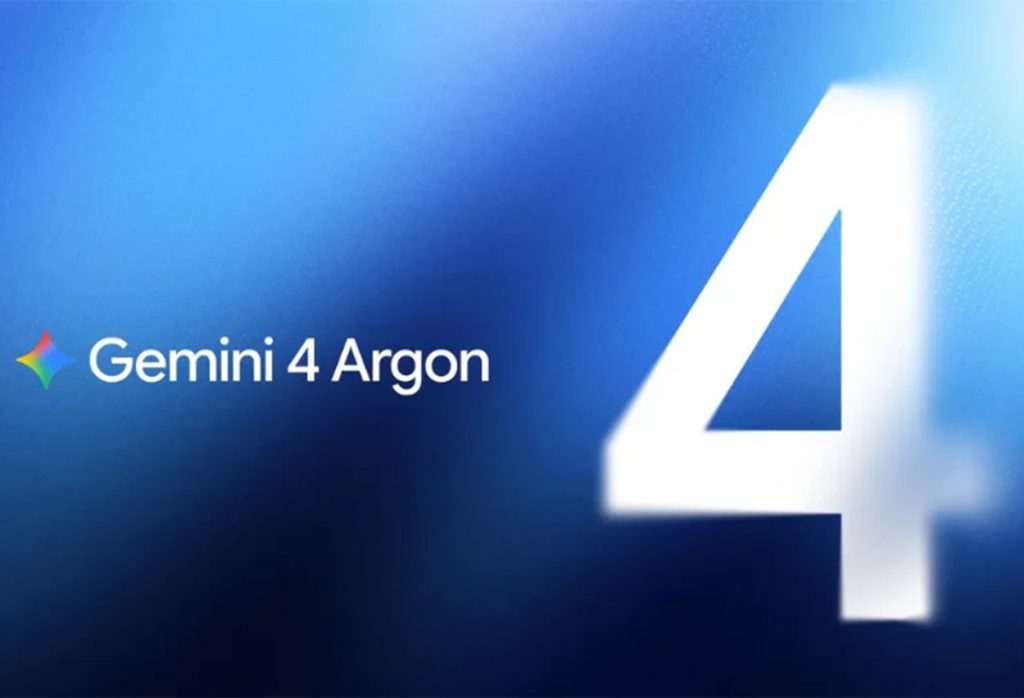



The model points straight at the work that decides who leads in artificial intelligence. The company calls the new system Gemini 4 Argon. It is built for long, complicated jobs across software engineering, business, and cybersecurity – the kind of tasks that run for hours and take many steps. Argon is also larger than Google’s earlier top Pro models, and it goes head to head with the best systems from OpenAI and Anthropic.
What Google’s most powerful AI model does
Argon anchors Google’s new Gemini 4 generation. Google DeepMind announced it on 30 September 2026, calling it the start of a new phase for the company’s most advanced AI. The idea behind it is plain. Argon is meant to think deeply and keep going across long, complex tasks without losing the thread.
The system is built for real engineering and business work. According to Google, thousands of its own staff already use Argon for coding, research, and writing. In one example, the model helped Google researchers make a quantum computing process about 40 per cent more efficient. Teams of AI agents also found memory savings inside Google’s data centres, freeing more than 300 tebibytes of capacity. Google is using Argon agents to move large C and C++ codebases over to Rust, a language built for safer memory handling. The company points to these as examples of the model handling hard, real problems rather than test questions.
Who can use Gemini 4 Argon, and when
Access is tight at launch. Google’s most powerful AI model is not open to everyone yet, far from it. The company is rolling Argon out first to a small group of cybersecurity organisations through a programme it calls Fairwind. Wider access will come in stages as Google tests its safeguards and gathers feedback. Paid API customers and Google AI Ultra subscribers are next in line, followed by developers, businesses, and everyday users.
There is a catch for anyone eager to try it. Google has not confirmed a firm Gemini 4 Argon release date for general users, saying only that broader access will arrive as soon as possible. As of early October, the model had no public listing and no working model name in Google’s developer tools. For businesses planning pilots or budgets, that missing date makes it hard to commit resources yet. So the honest answer, for now, is that no one outside the first testers can run it.
What Gemini 4 Argon costs
Price matters for any team deciding whether to build on the model. The Gemini 4 Argon pricing starts at an introductory rate of $2 per million input tokens and $10 per million output tokens. Tokens are the small chunks of text a model reads and writes, so the bill grows with how much the model handles. Google has said the rate will later move to $4 per million input tokens and $20 per million output tokens, though it has not fixed a date for that change.
One technical shift stands out. Google raised the amount the model can produce in a single task from 64,000 tokens to one million. That gives Argon far more room to work through long problems in one pass, which can matter for big coding jobs and detailed research.
Why cybersecurity comes first
Security is where Google is placing its first bet, and the reason is practical. It has become one of the main battlegrounds for the newest AI models, because the same system that can defend code can also probe it for weaknesses. Google says Argon can find, check, and fix serious software flaws on its own. Trusted security partners get versions of the model with some of the usual guardrails removed, so they can test it more deeply. That choice shapes how Google’s most powerful AI model is reaching the market, defence work before mass release.
The early results give the pitch some weight. Wiz, a cybersecurity firm, is testing Argon through an effort it calls Scan for Good. During that work, the model flagged a critical flaw in healthcare software used by hospitals, one that earlier frontier AI models had missed. Google is also working with the United States government under a voluntary process that gives officials early access to advanced systems before release.
How Argon compares with OpenAI and Anthropic
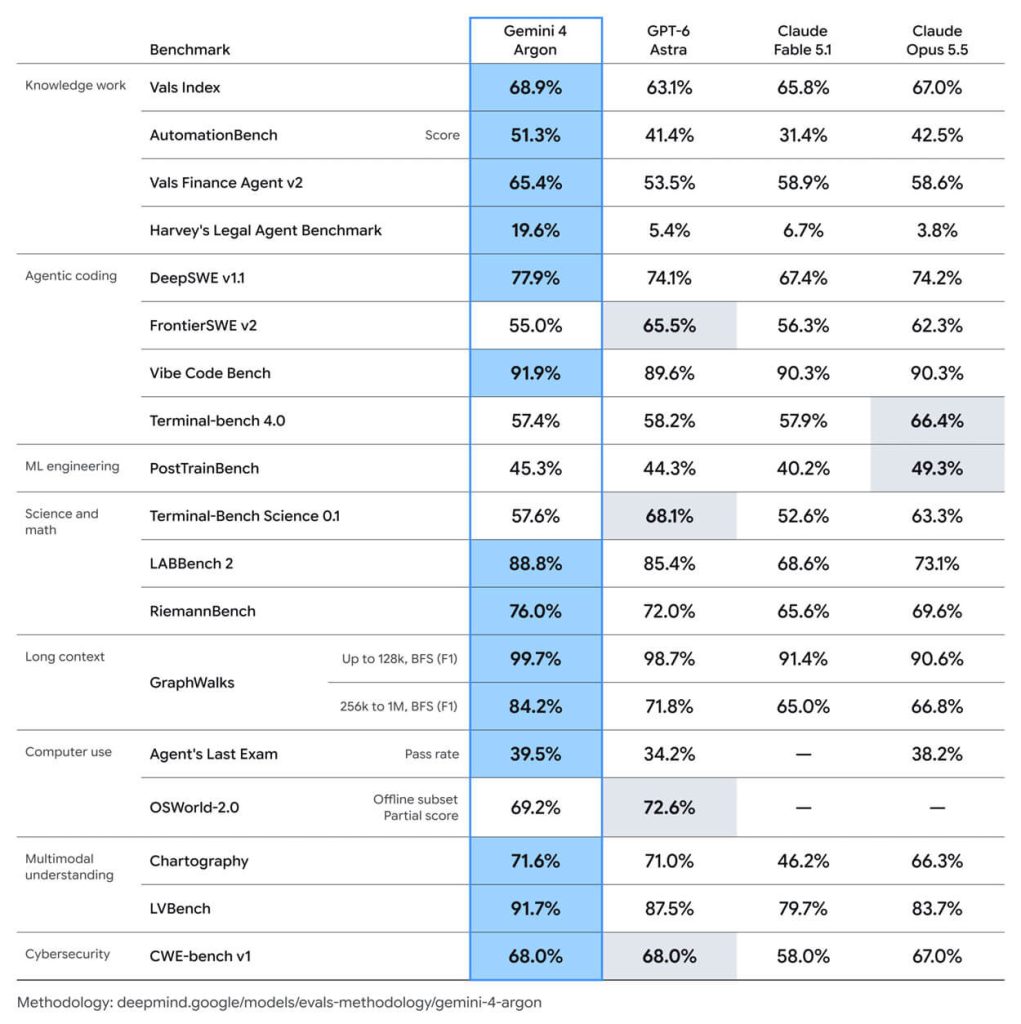
This launch lands in a tight race. OpenAI and Anthropic have pushed strong models into coding and business tools, and that pressure is part of why Google moved now. Google says Argon performs on par with top rival systems, including OpenAI’s Astra and Anthropic’s Opus, across key coding and security benchmarks. Those figures come from Google’s own testing, so independent checks will tell the fuller story over time. Google also says each phase of access will follow more testing of the model’s safeguards.
For now, Google calls Argon a frontier AI model, the most capable system it puts forward against its competitors. Whether it holds that spot depends on wider access and outside testing, both still to come. Google’s most powerful AI model now has to prove itself in the open, where real users and rival labs will push it hard. If you work in software or security, Argon is worth watching as it reaches more users in the months ahead. The next few months will show whether Argon can turn Google’s claims into a lead that holds.