


$600 million in revenue for Lovable is the figure co-founder Fabian Hedin shared at the HumanX summit in Amsterdam on Thursday. In June, that number sat near $500 million. The jump matters less as a headline and more for what it shows. People who never learned to code are shipping real products, and companies are paying for it.
What sits behind $600 million in revenue for Lovable
Lovable calls itself a vibe coding platform. The term, credited to AI researcher Andrej Karpathy, means building software by describing what you want in plain language. You type a request. The tool builds the app. Hedin drew a clear line between his product and coding assistants like Codex or Claude Code. Those tools write code. Lovable, he said, hands back something closer to a finished product, and its output is “a product, and increasingly so, a business.” The company also runs hosting, deployment, and scaling, so a builder does not stop at a prototype and then get stuck.
Enterprise clients change the picture
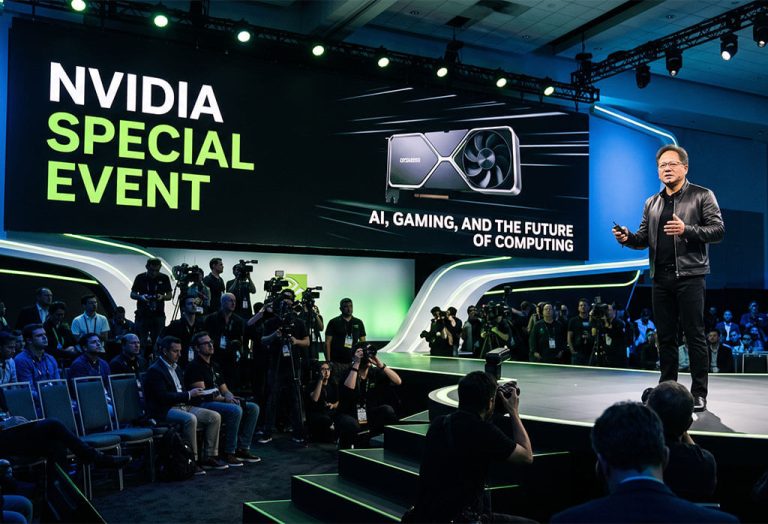
For a while, vibe coding looked like a tool for solo founders and weekend projects. That view has shifted. Hedin said staff at two-thirds of Fortune 500 companies now use the platform, naming Microsoft, Nvidia, and Deutsche Telekom among its customers. Enterprise demand sits at the center of $600 million in revenue for Lovable, because large contracts bring steadier income than one-off sign-ups. The reach shows in usage too. Apps built on the platform draw close to a billion views a month, which Hedin said runs well ahead of traffic to Lovable’s own site. The pace has its own signal. Its climb from $500 million to $600 million over three months is a smaller percentage gain than the earlier move from $400 million to $500 million.

What the funding says for you
Investors have moved fast. Lovable has raised more than $700 million across two rounds set eight months apart. The first came last December, when it took $330 million from Menlo Ventures and CapitalG at a $6.6 billion valuation. This August brought the second round. Menlo Ventures returned with the Scaleup Europe Fund, and the round set a Lovable $13.3 billion valuation. That kind of markup shows how quickly money is chasing AI app builder companies whose sales keep rising. Still, Lovable annualized revenue is a run rate, not cash in the bank. It takes recent monthly sales and stretches them across a year, so the number can move if growth slows.
So what does this mean for you? If you run a small team, the signal is simple. A working app is no longer weeks of engineering and a heavy contractor bill. It can be an afternoon and a clear description of the problem. That is why non-technical founders keep turning to these tools, and why Lovable can charge for the result rather than the code. The trade-off is trust. A product built fast still has to stay up, stay secure, and keep running when the services beneath it change. For now, $600 million in revenue for Lovable puts real weight behind a simple idea. Building software no longer belongs only to engineers.