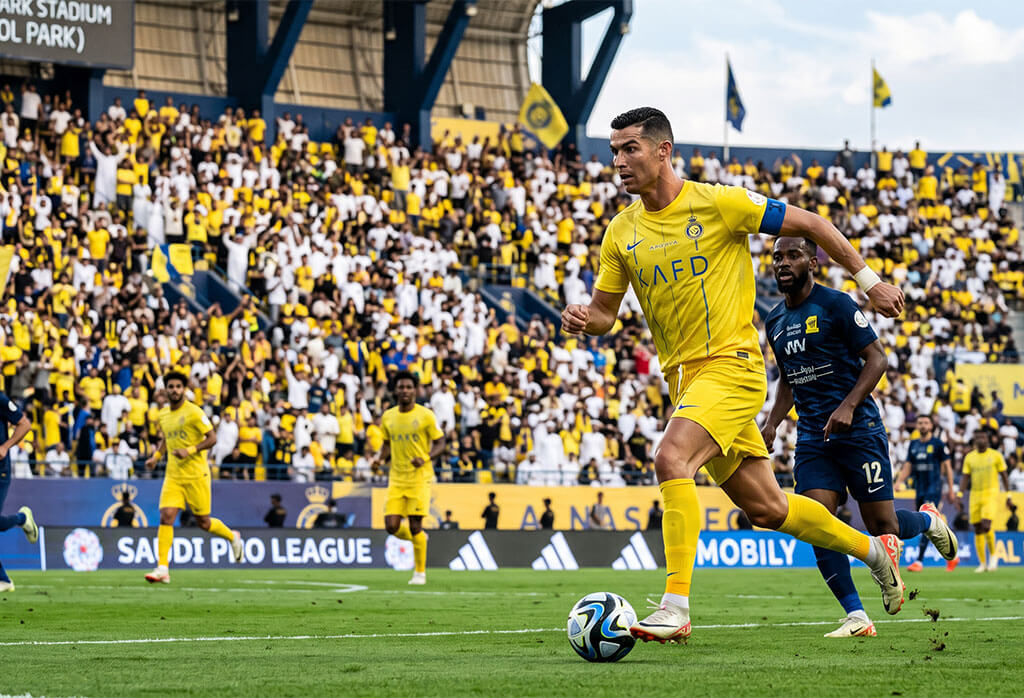


When PIF acquires Saudi football club stakes, the change reaches the stands well before it shows up on a balance sheet. Saudi Arabia’s sports ministry said in a social media post that it has begun moving 25 percent of the shares held by non-profit foundations in Al-Ittihad, Al-Ahli, Al-Hilal and Al-Nassr to the Public Investment Fund. Regulatory steps are complete. The boards of those foundations will be dissolved. No price was disclosed, and the ministry framed the step as the second phase of an ownership transfer meant to make the four clubs easier for outside money to buy into.
Those foundations were built by club members. Some served for years, running elections, handling club affairs, carrying the identity of a club from one generation to the next. That role now ends. If you support one of these four teams, the people who used to speak for you inside the boardroom no longer sit there.
The PIF ownership stake and what it replaces
Regional and Saudi outlets report the fund already held 75 percent of the four clubs after the first phase in 2023, with the remaining quarter parked with each foundation. Folding in that quarter hands the fund the whole company. The second time PIF acquires Saudi football club stakes, the terms look cleaner than the first, because a single owner is far simpler to sell than a split one.
Al Hilal ownership shows where this goes. In April, the fund agreed to sell 70 percent of the club to Kingdom Holding Company, the investment firm founded by Prince Alwaleed bin Talal, for SAR840 million, around $224 million. Before that, in July 2025, US venture firm Harburg Group bought Al-Kholood Club and became the first foreign owner in the league.
Saudi Pro League privatisation moves club by club
Saudi Pro League privatisation started as a formal programme in 2024, covering 14 clubs. Teams across the top tier have since moved to owners backed by sovereign money or private capital. Each deal follows the same shape. Convert the club into a company, tighten the governance, then find a buyer who wants the brand.
Ibrahim AlMoaiqel, assistant deputy minister for investment and privatisation, told a London forum in June that 11 club transactions had closed with two more underway, and more than 40 local and international investors had registered interest, according to reporting by Enterprise KSA. Five further clubs went on offer the same month.
What happens next after PIF acquires Saudi football club stakes
The logic behind all of it sits inside the Saudi Vision 2030 sports sector plan, which Crown Prince Mohammed bin Salman set out to widen the economy beyond oil. Sport and entertainment carry part of that weight. The 2034 World Cup, which Saudi Arabia is preparing to host, tightens the clock, since a club bought today should be worth more once the league grows ahead of the tournament.
Each time PIF acquires Saudi football club stakes, the fund edges closer to handing the clubs over completely. What arrives with the new owners is harder to read. Budgets have tightened across the league, and Enterprise KSA reports transfer spending this summer sits far below the 2023 peak, when Saudi clubs pulled stars out of Europe at speed.
So the shares move, the paperwork clears, and the boardroom empties out. For the crowd in the stands, the real question is who walks in next.