The strength of a product offer is never determined by charging the lowest price. It is determined exclusively by the perceived altitude difference between the floor where payment is extracted and the floor where the passenger disembarks after value has been delivered. In today’s editorial, I am going to present the concept of The Elevator Gap Principle.
The Dynamic Law of Offer Conversion
Every commercial transaction in a business startup is governed by two dynamic components: Price and Perceived Value. When a prospective customer experiences overwhelming value relative to the requested financial commitment, friction disappears and buying occurs immediately. Conversely, when the monetary cost appears elevated compared to the immediate utility delivered, conversion collapses into hesitation, extended review cycles, or outright rejection.
The central problem confronting early-stage ventures is rarely product capability. The failure occurs in offer architecture: founders routinely ask for maximum monetary commitment before proving substantial utility, while failing to provide a compounding journey after payment is extracted.
Core Positioning Thesis: An offer succeeds when it functions as an elevator that invites the passenger in immediately, charges an accessible fee at the first floor, and subsequently carries the passenger upward across dozens of floors without interruption. Value must dramatically outrun price at every phase of the commercial ascent.
The Elevator Analogy: Skyscraper Capabilities and Value Vehicles
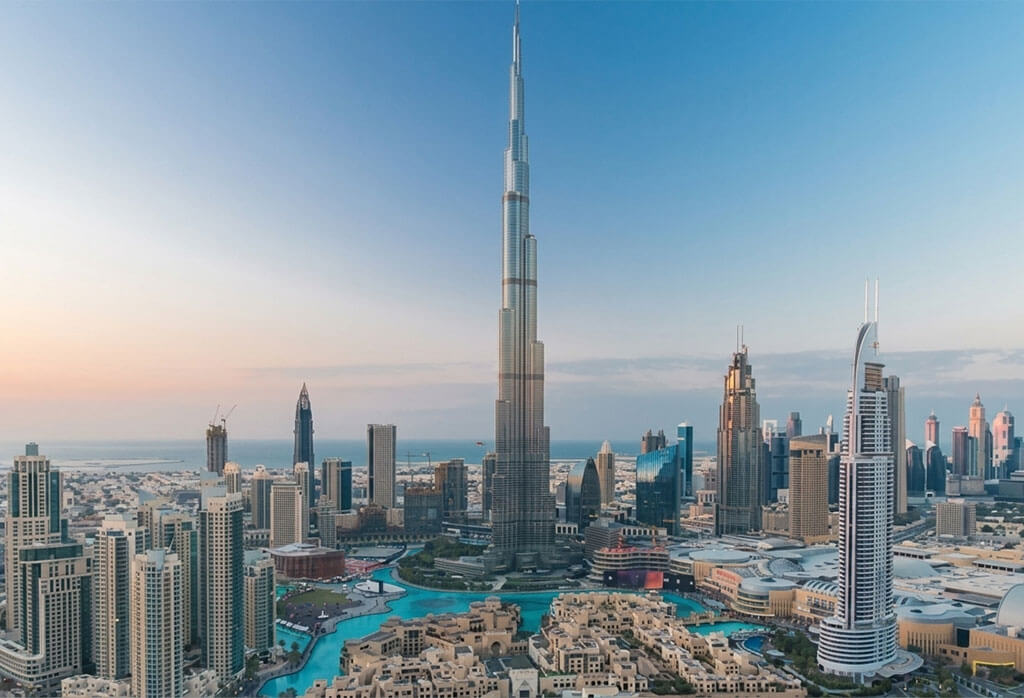
So, I am going to conceptualize high-retention offer positioning, considering two distinct corporate towers ( decided on this analogy influenced by Dubai’s downtown landscape ) operating across identical commercial landscapes:
The Tower: Enterprise Capability
The tower represents your complete business: infrastructure, intellectual property, product ecosystem, operational talent, and long-range vision. It contains hundreds of floors of potential transformation.
The Elevator: The Offer Vehicle
The elevator represents the commercial offer vehicle. It reflects the real-time relationship between price asked and value delivered. It determines how prospects enter, when they pay, and how far they travel.
Tower 1: The Extraction First Trap (The Flawed Elevator)
In Tower 1, the startup operates under an extraction mindset. The customer enters the lobby, steps into the elevator, and begins ascending through the lower structure. When you interact with these types of companies, you immediately experience the feeling of “being used”. You need to decide fast “because people are waiting” behind you. Usually, this happens inside cities where tourism is high. They literally don’t care if you come back or not. They are very transactional, and the difference between what you pay and what you get is insignificant. Sometimes even negative. It depends on the character of the owner.
The Flawed Journey Architecture
- The Silent Ascent: The cabin ascends past floor 1, floor 2, floor 3, and floor 4 without stopping. The business asks for nothing, but delivers no explicit tangible milestone. Anxiety and suspicion build silently within the prospect.
- The Elevated Stop: At floor 10, the elevator suddenly halts. The doors open to a high paywall. The business demands a premium ticket, requiring an upfront commitment of $1,000.
- The Immediate Eviction: Once the customer pays the $1,000 ticket, the cabin climbs just one level to floor 11. The doors slide open, and the customer is asked to exit the elevator.
The Economic Consequence: The customer paid a heavy toll for a single floor of advancement. The ratio between price and post-transaction value is compressed. The buyer feels extracted rather than empowered, creating high refund requests, churn, and resistance to further engagement.
Tower 2: The Ascension First Model (The Asymmetric Engine)
In Tower 2, the offer is engineered around radical value asymmetry. The prospect steps into the lobby elevator, and the commercial dynamic is immediately inverted. These are businesses that last for decades. Think about interior design agencies or professional photography services. The perceived and commercial value keeps compounding. You may use the same interior for years and years, and be completely satisfied. You paid once, and then the value keeps delivering uninterrupted.
The Asymmetric Journey Architecture
- The Floor 1 Gateway: The elevator closes its doors and ascends directly to Floor 1. The doors open immediately. The startup requests a minimal, highly accessible commitment: a low-barrier entry price that eliminates financial risk.
- The Open Invitation: Upon paying the nominal Floor 1 fee, the customer is not ejected onto the corridor. The customer is explicitly invited to remain inside the elevator.
- The Continuous Ascent: The doors close, and the cabin surges upward continuously past floor 2, floor 5, floor 20, and floor 50, collecting compounding operational utility, education, and functional outcomes on that initial entry ticket. Every floor is effectively communicated, and trust is established that it works smoothly to the desired destination.
- The Penthouse Expansion: When the passenger finally arrives at the summit floors, the business reveals enterprise expansions, high-velocity access, and bespoke services. Because the customer has accumulated massive value, premium expansion is welcomed without friction.
Architectural Comparison Matrix
| Strategic Dimension |
Tower 1: Extraction First |
Tower 2: Ascension First |
My Verdict |
| Initial Ask Elevation |
Floor 10 (Elevated elevation) |
Floor 1 (Ground gateway) |
Early Gateway Wins |
| Entry Price Barrier |
$1,000 Premium commitment |
Low friction entry fee |
De-risks Prospect |
| Post Payment Ascent |
1 Single floor before ejection |
Continuous ascent to top floors |
Asymmetric Delivery |
| Value to Price Ratio |
Low value relative to high price |
Vast value dwarfing low price |
Compounding Trust |
| Conversion Velocity |
Sluggish with severe friction |
Instantaneous buyer action |
Scalable Acquisition |
| Customer Retention |
High buyer remorse and churn |
Multi-year loyalty and expansion |
Compounding LTV |
The Four Pillars of Asymmetric Offer Positioning
Calibrate the Floor 1 Gateway
Establish a low-resistance initial transaction that solves an acute, urgent problem. The goal of Floor 1 is not maximal cash extraction, but relationship initiation and customer qualification.
Frontload Non-Stop Value Ascent
Deliver immediate, compounding utility without demanding another credit card swipe at floor 2 or floor 3. Let the customer experience multiple operational breakthroughs on the strength of their initial entry.
Engineer Visible Value Asymmetry
Ensure the customer consciously perceives the discrepancy between what they paid and what they have gained. When perceived value is ten times greater than cost, referrals and advocacy accelerate naturally.
Monetize Only at the Penthouse
Reserve high-ticket pricing for bespoke speed, proprietary integration, governance, and institutional scale. Premium offers convert effortlessly when presented to passengers who have already ascended 50 floors with your brand.
Tactical Implementation Playbook for Founders
Step A: Audit Your Tollbooths
Map your sales funnel against elevator floors. Identify where prospective buyers face sudden halts. If your first commercial request is an enterprise commitment, you are running Tower 1.
Step B: Build the Gateway Vehicle
Carve out an accessible, high-utility entry module. Price it so low that deliberation becomes unnecessary, yet meaningful enough to turn a casual spectator into an invested commercial customer.
Step C: Extend the Post-Purchase Lift
Examine your onboarding experience. Rather than offboarding customers immediately after purchase, deliver proactive insights, automated optimizations, and strategic workflows that sustain upward momentum.
Step D: Introduce Penthouse Tiers
Deploy executive advisory, deep infrastructure integrations, and priority execution as optional ascension tiers. The passenger willingly funds the penthouse because your elevator proved its reliability across every prior floor.
Strategic Verdict
Startup success is fundamentally an exercise in trust velocity. Founders who attempt to monetize before delivering tangible elevation will continually battle sluggish sales pipelines and heavy customer churn.
By adopting the Tower 2 architecture, asking for accessible commitment at Floor 1 and carrying the customer upward through continuous, non-stop value delivery, you build an unbeatable competitive moat where conversion is instantaneous, and retention is permanent. The gap between value and price is at a level that cannot even be compared. Therefore, purchase resistance is almost non-existent. This is what you want.
In upcoming editorials, I’ll be sharing my personal framework for business intelligence: insights drawn from two decades bridging hospitality operations, e-commerce growth, and media strategy.