
icnlive

WATCH LIVE. THINK BUSINESS.

© 2026 ICN.LIVE

ICN.live

PUBLISHED BY ICN PRESS

  • Emirates NBD Egypt has agreed to buy HSBC Egypt’s retail banking business, pending regulatory approvals.
  • The sale covers HSBC Egypt’s retail portfolio, branches, ATMs, customers and transferring staff.
  • HSBC expects a pre-tax gain of about $300 million and targets completion in the second half of 2027.
  • HSBC keeps its corporate and institutional banking operations in Egypt.

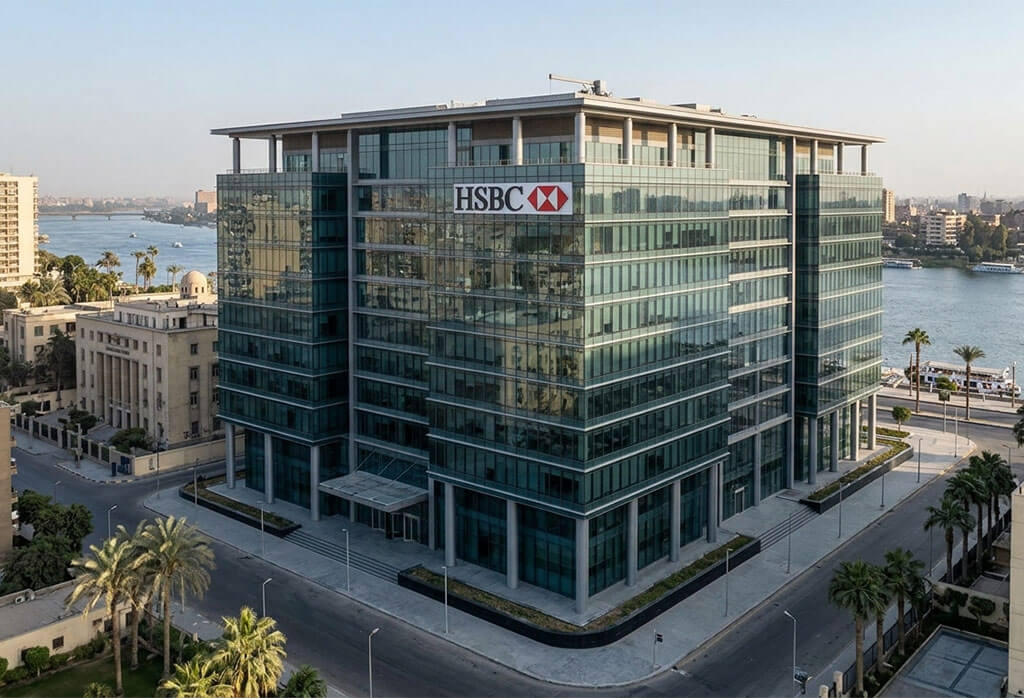
Emirates NBD acquires HSBC Egypt’s retail banking business under a definitive agreement announced on Sunday, a plan that widens the Dubai lender’s consumer reach in the Arab world’s most populous market. The wholly owned Egyptian unit, Emirates NBD Egypt, will take on the portfolio once regulators sign off. Neither bank disclosed the price. Let’s see what the deal covers.

The transaction moves HSBC Egypt’s retail banking assets and liabilities to Emirates NBD Egypt. Retail banking covers everyday services for individual customers, such as accounts, deposits, loans and cards. Included in the sale are HSBC Egypt’s branches, its ATM network, its customer base and the employees who support the business. Customers of HSBC Egypt retail banking face no immediate change, and their products keep running as normal while the two sides prepare the handover.

Why does Emirates NBD acquire HSBC Egypt now?

Egypt sits near the center of Emirates NBD’s regional growth plan. The bank describes the country as a core market central to those ambitions. Emirates NBD entered the Egyptian market in 2013 and has expanded its branch network since. Adding the HSBC book builds scale in retail and premium banking, the service tier aimed at higher-income clients. This Emirates NBD acquisition also deepens ties along the UAE-Egypt banking corridor, the flow of trade, payments and investment between the two economies.

HSBC steps back from Egyptian retail

For HSBC, the sale trims a business the group no longer treats as core. The lender has operated in Egypt since 1982. This HSBC Egypt sale follows a strategic review announced in 2025, part of a wider effort to simplify the group and focus where it holds stronger positions. HSBC expects a pre-tax gain of about $300 million, which it plans to book mostly at completion. The group keeps its corporate and institutional banking arm in the country, so it narrows its presence rather than leaving.

Hesham Abdulla Al Qassim, Vice Chairman and Managing Director of Emirates NBD and Chairman of Emirates NBD Egypt, said the investment reflects the bank’s confidence in Egypt’s market and its long-term growth prospects. Group Chief Executive Shayne Nelson described the purchase as a step in the bank’s regional strategy and its plan to grow its customer base in the country. Both sides target the second half of 2027 for completion, subject to regulatory approvals, including clearance from the Central Bank of Egypt.

What it means for customers

As Emirates NBD acquires HSBC Egypt’s retail arm, customers keep their accounts, cards and services for now. No account will change hands until regulators approve the deal and the two banks complete the transfer. HSBC and Emirates NBD said they will work together on a smooth move for staff and customers. Anyone with an HSBC Egypt account can keep using it as usual in the meantime.

What comes next

Amr ElShafei, Chief Executive and Managing Director of Emirates NBD Egypt, said the bank looks forward to welcoming HSBC customers and offering digital services backed by the wider group. Once Emirates NBD acquires HSBC Egypt, the lender gains more current accounts, deposits and card relationships across a combined branch and digital network. The full effect on customers will depend on how the two banks manage the transfer through 2027.


TAGS

EXPLORE MORE ON:

$20 billion Maldives project

For thousands of Maldivian families, a $20 billion Maldives project now stands between where they live today and a new home by the water. Abu Dhabi developer Eagle Hills has signed a commercial terms agreement with the Government of Maldives to build an island destination called Maldives Waterfront and Marina. The site covers 550 hectares, roughly 1,359 acres, in the Ras Malé area.

Ras Malé sits at Fushi Dhiggaru Lagoon, about 17 minutes by speedboat from the capital, Malé. The agreement, signed on Monday, sets out the main commercial terms. Finer details will follow as the work moves ahead.

Inside the $20 billion Maldives project

The Eagle Hills Maldives plan runs in phases. It brings together international hotels, premium and branded residences, a marina and waterfront leisure spaces. Retail, dining and entertainment sit alongside wellness, education, healthcare and community services. The aim is a place where people can holiday, live and go about ordinary days in one connected setting.

Numbers show the scale. The Ras Malé development could draw more than one million visitors a year and more than $2 billion in annual tourism revenue, by early estimates. Over its lifetime, it could attract more than $30 billion in gross foreign investment, including about $18 billion in net foreign investment. Planners expect it to create more than 54,000 jobs.

Homes for local families, and a cut for the state

The $20 billion Maldives project promises more than tourism for the islands. Its plan sets aside 5,000 homes for Maldivian families. The government will take 10 percent of sales revenue from the commercial side, plus a 4 percent fee on every property deal, including sales and resales. Each time a unit changes hands, the state earns its share.

Mohamed Alabbar, founder and chairman of Eagle Hills, told Reuters construction could begin in the first quarter of 2027. He also raised the chance of a familiar name joining in.

Where Emaar Properties fits in

The current agreement rests with Eagle Hills alone. Even so, Alabbar left the door open to a shared stake in the $20 billion Maldives project. “We may go for 50:50 sharing, depending on the decision of the Emaar Investment Committee,” he said. Emaar Properties, which Mohamed Alabbar also founded, is the name behind Burj Khalifa and Dubai Mall. Its presence would carry weight for buyers weighing where to put their money.

Eagle Hills works across more than 18 countries and runs a portfolio of 45 hotels. The developer said the masterplan folds in sustainability, resilient infrastructure and steps to protect the fragile island environment.

Dubai Creek Tower and no IPO

Alabbar addressed other plans too. He said the tendering of the proposed Dubai Creek Tower would depend on the conflict involving Iran and the United States. “Once the situation in Iran and the US settled, I might tender it,” he said. Back in June 2026, reporting indicated Emaar had delayed that tender after port closures tied to the Iran-US war pushed up material costs and pricing.

On one point, he was firm. “For Eagle Hills, no IPO is on the table,” he said, ruling out a public listing.

For families near Malé, the next signal to watch is simple. If ground breaks in early 2027 as planned, the $20 billion Maldives project moves from paper to shoreline.

What Qatar’s new dual-tranche

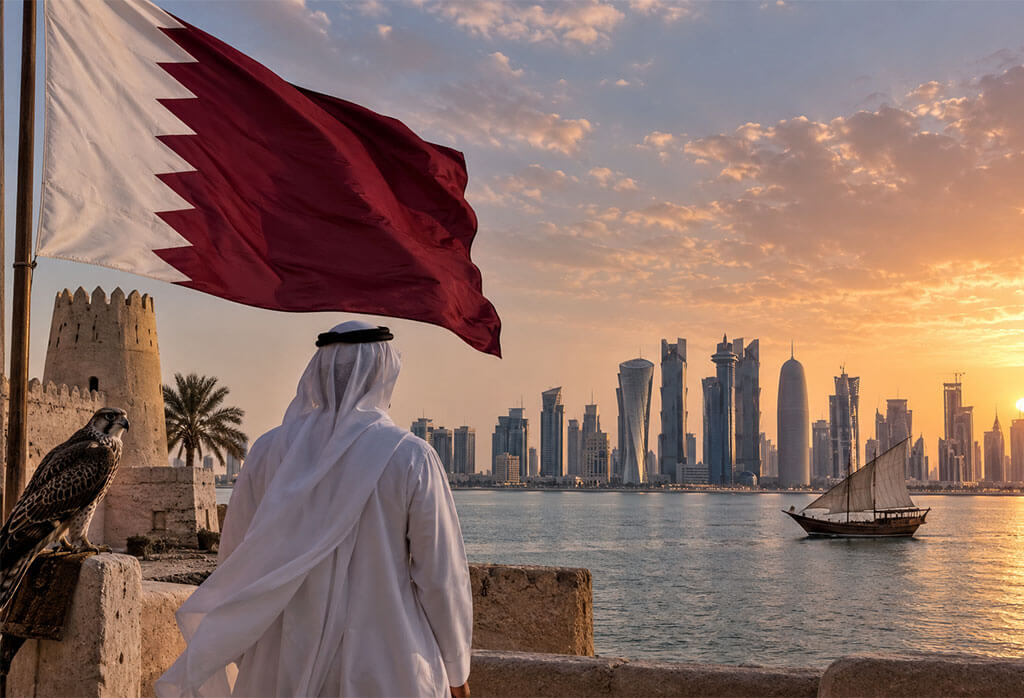
Qatar has launched a benchmark-sized sovereign USD bond across two tranches, with pricing expected later the same day. The offering is senior unsecured. It comes through the Ministry of Finance, acting for the State of Qatar.

The five-year tranche carries initial price targets of 85 basis points over US Treasuries. Guidance on the 10-year sits at 95 basis points. Both spreads fall below the 100 basis point mark. Final coupons will depend on Treasury levels once the order book closes.

Qatar is the latest Gulf state to return to international debt markets. The move follows a quieter stretch for regional supply during a period of renewed geopolitical tension. Earlier this month, Saudi Arabia raised 3.25 billion dollars through a dual-tranche dollar sukuk.

Business Intelligence & News

  • UAE higher education is becoming core economic infrastructure for talent, innovation, and growth.
  • Abu Dhabi University awarded QS Stars 5+ rating
  • Dubai private university enrolment reached 42,026, growing by around 20% in 2024–25.
  • Universities are aligning skills with AI, finance, healthcare and other strategic UAE sectors.

How the sovereign USD bond is structured

The deal is a Qatar dual-tranche bond, split by maturity. One tranche runs five years. The other runs 10. Each is a senior unsecured bond, which ranks holders alongside other unsecured senior creditors rather than against specific assets.

Initial price thoughts, or IPTs, are the early spread levels shown to investors before the book builds. They mark a starting point, not a final price. As demand forms, the spread can tighten. The US Treasuries spread is the gap between Qatar’s yield and comparable US government debt, and it moves with Treasuries until pricing locks. The sovereign USD bond gives Qatar dollar funding at two points on its curve.

A benchmark-sized transaction points to an issue large enough to trade with reasonable liquidity later. Qatar had not confirmed the final size at launch.

Ratings and syndicate

The State of Qatar holds an Aa2 rating with a stable outlook from Moody’s. S&P rates it AA with a stable outlook. Fitch rates it AA with a negative outlook. The notes are expected to carry a rating in line with the issuer.

Credit Agricole CIB, Deutsche Bank, Mizuho, MUFG, Santander and SMBC serve as joint lead managers. Goldman Sachs International, HSBC, JP Morgan, QNB Capital and Standard Chartered Bank act as joint global coordinators. HSBC is the billing and delivery bank on the five-year tranche. Standard Chartered Bank takes that role on the 10-year.

Settlement and listing

The bonds settle on September 28, 2026. They fall under Qatar’s Global Medium Term Note Programme, the standing framework the sovereign uses for repeat issuance. A listing on the London Stock Exchange Main Market will follow.

Pricing gives a current read on how investors weigh Qatar’s credit. Spreads under 100 basis points on a five- and 10-year sovereign point to steady demand. For the wider Gulf debt markets, the deal adds a fresh reference point after a thin run of supply. Other regional borrowers can price against it.

Qatar’s access to dollar funding rests on large hydrocarbon revenues and a deep pool of state financial assets. That base has long supported its standing with bond investors.

What comes next?

Order books will guide the final spread and coupon on each tranche. Pricing on the sovereign USD bond will firm up once the book closes. Investors will watch the size of Qatar’s prints and where the spreads land against the opening guidance.

Share this post

on your favourite social platforms

or copy the link