icnlive

WATCH LIVE. THINK BUSINESS.

© 2026 ICN.LIVE

Yousef Haddad

Senior Editor,

icn.live

Follow

Yousef Haddad writes for ICN.live about global markets, cross-border payments, and digital custody and has authored market coverage for Arab News Tech, and other regional publications. Known for clarity and precision, he trained in Broadcast Journalism and Media Communication at a leading Arab University. His passion for biking is very well known inside of the company. He has a huge collection of bikes.

China’s EV Industry Dominance

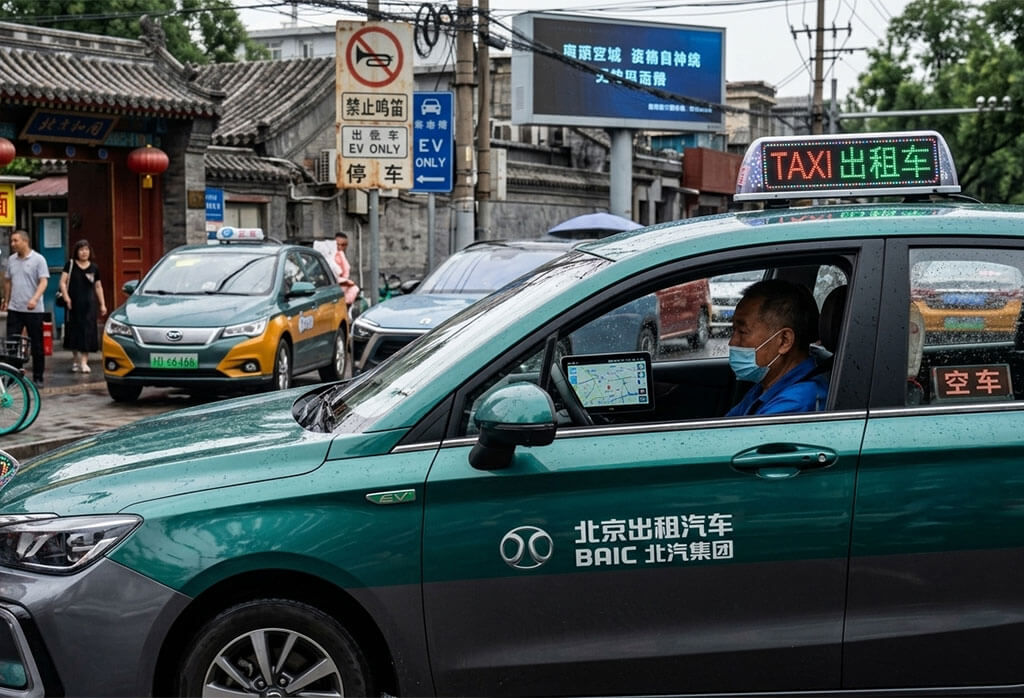
China’s electric vehicle industry has evolved into the most powerful force shaping the global automotive landscape. What began as a state-supported industrial push has transformed into a hyper-competitive ecosystem where scale, speed, and cost efficiency redefine market leadership. Today, Chinese manufacturers are not only dominating domestic sales but actively compressing global EV pricing structures through aggressive innovation and vertical integration. From ultra-low-cost urban vehicles to advanced premium electric SUVs, the spectrum of offerings reflects a manufacturing system optimized for mass adoption. As Western automakers struggle to match cost and production velocity, China is setting the benchmark for the next decade of mobility. Now, let’s look at some data and insights about the most powerful Chinese EVs so far, Chinese EVs, and why they are so competitive, and what their best-selling cars are.

China is the dominant global EV market, accounting for ~60% of global EV sales and >45% domestic penetration.

  • Annual EV sales: ~10–12M units (run-rate)
  • Market structure: hyper-competitive, price-compressed, vertically integrated
  • Leader: BYD (volume + cost leadership)
  • Strategic reality: China is exporting deflation to global auto markets

Estimated Impact: Extreme—China will define global EV pricing and margins
Confidence Level: High (multi-source consistency)

MARKET SIZE & CAPITALIZATION

Market Scale

  • ~1.49M EVs sold monthly (May 2026 snapshot)
  • ~63% EV penetration rate (China leads globally)

Aggregate Market Cap (Top Chinese EV Players)

Company Market Cap (USD)
BYD ~$125B
Xiaomi ~$118B
XPeng ~$19B
Li Auto ~$16.9B
NIO ~$12B

Total (Top 5): ~$290B–$320B EV exposure.

NOW LET’S SEE THE TOP 5 CHINESE EV COMPANIES

BYD (Market Leader)

BYD SEAL 7 DESIGNBYD SEALION 7 PERFORMANCEBYD ATTO 8 PERFORMANCE

Overview

  • #1 EV company globally by volume
  • 3.48M EVs sold in China alone (2025)

Best-Selling Models

  • BYD Seagull: ~$10,000–$12,000
  • BYD Dolphin: ~$16,000–$20,000
  • BYD Atto 3: ~$20,000–$30,000

Pros

  • Full vertical integration (battery → chip → assembly)
  • Lowest cost structure globally
  • Massive scale advantage

Cons

  • Lower premium perception vs Western brands
  • Margin pressure due to price wars

Estimated Impact: Dominant global disruptor
Confidence: Very High


Geely (incl. Zeekr)

Geely SUVgeely-is-the-best-chinese-brand-for-2019Geely Sport

Overview

  • #2 in China EV market (~11% share)

Best-Selling Models

  • Zeekr 001: ~$40,000–$50,000
  • Geely Galaxy L7: ~$20,000–$30,000

Pros

  • Strong global portfolio (Volvo, Polestar)
  • Premium + mass-market diversification

Cons

  • Brand fragmentation
  • Less cost-efficient than BYD

Estimated Impact: Strong #2 with global leverage
Confidence: High


NIO (Premium Segment)

NIO PremiumNIO redNIO Car EV

Overview

  • Premium EV positioning (China’s Tesla competitor)

Best-Selling Models

  • NIO ES6: ~$45,000–$60,000
  • NIO ET5: ~$40,000–$55,000

Pros

  • Battery swapping infrastructure (unique moat)
  • Strong brand in premium segment

Cons

  • High burn rate
  • Profitability issues

Estimated Impact: Niche premium player
Confidence: Medium-High


XPeng (Tech-Focused)

Xpeng SUVXPeng SportXpeng interior

Overview

  • Known for autonomous driving tech

Best-Selling Models

  • XPeng G6: ~$25,000–$35,000
  • XPeng Mona M03: ~$16,500

Pros

  • Strong software + AI positioning
  • Competitive pricing

Cons

  • Weak brand vs BYD/NIO
  • Volatile demand

Estimated Impact: Tech upside, uncertain scale
Confidence: Medium


Li Auto (Hybrid-Dominant)

Li SUSLi interiorLI Sub

Overview

  • Focus on EREV (range-extended EVs)

Best-Selling Models

  • Li L6: ~$34,500
  • Li L7/L8/L9: ~$40,000–$60,000

Pros

  • Solves range anxiety (hybrid approach)
  • Strong family SUV positioning

Cons

  • Declining sales momentum
  • Less future-proof vs pure EVs

Estimated Impact: Transitional player
Confidence: Medium


BEST-SELLING EVs IN CHINA (MARKET LEVEL)

Top mass-market winners:

  • BYD Seagull — dominant low-cost urban EV
  • Wuling Mini EV — ultra-cheap segment leader
  • BYD Qin / Song series — high-volume mid-tier
  • Tesla Model Y (China) — premium benchmark

Insight: China’s volume is driven by $10K–$25K vehicles, unlike Western markets.

Chinese EVs are competitive because the entire system is engineered for it. Companies like BYD build their own batteries, chips, and powertrains in-house, stripping out the supplier margins that inflate Western prices. Scale does the rest. Multi-million unit production spreads fixed costs across enormous volume, driving per-car expense down.

The deeper advantage sits in the battery supply chain, which China dominates end to end, from lithium and refining to cell manufacturing. Layer on government policy that aligns subsidies, infrastructure, and regulation to accelerate adoption, plus lower labor costs and faster iteration cycles, and the gap widens further.

Then there is the price war. Domestic hyper-competition compresses margins to the bone, forcing efficiency Western automakers rarely face.

The result is structural, not temporary. China optimizes for volume dominance over margin maximization, producing a durable cost advantage of roughly 20 to 40 percent versus the West. Confidence in that read is very high.

UAE MARKET (200-WORD STRATEGIC OVERVIEW)

The UAE EV market is in an early but accelerating adoption phase, driven by government sustainability targets and a rising fuel diversification strategy. Chinese EV brands are gaining traction due to a combination of aggressive pricing, fast availability, and feature-rich vehicles compared to European imports. Brands like BYD, MG (SAIC), and Geely are expanding distribution networks through local partnerships, targeting mid-income consumers priced out of Tesla and premium German EVs.

Infrastructure remains a constraint but is improving, with Abu Dhabi and Dubai investing in charging networks aligned with UAE Net Zero 2050 goals. Chinese EVs benefit from shorter delivery cycles and lower landed costs, making them highly competitive in fleet, ride-hailing, and government procurement segments.

Consumer perception is shifting from skepticism to value-driven acceptance, especially as build quality improves. The UAE acts as a strategic gateway market for Chinese OEMs to expand into the Middle East and Africa, where price sensitivity is higher.

Key dynamic: Chinese brands are not competing on prestige but on price-performance ratio, which aligns strongly with UAE demand outside luxury segments.

Estimated Impact: High growth, but not yet dominant
Confidence: Medium-High

REVENUE LEVERS (STRATEGIC TAKEAWAYS)

Lever Action Impact Confidence
Distribution Arbitrage Import Chinese EVs into underpenetrated markets (MENA, Africa) Very High High
Fleet Sales Target ride-hailing/logistics fleets with low-cost EVs High High
Charging Infrastructure Invest alongside EV distribution High Medium
Brand Positioning Focus on value, not premium High High
After-Sales Ecosystem Build servicing + parts network High Medium

China’s EV sector is structurally advantaged and globally expansionary. The dominant strategy is not innovation alone, but cost destruction at scale, which Western OEMs are currently unable to match. It will remain an open game on how the rest of the global markets will compete with the Chinese manufacturers, but so far the race has a clear leader ahead. The race is long and can always have unexpected models that will rearrange the list. One thing is obvious, and that is the fact that the end user will always win because, as customers, we have the final vote with our wallets.

Ebola cases in Congo

Ebola cases in Congo have reached 1,274, including 360 deaths in official health records. Health teams across the Democratic Republic of Congo admit dozens of new patients each day. Recoveries almost doubled within a single week, climbing to 148 patients from 80 before. Doctors now study how this Bundibugyo virus behaves inside the human body during infection. Their work offers the clearest picture yet of one rare and little-studied Ebola strain.

You should know why these figures matter for public health planning across the region. Officials confirm the Ebola outbreak Congo faces grew faster than most earlier official projections suggested. Before this year, scientists recorded only two known Bundibugyo events anywhere since 2007 worldwide. Those earlier outbreaks produced fewer than 200 confirmed patients across two separate small clusters. The World Health Organisation declared this outbreak a global health emergency back in mid-May. Ituri Province holds most reported patients, with smaller clusters across North and South Kivu.

What happened in Congo?

Ebola cases in Congo have reached 1,274, and treatment units stay full almost everywhere. Doctors caution against early conclusions because hundreds of patients still need active hospital care now. Past Bundibugyo strains showed lower fatality rates than the common Zaire and Sudan species. Whether this current epidemic follows the same gentle pattern remains unclear for medical teams today. No approved vaccine or specific drug exists for this particular Bundibugyo virus strain today. Care relies on fluids, oxygen support, and close monitoring of blood and heart function.

Inside the symptoms doctors now track

A study in the New England Journal of Medicine described the first 505 confirmed patients. Researchers found common Bundibugyo Ebola symptoms like fever, vomiting, diarrhoea, headache and stomach pain. Loss of appetite appeared often, while bleeding stayed uncommon during the first medical visit. Early supportive care saves many lives, even without a targeted Bundibugyo virus treatment available. Patients who died carried much higher viral loads than the people who later survived. Susan McLellan said the virus seems to “move a little more slowly” through patients. She cared for Ebola patients in Sierra Leone and Congo during earlier major outbreaks. Doctors hope this current epidemic answers old questions about how the strain truly spreads. Better data helps teams separate the biology of the virus from the quality of care.

What this means for you and the region

From my standpoint, this outbreak shows how supportive care shapes survival during uncertain epidemics. Current Ebola cases 2026 figures will guide how agencies send staff and medical supplies. Careful tracking of DRC Ebola deaths lets researchers compare this strain against past patterns. Insecurity and population movement make contact tracing harder for response teams on the ground. Aid groups now run treatment centres in Bunia, Goma and Mongbwalu across the region. Each recovery offers hope, yet medical teams know the next weeks will test them. Families and frontline workers carry the heaviest weight during this long and tense fight. Ebola cases in Congo have reached 1,274, and the count keeps moving each day. You can follow official updates as scientists learn more about this unusual viral threat.

HSBC issued an AI adoption

HSBC issued an AI adoption in investing report showing how UAE investors now use these tools. Your money decisions sit at the center of this fast-moving shift across the country. Researchers surveyed 9,993 wealthy people across ten markets, including 703 investors based in the UAE. The numbers place UAE AI adoption right at the top, level with India worldwide. About 98 percent of these investors use AI somewhere in their daily lives right now. Britain sits near 76 percent, while the United States lands close to 75 percent.

What the report shows about the UAE’s habits

Most of these investors lean on AI for research, analysis, and quick idea generation. Around 83 percent apply these tools to finance work, above the global mark of 73 percent. Roughly 78 percent use AI investment tools for research, while 61 percent back a wider strategy. Confidence rises too, since 31 percent feel readier when they talk with their advisers. Another 27 percent compare options faster, and a similar share feels calmer under pressure. The HSBC issued an AI adoption in investing report that tracks these shifts in plain numbers.

Risk appetite also shifts as people gain more trust in these new digital helpers. Some 63 percent say AI helps them weigh calculated risks with much clearer eyes. India leads here at 64 percent, while the global average sits near 49 percent. Western markets trail behind, with the United States at 44 percent and Britain at 39. These investors also tie about 36 percent of recent returns to AI-guided choices. The global figure here sits a little lower, near 33 percent across all markets.

People still want a human voice before the money moves

Trust in human advisers stays strong, even as these smart tools grow more popular. About 56 percent want a hybrid wealth management model blending software and expert people. Nearly 39 percent explore with AI first, then check ideas with a trusted adviser. Barry O’Byrne, CEO of International Wealth and Premier Banking at HSBC, framed the pattern clearly. “Clients are not picking sides,” he said, since they blend speed from AI with human judgment. Craig Worobec, Head of Wealth and Premier Solutions for the Middle East, agreed strongly. He called UAE residents some of the most AI-literate people on the planet today. From my standpoint, this blend gives you speed without losing the calm of human advice.

The HSBC Human-AI Advantage study also tracked daily life well beyond pure portfolio numbers. Around 74 percent feel their quality of life has improved, against a global rate of 63 percent. Many also credit these tools with opening new doors in their careers and skills. Growing use of generative AI in finance ties closely to wider national goals here. The UAE National Strategy for AI 2031 treats the field as a core economic driver. A new Artificial Intelligence and Data Authority now guides data and digital government work. HSBC pairs the trend with tools like Wealth Intelligence, drawing on 10,000 data sources.

The HSBC issued an AI adoption in investing report, pointing to a clear hybrid future. You gain real speed from these systems, yet a trusted adviser still guides big moves. This HSBC report on AI adoption in investing gives you a clear picture of the UAE.