icnlive

WATCH LIVE. THINK BUSINESS.

© 2026 ICN.LIVE

Fatima Al-Nouri

Writer,

icn.live

Follow

Fatima Al-Nouri is an experienced journalist passionate about financial freedom. Her career highlights include features on Bitcoin adoption, stablecoins, and global regulation. She received her diploma in Journalism and New Media and continues to engage Arabic-speaking audiences on digital finance.

Kuwait $6 billion bond sale

The Kuwait $6 billion bond sale closed this week with an order book the finance ministry calls one of the largest for a multi-tranche sovereign deal in 2026. Three tranches went out. Investors took $3 billion in three-year paper, $1.5 billion in five-year notes and $1.5 billion at 10 years. Final spreads landed at 70, 75 and 85 basis points over US Treasuries. It was the country’s first international issuance since October last year.

Pricing tells you more here than the headline number does. Kuwait tightened 25 basis points across all three tranches from its opening levels, according to a person familiar with the deal cited by Bloomberg. Buyers do not give up that much yield to a borrower they distrust.

Demand for the Kuwait $6 billion bond sale came in two versions. The finance ministry put total orders above $18 billion, more than three times the issue size. Bloomberg reported books near $14.8 billion at final terms. Peak interest and final interest are different numbers, and both can be accurate.

Who bought the Kuwait $6 billion bond sale?

American accounts took 48 percent of the allocation. The UK and Europe followed with 28 percent, then the Middle East and North Africa at 16 percent. Asia took 4 percent, and other international markets took the rest. Finance minister Yaqoub Al-Refaei said the result shows investor confidence in Kuwait’s credit position and financial standing.

The short end did the heavy lifting. Half the total sat in the three-year tranche, which points to buyers who want yield without long duration risk. Five- and 10-year paper gives other Kuwaiti borrowers a benchmark to price against.

Geography matters more than usual on this one. JPMorgan reclassified Kuwait as a developed market in February 2025 and removed it from its emerging market bond index. That move stripped out index-driven demand the country once attracted by default. Pulling almost half the book from the Americas without that support is a real result for a Kuwait sovereign bond issuance.

War risk barely moved the price

Iranian attacks have hit US military assets in Kuwait and Bahrain in recent weeks. Fixed income desks priced the three-tranche bond sale anyway. Gulf sovereign bonds already went through this test once, falling to lows in mid-March before climbing back through late April. Traders have a reference point now, and they used it.

Why Kuwait keeps borrowing

The arithmetic is plain. Kuwait’s 2026-27 budget forecasts revenue of KD16.3 billion against spending of KD26.1 billion. That leaves a Kuwait budget deficit of KD9.8 billion, up from KD6.3 billion the year before. Oil was expected to supply close to 80 percent of budgeted revenue, so disruption around Hormuz cuts straight into the top line.

Access came back through legislation. The Kuwait public debt law, approved in March 2025, set the borrowing ceiling at KD30 billion, roughly $97.4 billion, and allowed maturities out to 50 years. Political gridlock had kept the country out of the sovereign market for eight years before that. Since the law passed, Kuwait raised $11.25 billion in October 2025 and another $2 billion in May.

Kuwait is building a yield curve, and curves need repeat business. Each deal hands domestic banks and corporate borrowers a pricing reference they did not have. I read the Kuwait $6 billion bond sale as a curve-building exercise first and a cash-raising one second. The deficit is real. So is the sovereign wealth sitting behind it. What global investors bought this week was the legal framework and the balance sheet, not the news cycle.

US-Saudi nuclear deal

The US-Saudi nuclear deal cleared its biggest hurdle this week, with President Donald Trump signing off on it. Two people familiar with the decision told the Associated Press an announcement is expected Wednesday. Neither would speak on the record before the formal rollout. Reporting from The Wall Street Journal broke the news first on Tuesday. The pact runs 30 years and pulls US firms into building the kingdom’s program. Washington and Riyadh have chased this outcome for years, across both the Trump and Biden administrations. For Trump, Saudi Arabia has become a signature foreign policy bet. Energy Secretary Chris Wright is expected to sign the accord with his Saudi counterpart, Prince Abdulaziz bin Salman. The two men discussed building out the kingdom’s commercial nuclear power industry during Wright’s trip to the region last year.

What the US-Saudi nuclear deal actually allows

Here is where the US-Saudi nuclear deal gets sensitive. The accord could let Saudi Arabia enrich uranium inside its borders. That would follow a joint US-Saudi study on whether domestic fuel makes economic sense. Uranium enrichment sits at the center of the debate. It is one of two routes to the material inside a nuclear weapon, alongside plutonium reprocessing. Most countries with civilian reactors skip enrichment and buy fuel from suppliers like the US or Russia. Saudi leaders want the option at home. The plan also leans on American builders, with reactor firm Westinghouse in line to benefit.

Why Congress is worried

This is where the US-Saudi nuclear deal meets resistance. The agreement heads to Congress for review, and some lawmakers are uneasy. They fear helping Riyadh enrich its own uranium could set off fresh nuclear proliferation across the region. Officials call the 30-year framework a 123 agreement, named for a section of the US Atomic Energy Act. Saudi Arabia belongs to the International Atomic Energy Agency. The Vienna-based body promotes peaceful nuclear work and inspects for hidden weapons programs. Reports suggest the deal skips the IAEA’s Additional Protocol, which grants inspectors wider access. It also breaks from the 2009 US-UAE accord. Back then, Abu Dhabi agreed not to enrich and accepted tougher oversight, the so-called gold standard.

The money and the regional stakes

The dollars behind this are large. US officials frame the accord as billions for the American nuclear industry, part of a plan to reach 20 nuclear deals worldwide. Enrichment alone does not build a bomb. A country still needs other steps, including synchronized high explosives, before any weapon is possible. Crown Prince Mohammed bin Salman has said before he would seek a bomb if Iran built one. The timing is loud, because this approval lands while the US and Israel wage war on Iran’s nuclear program. Saudi Arabia and Pakistan signed a mutual defense pact last year. Pakistan’s defense minister later said his nation’s nuclear program would be available to the kingdom if needed. Kelsey Davenport, director for nonproliferation policy at the Arms Control Association, sees a clear opening. “Even with restrictions and limits, it seems likely that Saudi Arabia will have a path to some type of uranium enrichment or access to knowledge about enrichment,” she wrote.

What I would watch next

Here is my read. The money is real, with billions flowing to a US nuclear industry hungry for export wins. Politics is the harder part. Watch Congress, watch the inspection terms, and watch how Iran reads all of it. Saudi Arabia’s civilian nuclear program has moved from talking point to signed framework. For a region already on edge, this US-Saudi nuclear deal changes the math.

FAB Launches the Emirati Jaywan Debit Card

FAB launches the Emirati Jaywan Debit Card, and the country now has a homegrown card sitting inside its biggest bank. The card is live for domestic use. It runs on the UAE national card scheme, the local rails managed by Al Etihad Payments and backed by the Central Bank of the UAE. First Abu Dhabi Bank is the largest lender in the country by assets. So this reads as a real signal, not a pilot.

What the Jaywan debit card does

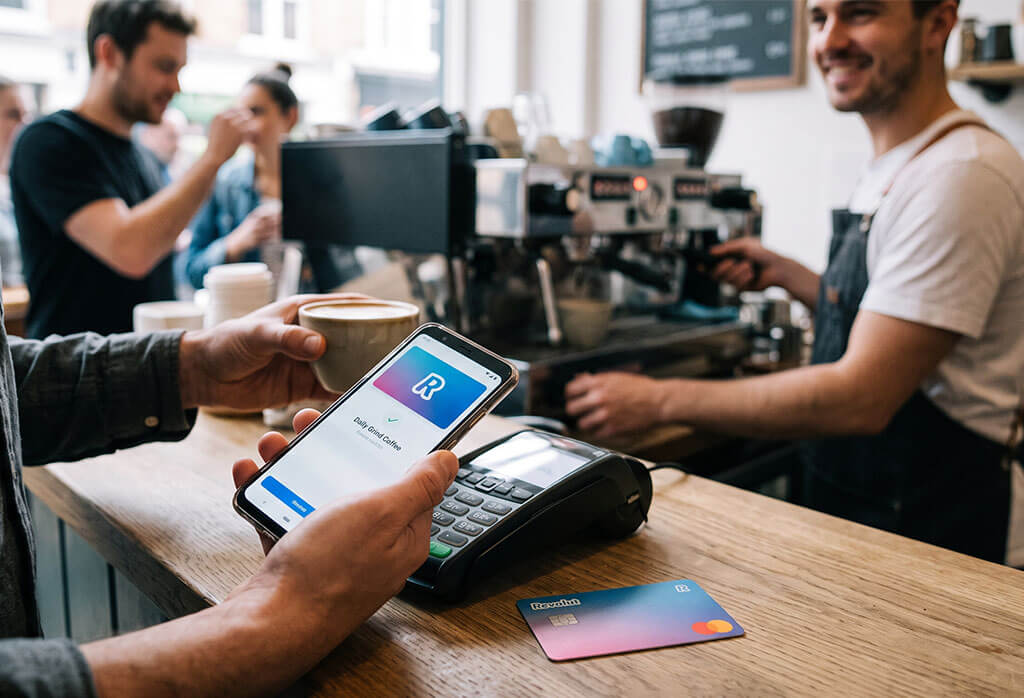
Here is what you get. The Jaywan debit card handles everyday payments and cash access across the UAE. Tap or dip at local merchant outlets. Online, it works on UAE-based platforms. ATMs nationwide handle cash withdrawals. The card also links to digital wallets through tokenised wallet integration, so your card details get swapped for a secure token on supported devices.

Security sits at the core. The card uses Chip and PIN for in-person buys and 3D Secure authentication online. Your four-digit PIN confirms you are the real cardholder at the till. For a domestic scheme handling millions of daily taps, this layer counts.

Why FAB launches the Emirati Jaywan Debit Card now

Timing tells the story. FAB launches the Emirati Jaywan Debit Card as the national rollout moves from plan to practice. The card is integrated with the FAB Mobile app, so you manage it where you already bank. You watch transactions, handle your account, and run digital servicing from one screen. Al Etihad Payments built Jaywan to localise card payments and cut transaction costs. Keeping this flow inside UAE borders also strengthens national data sovereignty, a point FAB made plainly.

Two names carried the message. Futoon Al Mazrouei, Group Head of Personal, Wealth and Business Banking at FAB, tied the card to trust and customer focus inside the UAE’s financial system. Andrea Ciancetti, Chief Products Officer at Al Etihad Payments, called the FAB launch “a critical milestone for the roll-out of the scheme,” and thanked the bank for making Jaywan real for people nationwide.

How to get the Jaywan debit card

Getting one is simple if you already bank with FAB. Apply through the FAB Mobile app or at a FAB branch. No account with the bank yet? Open an eligible one first, then apply. Elite and Private Banking clients can go through their relationship managers. FAB has not disclosed fees, account tiers, or rewards, so check those points before you commit.

Jaywan is bigger than one card. The scheme, launched in 2024, is the first UAE national card scheme, built to localise payments and lower costs for merchants and banks. First Abu Dhabi Bank is one of the early issuers, with other lenders lining up prepaid and debit products over the coming months. Al Etihad Payments has also signed global networks for co-badged cards, so travel use can follow the domestic base. For now, the FAB card stays inside UAE borders.


IMPORTANT: CONTENT SUBMITTED BY THE CLIENT. THIS IS A PRESS RELEASE ARTICLE. PLEASE READ THE INFORMATION BELOW.

ICN.live neither validates nor guarantees the accuracy, reliability, or quality of the information, promotional materials, or products mentioned herein. Readers are encouraged to conduct independent due diligence before making any decisions related to the featured company. ICN.live bears no responsibility, directly or indirectly, for any harm, loss, or consequences that may result from reliance on or interaction with the content, services, or offerings described in this release.

The details shared in this announcement do not constitute financial, trading, or investment guidance. Readers are strongly advised to carry out independent research and seek advice from a qualified financial professional before making any investment or cryptocurrency-related decisions.