The Gulf Cooperation Council (GCC) is entering a transformative phase in its economic development, where regional integration is evolving beyond traditional trade cooperation into a sophisticated framework of industrial interdependence, investment connectivity, and supply-chain optimization. This transition represents a strategic opportunity to consolidate six national economies into an increasingly interconnected economic powerhouse capable of influencing global trade, manufacturing, and capital flows.
According to the GCC Statistical Centre, the combined GDP of GCC economies reached approximately $2.4 trillion in 2025, supported by a population exceeding 63 million. Meanwhile, external merchandise trade amounted to approximately $1.59 trillion in 2024, demonstrating the region’s substantial contribution to international commerce.
These indicators establish a strong foundation for advancing economic integration through productive specialization, economies of scale, and harmonized investment frameworks.
Regional Trade Integration: Unlocking Economic Multipliers
The GCC’s economic potential extends considerably beyond its individual national markets. Expanding intra-regional trade can generate positive economic multiplier effects by stimulating manufacturing output, reducing transaction costs, increasing market accessibility, and improving capital allocation efficiency. Intra-GCC merchandise exports reached approximately $146 billion in 2024, with re-exports accounting for around $68 billion, reflecting the growing importance of regional logistics and distribution networks.
Greater customs interoperability, unified technical standards, digital trade documentation, and streamlined cross-border procedures could further enhance these commercial flows. Importantly, the next stage of integration should prioritize regional value-chain development rather than relying predominantly on the exchange of finished goods. Industrial complementarity between Saudi Arabia, the UAE, Oman, Qatar, Bahrain, and Kuwait could generate higher domestic value addition while strengthening the GCC’s collective export competitiveness.
The UAE: A Strategic Economic Accelerator for GCC Integration
The United Arab Emirates occupies a particularly influential position within this emerging economic architecture, supported by advanced transportation infrastructure, internationally connected financial markets, competitive industrial zones, and an increasingly diversified economic structure.
The UAE’s non-oil foreign trade reached approximately AED 3.8 trillion in 2025, increasing 27% annually. This momentum continued during the first half of 2026, when non-oil trade reached AED 1.937 trillion, representing 13.1% year-on-year growth, while national non-oil exports increased 23.9% to AED 452.8 billion.
These achievements demonstrate the UAE’s transition from a conventional commercial intermediary toward a sophisticated production, export, investment, and global distribution economy. Dubai’s D33 Economic Agenda and the UAE’s broader industrial diversification initiatives provide complementary foundations for extending Emirati economic influence through regional integration.
Meanwhile, Abu Dhabi’s expanding industrial and manufacturing capabilities reinforce this strategic trajectory. The emirate recorded non-oil foreign trade exceeding AED 415.4 billion in 2025, increasing 36%, while non-oil exports expanded by 63% to AED 175.4 billion. Deeper GCC integration could consequently strengthen the UAE’s manufacturing competitiveness, attract cross-border investment, stimulate Emirati SME participation, and increase the contribution of knowledge-intensive activities to national economic output.
“The UAE is transitioning from a conventional commercial intermediary toward a sophisticated production, export, investment, and global distribution economy.”
Logistics Connectivity: Building an Integrated Gulf Economic Corridor
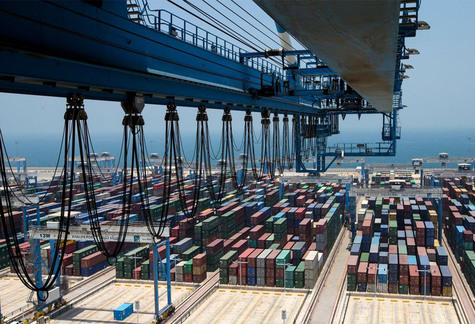
Transportation infrastructure represents a fundamental determinant of regional economic competitiveness. The development of interconnected railway systems, ports, industrial clusters, and multimodal logistics networks can substantially improve trade efficiency and supply-chain resilience.
One prominent example is the 238-kilometre Hafeet Rail project, connecting the UAE and Oman. The project reported 40% construction completion in April 2026, representing an important advancement toward integrated cross-border freight transportation. Such investments offer opportunities to reduce transport friction, improve cargo predictability, enhance industrial connectivity, and establish more efficient trade corridors between the Gulf production Centre and international markets.
For the UAE, improved regional connectivity can amplify the economic contribution of Jebel Ali Port, Khalifa Port, industrial free zones, and national railway infrastructure, reinforcing its position as a pivotal commercial gateway connecting Asia, Africa, Europe, and the broader GCC marketplace.
Industrial Specialization and the Future of Regional Competitiveness
The next generation of GCC integration should advance a coordinated industrial development model emphasizing sectoral specialization and technological complementarity. Saudi Arabia’s expanding manufacturing base, the UAE’s logistics and advanced industrial infrastructure, Oman’s maritime connectivity, Qatar’s energy-related industrial capabilities, and Bahrain’s financial and specialized manufacturing services create significant opportunities for integrated regional production ecosystems.
Such cooperation could accelerate technology transfer, strengthen research commercialization, improve industrial productivity, and reduce dependence on external suppliers. Moreover, coordinated investment frameworks could enable sovereign wealth funds, institutional investors, and private capital to support cross-border industrial projects with measurable economic returns.
The Road Ahead: Integration as a Catalyst for Sustainable Prosperity
The future competitiveness of GCC economies will increasingly depend on their collective capacity to transform economic connectivity into productivity growth, investment efficiency, and export diversification. For the UAE, deeper regional integration represents an opportunity to reinforce its economic leadership while expanding market access, attracting high-value investments, and accelerating industrial innovation.
Ultimately, the GCC’s transition from six interconnected national markets toward a more unified economic powerhouse represents a strategic evolution in regional economic development—one capable of strengthening global competitiveness, enhancing economic resilience, and establishing the Arabian Gulf as an influential Centre of international trade, investment, and industrial prosperity.